›[พื้นฐาน]ใบขับขี่สากล (ใบอนุญาตขับรถระหว่างประเทศ) คืออะไร?
คือเอกสารที่กรมการขนส่งทางบกออกให้ผู้ถือใบอนุญาตขับรถไทยที่ยังไม่สิ้นอายุ เพื่อใช้ประกอบใบขับขี่ไทยขณะขับรถในต่างประเทศที่เป็นภาคีอนุสัญญาว่าด้วยการจราจรทางถนนฉบับเดียวกัน ใบขับขี่สากลไม่ใช่ใบอนุญาตขับรถโดยตัวเอง จึงต้องพกใบขับขี่ไทยฉบับจริงไปด้วยเสมอ และไม่ได้ให้สิทธิขับรถประเภทที่ไม่ปรากฏในใบขับขี่ไทยของผู้ถือ
›[พื้นฐาน]ประเทศไทยเป็นภาคีอนุสัญญาการจราจรทางถนนกี่ฉบับ?
สองฉบับ คือ อนุสัญญาว่าด้วยการจราจรทางถนน ณ นครเจนีวา ค.ศ. 1949 และอนุสัญญาว่าด้วยการจราจรทางถนน ณ กรุงเวียนนา ค.ศ. 1968 กรมการขนส่งทางบกจึงออกใบขับขี่สากลได้ทั้งสองแบบ ผู้ขอต้องเลือกแบบที่ตรงกับสถานะภาคีของประเทศที่จะไปขับรถ
›[เจนีวา 1949]ใบขับขี่สากลตามอนุสัญญาเจนีวา 1949 มีอายุเท่าไร?
มีอายุ 1 ปีนับแต่วันออก ตามข้อกำหนดของอนุสัญญาเจนีวา ค.ศ. 1949 กรมการขนส่งทางบกระบุว่าใช้ได้ในกลุ่มประเทศภาคีอนุสัญญาฉบับนี้ เช่น สหรัฐอเมริกา ออสเตรเลีย ญี่ปุ่น เกาหลีใต้ และนิวซีแลนด์ ควรตรวจรายชื่อประเทศล่าสุดกับกรมการขนส่งทางบกก่อนยื่นคำขอ
›[เวียนนา 1968]ใบขับขี่สากลตามอนุสัญญาเวียนนา 1968 มีอายุเท่าไร?
มีอายุ 3 ปีนับแต่วันออกใบขับขี่สากล หรือเท่ากับอายุที่เหลือของใบอนุญาตขับรถภายในประเทศที่ผู้ถือมีอยู่ แล้วแต่ระยะใดสั้นกว่า ใช้ได้ในกลุ่มประเทศภาคีอนุสัญญาเวียนนา 1968 เช่น เยอรมนี สวิตเซอร์แลนด์ บราซิล และบาห์เรน
›[เลือกอนุสัญญา]ถ้าประเทศปลายทางเป็นภาคีทั้งสองอนุสัญญา ต้องขอกี่ฉบับ?
ขอเพียงฉบับตามอนุสัญญาเวียนนา 1968 ก็เพียงพอ กรมการขนส่งทางบกระบุว่าประเทศที่เป็นภาคีทั้งสองฉบับ เช่น สหราชอาณาจักร ฝรั่งเศส อิตาลี เนเธอร์แลนด์ สวีเดน รวมถึงประเทศไทย สามารถใช้ใบขับขี่สากลแบบเวียนนา 1968 เพียงฉบับเดียวได้ ซึ่งได้เปรียบเรื่องอายุการใช้งานที่ยาวกว่า
›[เลือกอนุสัญญา]จะเดินทางหลายประเทศในทริปเดียว ควรทำอย่างไร?
ตรวจสถานะภาคีของทุกประเทศในเส้นทางก่อน ถ้าทุกประเทศเป็นภาคีเวียนนา 1968 ให้ขอฉบับเวียนนา ถ้ามีประเทศที่เป็นภาคีเฉพาะเจนีวา 1949 เช่น สหรัฐอเมริกา ญี่ปุ่น หรือออสเตรเลีย ปะปนอยู่ อาจต้องขอทั้งสองแบบเพื่อครอบคลุมทั้งเส้นทาง กรมการขนส่งทางบกอนุญาตให้ขอทั้งสองแบบพร้อมกันได้
›[ยื่นคำขอ]ยื่นขอใบขับขี่สากลได้ที่ไหน และต้องจองคิวหรือไม่?
ยื่นได้ที่สำนักงานขนส่งกรุงเทพมหานครพื้นที่ 1-5 และสำนักงานขนส่งจังหวัดทั่วประเทศ กรมการขนส่งทางบกเคยประชาสัมพันธ์ว่างานใบขับขี่สากลสามารถเข้ารับบริการได้โดยไม่ต้องจองคิวล่วงหน้า อย่างไรก็ดีเงื่อนไขคิวและช่องทางออนไลน์อาจเปลี่ยนได้ ควรตรวจประกาศล่าสุดที่ dlt.go.th หรือสอบถามสำนักงานขนส่งที่จะไปยื่นในวันนั้น
›[ยื่นคำขอ]เอกสารที่ใช้ขอใบขับขี่สากลมีอะไรบ้าง?
โดยหลักคือหนังสือเดินทางที่ยังไม่สิ้นอายุพร้อมสำเนา บัตรประจำตัวประชาชนพร้อมสำเนา ใบอนุญาตขับรถส่วนบุคคลแบบ 5 ปีหรือชนิดตลอดชีพที่ยังไม่สิ้นอายุพร้อมสำเนา และรูปถ่ายตามขนาดที่กรมการขนส่งทางบกกำหนด กรณีชาวต่างชาติหรือกรณีมอบอำนาจจะมีเอกสารเพิ่มเติม ควรตรวจรายการเอกสารล่าสุดกับสำนักงานขนส่งก่อนเดินทางไปยื่น
›[ยื่นคำขอ]ใบขับขี่ชั่วคราว 2 ปี ใช้ขอใบขับขี่สากลได้หรือไม่?
โดยหลักไม่ได้ กรมการขนส่งทางบกกำหนดให้ผู้ขอต้องถือใบอนุญาตขับรถส่วนบุคคลชนิด 5 ปีหรือชนิดตลอดชีพที่ยังไม่สิ้นอายุ ผู้ถือใบขับขี่ชั่วคราวจึงควรดำเนินการเปลี่ยนเป็นชนิด 5 ปีก่อน แล้วจึงยื่นขอใบขับขี่สากล เงื่อนไขนี้อาจปรับปรุงได้ กรุณาตรวจสอบกับสำนักงานขนส่งก่อนยื่น
›[แปลใบขับขี่]ทำไมบางประเทศขอคำแปลใบขับขี่ไทยแม้มีใบขับขี่สากลแล้ว?
เพราะหน่วยงานปลายทางบางแห่ง เช่น หน่วยงานทะเบียนยานพาหนะของรัฐหรือบริษัทเช่ารถ ต้องการอ่านรายละเอียดในใบขับขี่ไทยโดยตรง เช่น ชนิดของรถที่อนุญาต วันออกและวันสิ้นอายุ เพื่อเทียบชั้นใบอนุญาตหรือคำนวณระยะเวลาการถือใบขับขี่ คำแปลรับรองจึงเป็นเอกสารประกอบที่ต่างจากใบขับขี่สากล และหลายกรณีต้องใช้ควบคู่กัน
›[แปลใบขับขี่]การแปลใบขับขี่ไทยเพื่อใช้ในออสเตรเลียต้องใช้นักแปลแบบไหน?
หน่วยงานรัฐของออสเตรเลียโดยทั่วไปกำหนดให้คำแปลเอกสารภาษาต่างประเทศจัดทำโดยนักแปลที่ได้รับการรับรองจาก NAATI (NAATI certified translator) ในทิศทางภาษาไทยเป็นอังกฤษ พร้อมตราประทับ หมายเลขผู้ปฏิบัติงาน และวันหมดอายุการรับรองปรากฏบนคำแปล เกณฑ์นี้เป็นไปตามระบบการรับรองของ NAATI (naati.com.au) โปรดตรวจข้อกำหนดของหน่วยงานรัฐแต่ละรัฐก่อนยื่น
›[แปลใบขับขี่]คำแปลใบขับขี่ต้องมีข้อมูลอะไรครบ?
ควรถอดความให้ครบทุกข้อความที่ปรากฏบนเอกสาร ได้แก่ ชื่อ-นามสกุลตามหนังสือเดินทาง เลขที่ใบอนุญาต ชนิดของรถที่อนุญาต วันออก วันสิ้นอายุ หน่วยงานผู้ออก ข้อจำกัดหรือเงื่อนไข และข้อความบนตราประทับ ควรระบุด้วยว่าคำแปลจัดทำจากเอกสารด้านใดบ้าง เพราะข้อมูลด้านหลังบัตรมักถูกละเลยและเป็นสาเหตุที่เจ้าหน้าที่ขอให้แปลใหม่
›[ต่างชาติในไทย]ชาวต่างชาติใช้ใบขับขี่ของประเทศตนขับรถในไทยได้หรือไม่?
ใช้ได้ในกรอบที่กฎหมายไทยกำหนด กรณีใบขับขี่สากลที่ออกตามอนุสัญญาซึ่งประเทศไทยเป็นภาคี ใช้ควบคู่กับใบขับขี่ของประเทศต้นทางได้ตามอายุของเอกสารและตามระยะเวลาที่ได้รับอนุญาตให้อยู่ในราชอาณาจักร ผู้ที่พำนักระยะยาวโดยทั่วไปควรดำเนินการขอใบอนุญาตขับรถไทย กรุณาตรวจเงื่อนไขล่าสุดกับกรมการขนส่งทางบก เพราะเงื่อนไขขึ้นกับประเภทการตรวจลงตราและระยะเวลาพำนัก
›[ต่างชาติในไทย]ชาวต่างชาติขอใบขับขี่ไทยต้องใช้เอกสารอะไร?
โดยทั่วไปต้องมีหนังสือเดินทางพร้อมการตรวจลงตราที่ยังไม่สิ้นอายุ หลักฐานที่พักอาศัยในไทยซึ่งอาจเป็นหนังสือรับรองถิ่นที่อยู่จากสถานทูตของตนหรือใบรับรองถิ่นที่อยู่จากสำนักงานตรวจคนเข้าเมือง ใบรับรองแพทย์ที่ออกไม่เกินระยะเวลาที่กำหนด และใบขับขี่เดิมพร้อมคำแปลรับรองหากขอเทียบชั้น รายการเอกสารและอายุเอกสารกำหนดโดยกรมการขนส่งทางบก โปรดตรวจสอบก่อนยื่นทุกครั้ง
›[ต่างชาติในไทย]หนังสือรับรองถิ่นที่อยู่จากสถานทูตต้องแปลและรับรองหรือไม่?
หากเอกสารออกเป็นภาษาต่างประเทศ สำนักงานขนส่งอาจขอคำแปลเป็นภาษาไทย และในบางกรณีขอให้ผ่านการรับรองนิติกรณ์ที่กรมการกงสุลด้วย เพื่อยืนยันความแท้ของลายมือชื่อและตราประทับ ควรสอบถามสำนักงานขนส่งที่จะยื่นเป็นรายกรณี เพราะแนวปฏิบัติของแต่ละสำนักงานอาจต่างกันในรายละเอียด
›[ทะเบียนรถ]สมุดคู่มือจดทะเบียนรถแปลรับรองเพื่อใช้ต่างประเทศได้หรือไม่?
ได้ โดยแปลรายการสำคัญ เช่น เลขทะเบียน เลขตัวถัง เลขเครื่องยนต์ ยี่ห้อ รุ่น ปีที่จดทะเบียน ชื่อผู้ถือกรรมสิทธิ์และผู้ครอบครอง รายการภาษีและรายการเปลี่ยนแปลง หากปลายทางต้องการหลักฐานความแท้ ให้ใช้สำเนาที่นายทะเบียนรับรองเป็นต้นทาง แล้วนำคำแปลไปยื่นนิติกรณ์ที่กรมการกงสุลก่อนขอ Apostille หรือรับรองต่อที่สถานทูตตามเส้นทางที่ปลายทางกำหนด
›[ทะเบียนรถ]โอนกรรมสิทธิ์รถขณะอยู่ต่างประเทศ ต้องทำอย่างไร?
ใช้หนังสือมอบอำนาจให้ผู้แทนดำเนินการที่สำนักงานขนส่งแทน หนังสือมอบอำนาจที่ลงนามในต่างประเทศเป็นเอกสารเอกชน จึงควรให้ผู้มีอำนาจรับรองลายมือชื่อในประเทศที่ลงนามรับรองก่อน แล้วรับรองต่อที่สถานเอกอัครราชทูตหรือสถานกงสุลใหญ่ไทยในประเทศนั้น เพื่อให้หน่วยงานไทยยอมรับ กรณีลงนามในไทยใช้ทนายความผู้ทำคำรับรองลายมือชื่อและเอกสารได้ ควรตรวจแบบฟอร์มและถ้อยคำที่สำนักงานขนส่งยอมรับล่วงหน้า
›[นำรถข้ามแดน]นำรถส่วนตัวออกไปขับต่างประเทศต้องมีเอกสารอะไร?
โดยทั่วไปต้องมีหลักฐานกรรมสิทธิ์หรือสิทธิครอบครองรถ เอกสารผ่านพิธีการศุลกากรขาออก-ขาเข้า ประกันภัยที่คุ้มครองในประเทศปลายทาง ใบขับขี่ไทยพร้อมใบขับขี่สากลแบบที่ตรงกับอนุสัญญาของประเทศปลายทาง และในบางประเทศต้องมีเอกสารนำรถเข้าชั่วคราวประเภท Carnet de Passages en Douane ควรตรวจข้อกำหนดกับกรมศุลกากรและหน่วยงานของประเทศปลายทางก่อนออกเดินทาง
›[นำรถข้ามแดน]ขับรถข้ามแดนในอาเซียนใช้ใบขับขี่ไทยได้เลยหรือไม่?
ขึ้นกับความตกลงและกฎภายในของประเทศปลายทาง หลายประเทศในภูมิภาคยอมรับใบขับขี่ไทยตามกรอบความตกลงในระดับภูมิภาคหรือทวิภาคี แต่บางประเทศยังกำหนดให้มีใบขับขี่สากลหรือคำแปลรับรอง และมีเงื่อนไขเรื่องเอกสารประกันภัยข้ามแดนแยกจากประกันภัยในประเทศ กรุณาตรวจกับด่านและหน่วยงานขนส่งของประเทศปลายทางก่อนเดินทางทุกครั้ง
›[ประกันภัยและอุบัติเหตุ]เอกสารอุบัติเหตุที่เกิดในไทยแต่ต้องเคลมต่างประเทศ ควรเตรียมอะไร?
โดยทั่วไปคือบันทึกประจำวันหรือหลักฐานการแจ้งเหตุจากพนักงานสอบสวน รายงานความเสียหายและใบเสร็จค่าซ่อม เอกสารกรมธรรม์และหนังสือจากบริษัทประกันภัย และใบรับรองแพทย์หากมีผู้บาดเจ็บ เอกสารราชการควรใช้ฉบับที่หน่วยงานผู้ออกรับรอง ส่วนเอกสารจากบริษัทเอกชนเป็นเอกสารเอกชนซึ่งมักต้องรับรองลายมือชื่อผู้ลงนามก่อนเข้าสู่ขั้นนิติกรณ์
›[ประวัติการขับรถ]ขอหนังสือรับรองประวัติการถือใบอนุญาตขับรถได้ที่ไหน?
ยื่นคำขอที่สำนักงานขนส่งที่มีข้อมูลทะเบียนใบอนุญาตของผู้ขอ กรมการขนส่งทางบกเป็นผู้ออกหลักฐานเกี่ยวกับประวัติใบอนุญาตขับรถ เอกสารนี้มักถูกขอโดยบริษัทประกันภัยหรือหน่วยงานทะเบียนยานพาหนะต่างประเทศเพื่อคำนวณส่วนลดประวัติดีหรือเทียบระยะเวลาการถือใบขับขี่ หากใช้ต่างประเทศให้แปลรับรองแล้วดำเนินนิติกรณ์ตามที่ปลายทางกำหนด
›[ลำดับการรับรอง]ลำดับขั้นการรับรองเอกสารขนส่งเพื่อใช้ต่างประเทศเป็นอย่างไร?
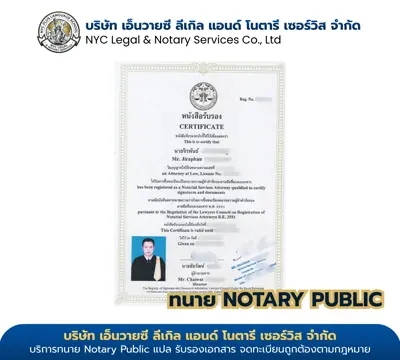
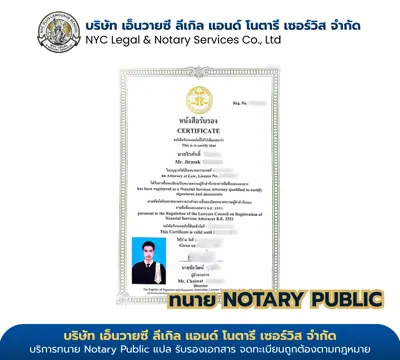
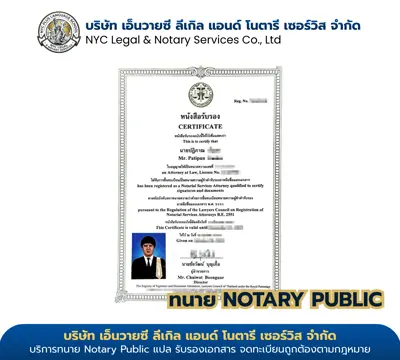
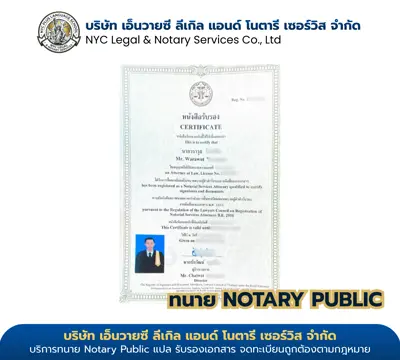
ลำดับทั่วไปคือ หนึ่ง เตรียมต้นฉบับหรือสำเนาที่หน่วยงานผู้ออกรับรอง สอง จัดทำคำแปลตามภาษาที่ปลายทางกำหนดพร้อมคำรับรองคำแปล สาม เอกสารเอกชนให้ทนายความผู้ทำคำรับรองลายมือชื่อและเอกสารที่ขึ้นทะเบียนกับสภาทนายความรับรองลายมือชื่อ สี่ ยื่นนิติกรณ์ที่กองสัญชาติและนิติกรณ์ กรมการกงสุล และห้า ขอ Apostille หากประเทศปลายทางเป็นภาคีอนุสัญญาซึ่งมีผลกับไทยตั้งแต่ 2 ธันวาคม 2568 หรือรับรองต่อที่สถานทูตของประเทศนั้นในไทยหากยังไม่เป็นภาคี
›[ลำดับการรับรอง]ใบขับขี่สากลต้องขอ Apostille หรือไม่?
โดยหลักไม่ต้อง เพราะใบขับขี่สากลออกตามแบบที่อนุสัญญาการจราจรทางถนนกำหนด และมีผลตามอนุสัญญานั้นในประเทศภาคีโดยตรง การขอ Apostille ใช้กับกรณีที่หน่วยงานปลายทางขอหลักฐานความแท้ของเอกสารราชการไทยฉบับอื่น เช่น สำเนาทะเบียนรถหรือหนังสือรับรองประวัติใบอนุญาต หากไม่แน่ใจ ให้ถามเงื่อนไขจากหน่วยงานปลายทางเป็นลายลักษณ์อักษรก่อนดำเนินการ
›[ข้อผิดพลาด]สาเหตุที่เอกสารกลุ่มขนส่งถูกปฏิเสธบ่อยมีอะไร?
ที่พบบ่อยคือ เลือกอนุสัญญาผิดกับประเทศปลายทาง ใบขับขี่ไทยสิ้นอายุก่อนหรือระหว่างช่วงที่ใช้ในต่างประเทศ ไม่พกใบขับขี่ไทยฉบับจริงควบคู่กับใบขับขี่สากล สะกดชื่อในคำแปลไม่ตรงกับหนังสือเดินทาง แปลไม่ครบด้านหลังเอกสารหรือตกข้อจำกัดชนิดรถ ใช้สำเนาที่ไม่มีการรับรองจากนายทะเบียน และลำดับการรับรองสลับขั้นจนต้องเริ่มใหม่
›[ข้อผิดพลาด]ชื่อในใบขับขี่ไทยสะกดต่างจากหนังสือเดินทาง ต้องทำอย่างไร?
ควรแก้ที่ต้นทางก่อน โดยขอปรับปรุงข้อมูลกับนายทะเบียนให้ตรงกับหลักฐานทางทะเบียนราษฎรและหนังสือเดินทาง หากแก้ไม่ได้ทันเวลา ให้ผู้แปลระบุการถอดอักษรและหมายเหตุความต่างของการสะกดไว้ในคำแปลอย่างชัดเจน และแนบหลักฐานยืนยันตัวบุคคล เช่น สำเนาหนังสือเดินทางและเอกสารทะเบียนราษฎร เพื่อให้เจ้าหน้าที่ปลายทางเชื่อมโยงเป็นบุคคลเดียวกันได้
›[ตรวจสอบข้อมูล]ตรวจสอบข้อกำหนดล่าสุดเรื่องใบขับขี่สากลได้ที่ไหน?
แหล่งทางการคือกรมการขนส่งทางบก (dlt.go.th) สำหรับเงื่อนไขการขอ รายชื่อประเทศภาคี และเอกสารประกอบคำขอ กรมการกงสุล (consular.mfa.go.th) สำหรับงานนิติกรณ์และ Apostille เว็บไซต์ HCCH (hcch.net) สำหรับสถานะภาคีอนุสัญญา Apostille และหน่วยงานทะเบียนยานพาหนะของประเทศปลายทางสำหรับเกณฑ์การเทียบชั้นใบขับขี่ เนื้อหาในหน้านี้เป็นข้อมูลทั่วไป ควรยืนยันกับแหล่งทางการในวันที่จะยื่น
›[ติดต่อ]สอบถามค่าบริการและระยะเวลาได้ทางไหน?
เราไม่ประกาศอัตราค่าบริการหรือค่าธรรมเนียมราชการบนหน้าเว็บไซต์ เพราะค่าธรรมเนียมกำหนดโดยหน่วยงานรัฐและมีการปรับปรุงเป็นระยะ ส่วนงานแปลและงานรับรองขึ้นกับจำนวนหน้า ภาษา จำนวนชุด และเส้นทางการรับรองที่ปลายทางกำหนด กรุณาสอบถามเจ้าหน้าที่ทางโทรศัพท์ LINE หรืออีเมล พร้อมส่งภาพเอกสารและระบุประเทศปลายทางเพื่อให้ประเมินได้แม่นยำ
›[ขอบเขตบริการ]ทางทีมงานเป็นตัวแทนของกรมการขนส่งทางบกหรือไม่?
ไม่ใช่ เราเป็นผู้ให้บริการเอกชนด้านงานแปลรับรอง งานรับรองลายมือชื่อและเอกสารโดยทนายความผู้ทำคำรับรองลายมือชื่อและเอกสาร และการประสานงานเอกสารเพื่อยื่นนิติกรณ์ เราไม่ใช่หน่วยงานรัฐ ไม่ใช่ตัวแทนที่หน่วยงานใดแต่งตั้ง และไม่สามารถรับประกันผลการพิจารณาหรือระยะเวลาดำเนินการของหน่วยงานรัฐได้
›[Basics]What is an International Driving Permit (IDP) issued in Thailand?
It is a document issued by the Department of Land Transport to holders of a valid Thai driving licence, to be used together with that Thai licence when driving in countries party to the same road-traffic convention. An IDP is not a licence in itself, so the original Thai licence must always be carried with it, and it confers no right to drive vehicle categories that do not appear on the holder's Thai licence.
›[Basics]How many road-traffic conventions is Thailand a party to?
Two: the Convention on Road Traffic done at Geneva in 1949 and the Convention on Road Traffic done at Vienna in 1968. The Department of Land Transport therefore issues both types of IDP, and the applicant must choose the type matching the convention status of the country where they intend to drive.
›[Geneva 1949]How long is a Geneva 1949 IDP valid?
One year from the date of issue, as prescribed by the 1949 Geneva Convention. The Department of Land Transport lists it as usable in the states party to that convention, including the United States, Australia, Japan, South Korea and New Zealand. Confirm the current country list with the Department before applying.
›[Vienna 1968]How long is a Vienna 1968 IDP valid?
Three years from the date of issue, or the remaining validity of the holder's domestic driving licence, whichever is shorter. It is used in states party to the 1968 Vienna Convention, including Germany, Switzerland, Brazil and Bahrain.
›[Choosing a convention]If the destination is party to both conventions, how many permits do I need?
One Vienna 1968 permit is sufficient. The Department of Land Transport states that countries party to both conventions — including the United Kingdom, France, Italy, the Netherlands, Sweden and Thailand itself — accept a Vienna 1968 permit alone, which also has the longer validity.
›[Choosing a convention]What if my trip covers several countries?
Check the convention status of every country on the route first. If all are party to Vienna 1968, apply for that permit. If the route includes states party only to Geneva 1949, such as the United States, Japan or Australia, you may need both permits to cover the whole itinerary; the Department of Land Transport allows both to be applied for at the same time.
›[Applying]Where do I apply, and is an appointment required?
Applications are filed at Bangkok Land Transport Offices Areas 1-5 and at provincial land transport offices. The Department of Land Transport has announced that IDP services can be used without booking a queue in advance, but queueing and online-channel arrangements can change; check the latest notice at dlt.go.th or ask the office you plan to visit on the day.
›[Applying]Which documents does an IDP application require?
Typically a valid passport with a copy, a Thai national ID card with a copy for Thai nationals, a valid five-year or lifetime private driving licence with a copy, and photographs in the size prescribed by the Department of Land Transport. Foreign applicants and applications filed by a representative require additional documents; verify the current list with the land transport office before travelling to file.
›[Applying]Can a two-year temporary Thai licence be used to obtain an IDP?
In principle no. The Department of Land Transport requires a valid five-year or lifetime private driving licence. Holders of a temporary licence should first convert it to the five-year type and then apply for the IDP. Requirements may be revised, so confirm with the land transport office before filing.
›[Licence translation]Why do some authorities ask for a translation of my Thai licence even though I hold an IDP?
Because some receiving bodies — state vehicle-registration authorities or car rental companies, for example — need to read the Thai licence itself: the authorised vehicle categories, the issue date and the expiry date, in order to map licence classes or count driving experience. A certified translation is therefore a separate document from an IDP and the two are often required together.
›[Licence translation]Which translator must be used for Australian purposes?
Australian government authorities generally require translations of foreign-language documents to be produced by a NAATI certified translator in the Thai-to-English direction, with the translator's stamp, practitioner number and certification expiry date shown on the translation, in line with the NAATI certification system (naati.com.au). Check each state authority's own published requirements before lodging.
›[Licence translation]What must the translation contain?
Everything printed on the document: the name exactly as in the passport, the licence number, authorised vehicle categories, issue and expiry dates, issuing authority, any restrictions or conditions, and all text on stamps. The translation should also state which sides of the document were translated, because omitted reverse-side content is a common reason authorities send translations back.
›[Foreigners in Thailand]Can a foreigner drive in Thailand on a home-country licence?
Within the limits set by Thai law. An IDP issued under a convention to which Thailand is a party may be used together with the home-country licence, subject to the validity of those documents and the period of permitted stay. Long-term residents should normally obtain a Thai driving licence. Verify current conditions with the Department of Land Transport, since they depend on the visa category and length of stay.
›[Foreigners in Thailand]What documents does a foreigner need for a Thai driving licence?
Typically a passport with a valid visa, proof of residence in Thailand — either a residence certificate from the applicant's embassy or a certificate of residence from the Immigration Bureau — a medical certificate issued within the prescribed period, and the existing foreign licence with a certified translation if class recognition is sought. The document list and validity periods are set by the Department of Land Transport, so confirm before filing.
›[Foreigners in Thailand]Must an embassy residence certificate be translated and legalised?
If it is issued in a foreign language, the land transport office may require a Thai translation and, in some cases, consular legalisation at the Department of Consular Affairs to confirm the authenticity of the signature and seal. Practice differs in detail between offices, so ask the office where you will file.
›[Vehicle registration]Can a vehicle registration book be translated for overseas use?
Yes. The key entries are translated: registration number, chassis and engine numbers, make, model, year of registration, registered owner and possessor, tax entries and any changes. If the receiving authority wants proof of authenticity, start from a copy certified by the registrar, then have the translation legalised at the Department of Consular Affairs before obtaining an apostille or embassy legalisation as required.
›[Vehicle registration]How can I transfer vehicle ownership while I am abroad?
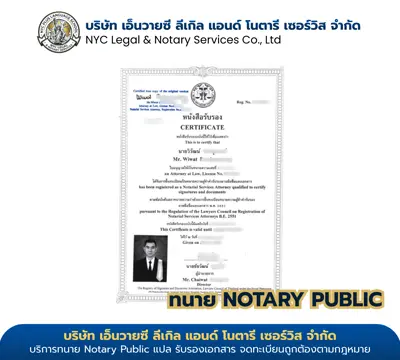
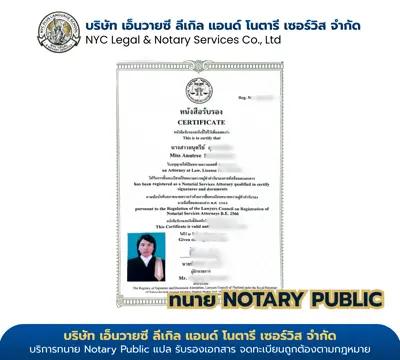
By granting a power of attorney to a representative to act at the land transport office. A power of attorney signed abroad is a private document, so the signature should first be certified by the competent officer in the country of signing and then legalised at a Royal Thai Embassy or Consulate-General there so Thai authorities accept it. If signed in Thailand, a notarial services attorney can certify the signature. Confirm the wording and form the land transport office accepts in advance.
›[Cross-border]What paperwork is needed to take a private vehicle abroad?
Generally proof of ownership or right of possession, outbound and inbound customs clearance documents, insurance covering the destination country, a Thai licence with the correct IDP type for that country, and in some countries a temporary importation document such as a Carnet de Passages en Douane. Check requirements with the Thai Customs Department and the destination country's authorities before departure.
›[Cross-border]Is a Thai licence enough for driving across ASEAN borders?
It depends on the destination country's agreements and domestic rules. Several countries in the region accept Thai licences under regional or bilateral arrangements, while others still require an IDP or a certified translation, and cross-border motor insurance is treated separately from domestic cover. Check with the border checkpoint and the destination transport authority before every trip.
›[Insurance and accidents]What accident documents are needed for an overseas insurance claim?
Usually the police daily record or proof of reporting the incident, a damage report and repair invoices, the policy documents and a letter from the insurer, and a medical certificate if anyone was injured. Official documents should be copies certified by the issuing authority, while documents from private companies are private documents whose signatures usually need certification before entering the legalisation chain.
›[Driving record]Where can I obtain a driving-licence history certificate?
File the request at the land transport office that holds your licence records; the Department of Land Transport issues evidence relating to driving licence history. Insurers and overseas vehicle-registration authorities often request it to calculate no-claim discounts or to credit driving experience. For overseas use, obtain a certified translation and then follow whatever legalisation chain the receiving authority requires.
›[Legalisation chain]What is the order of certification for transport documents used abroad?
Generally: (1) obtain the original or a copy certified by the issuing authority; (2) prepare the translation in the language the receiving authority requires, with a translator's certification; (3) for private documents, have the signature certified by a notarial services attorney registered with the Lawyers Council of Thailand; (4) file for legalisation at the Legalisation Division, Department of Consular Affairs; and (5) obtain an apostille if the destination is a party to the Apostille Convention, which entered into force for Thailand on 2 December 2025, or otherwise obtain legalisation at that country's embassy in Thailand.
›[Legalisation chain]Does an IDP need an apostille?
In principle no, because an IDP is issued in the form prescribed by the road-traffic convention and takes effect under that convention in states party to it. Apostilles apply where a receiving authority wants proof of authenticity of other Thai public documents, such as a certified copy of a vehicle registration book or a licence-history certificate. If in doubt, ask the receiving authority for its requirement in writing first.
›[Common pitfalls]Why are transport documents most often refused?
Common causes: choosing the wrong convention for the destination; a Thai licence that expires before or during the trip; failing to carry the original Thai licence with the IDP; a name spelling in the translation that differs from the passport; an incomplete translation that omits reverse-side content or vehicle-category restrictions; using an uncertified copy; and performing the legalisation steps out of order, which forces the chain to be restarted.
›[Common pitfalls]My Thai licence spells my name differently from my passport. What should I do?
Fix it at source where possible by asking the registrar to align the record with your civil registration records and passport. If that cannot be done in time, have the translator state the transliteration used and add a clear note about the spelling difference, and attach identity evidence such as a passport copy and civil registration documents so the receiving officer can link the records to one person.
›[Verification]Where can I verify current IDP requirements?
Official sources are the Department of Land Transport (dlt.go.th) for application conditions, party-country lists and required documents; the Department of Consular Affairs (consular.mfa.go.th) for legalisation and apostilles; the HCCH website (hcch.net) for Apostille Convention status; and the destination country's vehicle-registration authority for licence-recognition rules. This page is general information — confirm with official sources on the day you file.
›[Contact]How do I ask about fees and turnaround times?
We do not publish service fees or government fees on the website: government fees are set by state agencies and revised from time to time, and translation and certification work depends on page count, language, number of sets and the certification route the receiving authority requires. Please contact our staff by phone, LINE or email with images of your documents and the destination country so we can assess accurately.
›[Scope]Are you an agent of the Department of Land Transport?
No. We are a private provider of certified translation, signature and document certification by notarial services attorneys, and document coordination for consular legalisation. We are not a government agency, we are not appointed by any authority, and we cannot guarantee any authority's decision or processing time.