›[พื้นฐาน]บริการเอกสารทางการแพทย์และประกันสุขภาพของเราครอบคลุมอะไรบ้าง?
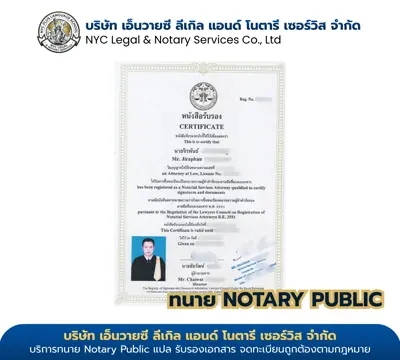
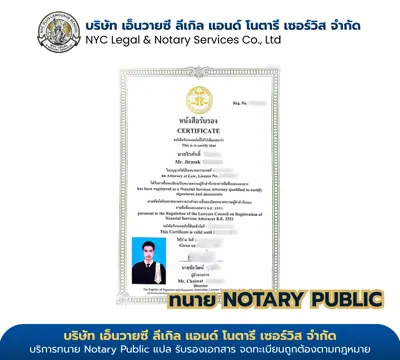
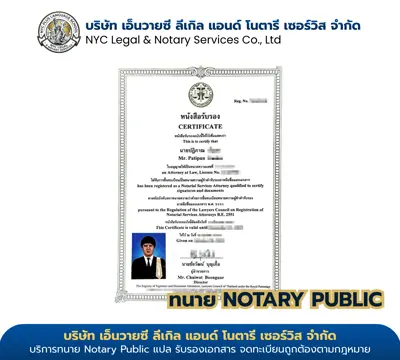
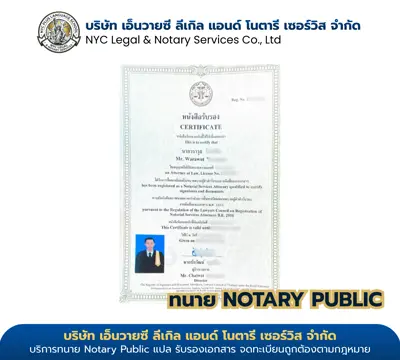
ครอบคลุมการแปลและงานรับรองเอกสารกลุ่มสุขภาพ ได้แก่ ใบรับรองแพทย์ ประวัติการรักษาและเวชระเบียน ใบสรุปการจำหน่ายผู้ป่วย (discharge summary) ผลตรวจทางห้องปฏิบัติการ ผลเอกซเรย์และรายงานภาพวินิจฉัย สมุดวัคซีนและหนังสือรับรองการฉีดวัคซีน ใบสั่งยาและหนังสือรับรองการนำยาส่วนตัวติดตัว หนังสือรับรองความพิการ หนังสือรับรอง fit-to-fly หนังสือรับรองการเกิด (ท.ร.1/1) และหนังสือรับรองการตาย (ท.ร.4/1) ที่ออกโดยสถานพยาบาล กรมธรรม์ประกันสุขภาพและประกันการเดินทาง เอกสารเคลมและใบเสร็จค่ารักษา รวมถึงเอกสารสิทธิประกันสังคม พร้อมขั้นตอนรับรองลายมือชื่อโดยทนายความผู้ทำคำรับรองลายมือชื่อและเอกสาร นิติกรณ์กรมการกงสุล และ Apostille ค่าบริการสอบถามเจ้าหน้าที่ทางโทรศัพท์ LINE หรืออีเมล
›[พื้นฐาน]เอกสารทางการแพทย์ของไทยต้องผ่านกี่ขั้นตอนก่อนใช้ในต่างประเทศ?
โดยทั่วไปสี่ขั้นตอนเรียงกัน (1) ขอเอกสารฉบับที่สถานพยาบาลออกให้ มีลายมือชื่อแพทย์ผู้ตรวจ เลขที่ใบอนุญาตประกอบวิชาชีพเวชกรรม และตราประทับของสถานพยาบาล (2) แปลเป็นภาษาที่ปลายทางกำหนด พร้อมคำรับรองคำแปล คงค่าผลตรวจ หน่วยวัด และวันที่ตรงกับต้นฉบับ (3) รับรองลายมือชื่อตามที่ปลายทางกำหนด ซึ่งเอกสารจากโรงพยาบาลเอกชนมักต้องผ่านการรับรองลายมือชื่อโดยทนายความผู้ทำคำรับรองลายมือชื่อและเอกสารก่อน แล้วจึงยื่นนิติกรณ์ที่กองสัญชาติและนิติกรณ์ กรมการกงสุล และ (4) ขอ Apostille หากปลายทางเป็นภาคีอนุสัญญา ซึ่งมีผลกับประเทศไทยตั้งแต่ 2 ธันวาคม 2568 หรือรับรองต่อที่สถานทูตปลายทางหากไม่ใช่ประเทศภาคี
›[พื้นฐาน]นิติกรณ์และ Apostille รับรองอะไรในเอกสารการแพทย์?
รับรองเฉพาะความถูกต้องแท้จริงของลายมือชื่อ ตำแหน่งของผู้ลงนาม และตราประทับบนเอกสารเท่านั้น ไม่ได้รับรองผลการวินิจฉัย ค่าผลตรวจ หรือข้อเท็จจริงทางการแพทย์ที่ปรากฏในเอกสาร ตามหลักการของอนุสัญญา Apostille (hcch.net) ดังนั้นหน่วยงานปลายทางยังมีอำนาจพิจารณาความน่าเชื่อถือของเนื้อหาและอาจขอให้ตรวจซ้ำกับแพทย์ที่ปลายทางกำหนดเอง
›[ใบรับรองแพทย์]ใบรับรองแพทย์ที่ใช้ยื่นต่างประเทศต้องมีองค์ประกอบอะไรบ้าง?
ควรมีชื่อ-นามสกุลผู้รับการตรวจสะกดตรงกับหนังสือเดินทาง เลขประจำตัวประชาชนหรือเลขหนังสือเดินทาง วันที่ตรวจ ชื่อสถานพยาบาลและที่อยู่ ผลการตรวจหรือข้อความรับรองที่ชัดเจน ลายมือชื่อแพทย์พร้อมชื่อ-นามสกุลตัวบรรจง เลขที่ใบอนุญาตประกอบวิชาชีพเวชกรรม (ว.) และตราประทับสถานพยาบาล หากขาดเลขใบอนุญาตหรือตราประทับ หน่วยงานปลายทางและกรมการกงสุลอาจไม่รับดำเนินการต่อ
›[ใบรับรองแพทย์]ใบรับรองแพทย์มีอายุการใช้งานเท่าไร?
ไม่มีอายุตายตัวตามกฎหมายไทยฉบับใดฉบับหนึ่ง แต่หน่วยงานปลายทางเป็นผู้กำหนดเอง โดยทั่วไปหน่วยงานราชการ สถานทูต และนายจ้างมักกำหนดให้ใบรับรองแพทย์ออกใหม่ไม่เกิน 1–3 เดือน และผลตรวจเฉพาะโรคบางรายการอาจกำหนดสั้นกว่านั้น จึงควรตรวจสอบ checklist ฉบับล่าสุดของปลายทางก่อนเข้ารับการตรวจ เพื่อไม่ให้เอกสารหมดอายุระหว่างรอขั้นตอนแปลและรับรอง
›[ใบรับรองแพทย์]ใบรับรองแพทย์ภาษาอังกฤษที่โรงพยาบาลออกให้ ยังต้องแปลอีกหรือไม่?
หากปลายทางรับภาษาอังกฤษและเอกสารเป็นภาษาอังกฤษทั้งฉบับ รวมถึงข้อความในตราประทับ ก็มักไม่ต้องแปลซ้ำ แต่หากมีตราประทับ หัวกระดาษ หรือข้อความบางส่วนเป็นภาษาไทย ต้องแปลส่วนนั้นด้วย และหากปลายทางใช้ภาษาอื่น เช่น เยอรมัน ฝรั่งเศส ญี่ปุ่น จีน หรือเกาหลี ต้องแปลเป็นภาษานั้นตามที่กำหนด กรณีเอกสารต้องผ่านนิติกรณ์กรมการกงสุล โดยทั่วไปกรมการกงสุลรับรองคู่เอกสารไทย-อังกฤษ จึงควรยืนยันรูปแบบกับเจ้าหน้าที่ก่อน
›[เวชระเบียน]ขอสำเนาเวชระเบียนและประวัติการรักษาจากโรงพยาบาลได้อย่างไร?
ยื่นคำร้องขอสำเนาเวชระเบียนที่เวชระเบียนหรือศูนย์ลูกค้าสัมพันธ์ของสถานพยาบาล พร้อมบัตรประจำตัวประชาชนหรือหนังสือเดินทางของเจ้าของประวัติ หากให้ผู้อื่นดำเนินการแทนต้องมีหนังสือมอบอำนาจและสำเนาบัตรของทั้งสองฝ่าย เนื่องจากข้อมูลด้านสุขภาพเป็นความลับส่วนบุคคลตามมาตรา 7 แห่งพระราชบัญญัติสุขภาพแห่งชาติ พ.ศ. 2550 และเป็นข้อมูลอ่อนไหวตามมาตรา 26 แห่งพระราชบัญญัติคุ้มครองข้อมูลส่วนบุคคล พ.ศ. 2562 สถานพยาบาลจึงต้องตรวจสอบตัวตนและความยินยอมก่อนออกสำเนา
›[เวชระเบียน]เวชระเบียนที่เขียนด้วยลายมือหรือใช้คำย่อทางการแพทย์ แปลได้หรือไม่?
แปลได้ แต่ต้องอ่านต้นฉบับออกอย่างชัดเจน หากลายมือกำกวมหรือคำย่อคลุมเครือ แนวปฏิบัติที่ถูกต้องคือขอให้สถานพยาบาลออกใบสรุปประวัติการรักษา (medical summary) หรือ discharge summary แบบพิมพ์ให้แทน แล้วแปลจากฉบับพิมพ์ ผู้แปลต้องไม่เดาความหมายหรือเติมข้อมูลที่ไม่ปรากฏในต้นฉบับ และควรคงคำย่อเดิมพร้อมคำเต็มในวงเล็บเมื่อยืนยันความหมายได้จากบริบทของเอกสาร
›[เวชระเบียน]ประวัติการรักษาที่มีหลายสิบหน้า ต้องแปลทั้งหมดหรือไม่?
ขึ้นอยู่กับข้อกำหนดของปลายทาง บางกรณีต้องแปลครบทุกหน้าเพื่อความสมบูรณ์ของสำนวน บางกรณียอมรับใบสรุปประวัติที่แพทย์ลงนาม หากปลายทางระบุว่าต้องแปลทั้งฉบับ ห้ามคัดเฉพาะบางหน้า เพราะการแปลไม่ครบถือเป็นเอกสารไม่สมบูรณ์และเป็นเหตุให้ถูกปฏิเสธ ควรส่งสารบัญหรือภาพถ่ายทุกหน้าให้เจ้าหน้าที่ประเมินขอบเขตงานก่อนเริ่ม
›[วัคซีน]สมุดวัคซีนและ ICVP (เล่มเหลือง) ต่างกันอย่างไร?
สมุดบันทึกวัคซีนของไทยเป็นบันทึกการได้รับวัคซีนทั่วไปที่สถานพยาบาลออกให้ ส่วน ICVP (International Certificate of Vaccination or Prophylaxis) เป็นแบบฟอร์มตามภาคผนวก 6 ของกฎอนามัยระหว่างประเทศ IHR (2005) ขององค์การอนามัยโลก ใช้รับรองวัคซีนที่มีผลระหว่างประเทศ เช่น ไข้เหลือง โดยต้องออกและประทับตราจากสถานพยาบาลหรือหน่วยงานที่ได้รับอนุญาต บางประเทศยอมรับ ICVP โดยไม่ต้องแปล แต่หากใช้สมุดวัคซีนไทยมักต้องแปลและรับรองคำแปล
›[วัคซีน]แปลสมุดวัคซีนต้องระวังอะไรเป็นพิเศษ?
ต้องคงชื่อวัคซีน ชื่อการค้า เลขที่ล็อต (lot number) วันที่ฉีดแต่ละเข็ม จำนวนโดส และชื่อผู้ให้บริการให้ตรงกับต้นฉบับทุกตัวอักษร ห้ามแปลงรูปแบบวันที่โดยไม่ระบุรูปแบบ ควรแปลงปี พ.ศ. เป็น ค.ศ. อย่างสม่ำเสมอและระบุไว้ในหมายเหตุผู้แปล และแปลข้อความในตราประทับด้วย ความคลาดเคลื่อนของวันที่หรือเลขล็อตเป็นสาเหตุที่พบบ่อยที่สุดที่ทำให้หน่วยงานสาธารณสุขปลายทางตีกลับเอกสาร
›[ตรวจสุขภาพวีซ่า]การตรวจสุขภาพเพื่อยื่นวีซ่าต้องตรวจกับโรงพยาบาลใดก็ได้หรือไม่?
ไม่ได้ในหลายกรณี ประเทศที่กำหนดการตรวจสุขภาพผู้ย้ายถิ่น เช่น ออสเตรเลีย นิวซีแลนด์ แคนาดา สหรัฐอเมริกา และสหราชอาณาจักร กำหนดให้ตรวจกับ panel physician หรือคลินิกที่หน่วยงานตรวจคนเข้าเมืองของประเทศนั้นรับรองเท่านั้น และผลตรวจมักถูกส่งเข้าระบบอิเล็กทรอนิกส์โดยตรงถึงหน่วยงาน ผู้สมัครจึงไม่ต้องแปลหรือรับรองผลเอง ควรตรวจสอบรายชื่อคลินิกที่ได้รับอนุญาตจากเว็บไซต์ทางการของประเทศปลายทางก่อนเสมอ
›[ตรวจสุขภาพวีซ่า]กรณีใดที่ต้องแปลผลตรวจสุขภาพเอง?
กรณีที่ปลายทางไม่มีระบบ panel physician หรือรับผลตรวจจากสถานพยาบาลทั่วไป เช่น การยื่นขอใบอนุญาตทำงานบางประเทศ การสมัครเรียน การขอใบประกอบวิชาชีพ การสมัครงานกับนายจ้างต่างชาติ หรือการยื่นเอกสารประกอบการขอวีซ่าประเภทที่ระบุให้แนบใบรับรองแพทย์ กรณีเหล่านี้ต้องแปลพร้อมคำรับรองคำแปล และอาจต้องรับรองนิติกรณ์หรือ Apostille ตามที่ปลายทางกำหนด
›[ผลแล็บ]ผลตรวจทางห้องปฏิบัติการที่มีค่าอ้างอิงและหน่วยวัด แปลอย่างไรให้ถูกต้อง?
คงตัวเลขผลตรวจ ค่าอ้างอิง (reference range) และหน่วยวัดตามต้นฉบับทุกประการ ห้ามแปลงหน่วย ห้ามปัดเศษ และห้ามตีความว่าผลปกติหรือผิดปกติเกินกว่าที่ต้นฉบับระบุ ชื่อรายการตรวจควรใช้ศัพท์มาตรฐานสากลและคงคำย่อเดิมไว้ เช่น HbA1c, eGFR หากจำเป็นต้องอธิบายเพิ่มให้ใส่เป็นหมายเหตุผู้แปลแยกจากเนื้อความ เพื่อไม่ให้ปะปนกับข้อความที่แพทย์รับรอง
›[ยาและใบสั่งยา]นำยาประจำตัวติดตัวไปต่างประเทศต้องมีเอกสารอะไร?
โดยทั่วไปควรมีใบสั่งยาหรือหนังสือรับรองจากแพทย์ระบุชื่อผู้ป่วย ชื่อสามัญทางยา (generic name) ขนาดยา ปริมาณที่นำติดตัว และเหตุผลทางการแพทย์ พร้อมแปลเป็นภาษาที่ปลายทางกำหนด เนื่องจากบางประเทศควบคุมยาบางชนิดเข้มงวดกว่าประเทศไทย และยาที่ซื้อได้ทั่วไปในไทยอาจเป็นยาควบคุมที่ปลายทาง ควรตรวจสอบกฎการนำยาเข้าประเทศจากเว็บไซต์ทางการของศุลกากรหรือหน่วยงานยาของประเทศนั้นก่อนเดินทางเสมอ ทั้งนี้เราให้บริการด้านเอกสารและการแปล ไม่ใช่คำแนะนำทางการแพทย์
›[ความพิการ/เดินทาง]หนังสือรับรอง fit-to-fly กับใบรับรองแพทย์ทั่วไปต่างกันอย่างไร?
fit-to-fly เป็นหนังสือที่แพทย์รับรองว่าผู้โดยสารมีสภาพร่างกายเหมาะสมต่อการเดินทางโดยอากาศยานในช่วงเวลาที่ระบุ มักต้องออกภายในกรอบเวลาสั้นก่อนวันเดินทางตามที่สายการบินกำหนด ส่วนใบรับรองแพทย์ทั่วไปรับรองภาวะสุขภาพหรือผลตรวจโดยไม่ผูกกับการเดินทาง เงื่อนไขรูปแบบและอายุเอกสารกำหนดโดยสายการบินแต่ละแห่ง จึงควรขอแบบฟอร์มหรือข้อกำหนดจากสายการบินก่อนเข้าพบแพทย์
›[ความพิการ/เดินทาง]บัตรประจำตัวคนพิการและหนังสือรับรองความพิการใช้แทนกันได้หรือไม่?
ไม่เสมอไป บัตรประจำตัวคนพิการออกตามพระราชบัญญัติส่งเสริมและพัฒนาคุณภาพชีวิตคนพิการ พ.ศ. 2550 เพื่อใช้สิทธิภายในประเทศ ส่วนเอกสารที่ปลายทางต่างประเทศต้องการมักเป็นหนังสือรับรองความพิการหรือใบรับรองแพทย์ที่ระบุประเภทและระดับความบกพร่องพร้อมเหตุผลทางการแพทย์ หากปลายทางไม่ระบุชัดเจน แนวปฏิบัติที่ปลอดภัยคือเตรียมทั้งสองฉบับพร้อมคำแปลรับรอง
›[เกิด/ตาย]หนังสือรับรองการเกิดจากโรงพยาบาล (ท.ร.1/1) ใช้แทนสูติบัตรได้หรือไม่?
ไม่ได้ ท.ร.1/1 เป็นหนังสือรับรองการเกิดที่สถานพยาบาลออกให้เพื่อใช้ประกอบการแจ้งเกิดต่อนายทะเบียนตามพระราชบัญญัติการทะเบียนราษฎร พ.ศ. 2534 ส่วนสูติบัตร (ท.ร.1, ท.ร.2, ท.ร.3) เป็นเอกสารทะเบียนราษฎรที่นายทะเบียนออกให้และเป็นฉบับที่หน่วยงานต่างประเทศต้องการ หากใช้เพื่อยื่นต่างประเทศควรใช้สูติบัตรหรือใบรับรองรายการทะเบียนคนเกิดที่สำนักทะเบียนออกให้ แล้วจึงแปลและรับรองตามลำดับ
›[เกิด/ตาย]หนังสือรับรองการตายจากโรงพยาบาล (ท.ร.4/1) กับใบมรณบัตรใช้ต่างกันอย่างไร?
ท.ร.4/1 เป็นหนังสือรับรองการตายที่สถานพยาบาลออกเพื่อใช้แจ้งการตายต่อนายทะเบียน ส่วนมรณบัตรเป็นเอกสารทะเบียนราษฎรที่นายทะเบียนออกให้ ซึ่งเป็นฉบับที่ใช้ดำเนินการทางกฎหมายในต่างประเทศ เช่น การจัดการมรดก การเคลมประกันชีวิต หรือการแจ้งสถานะต่อหน่วยงานต่างประเทศ กรณีต้องระบุสาเหตุการตายทางการแพทย์ ปลายทางอาจขอ ท.ร.4/1 หรือหนังสือรับรองแพทย์เพิ่มเติมควบคู่กับมรณบัตร
›[ประกันสุขภาพ]กรมธรรม์ประกันสุขภาพหรือประกันการเดินทางที่ยื่นขอวีซ่า ต้องแปลหรือไม่?
ขึ้นอยู่กับปลายทาง หลายบริษัทประกันในไทยออกหนังสือรับรองความคุ้มครองเป็นภาษาอังกฤษให้อยู่แล้ว ซึ่งมักใช้ได้โดยไม่ต้องแปลซ้ำ แต่หากกรมธรรม์เป็นภาษาไทยหรือปลายทางใช้ภาษาอื่น ต้องแปลส่วนที่ระบุชื่อผู้เอาประกัน เลขที่กรมธรรม์ ระยะเวลาคุ้มครอง วงเงินความคุ้มครอง และขอบเขตความคุ้มครองค่ารักษาพยาบาลให้ครบถ้วน ทั้งนี้เงื่อนไขวงเงินขั้นต่ำและช่วงเวลาคุ้มครองกำหนดโดยสถานทูตหรือหน่วยงานปลายทาง ต้องตรวจสอบ checklist ล่าสุดก่อนซื้อกรมธรรม์
›[ประกันสุขภาพ]ธุรกิจประกันภัยในไทยอยู่ภายใต้การกำกับของหน่วยงานใด?
สำนักงานคณะกรรมการกำกับและส่งเสริมการประกอบธุรกิจประกันภัย (คปภ. / OIC, oic.or.th) เป็นหน่วยงานกำกับดูแลธุรกิจประกันชีวิตและประกันวินาศภัยในประเทศไทย ผู้ถือกรมธรรม์สามารถตรวจสอบสถานะของบริษัทประกันและช่องทางร้องเรียนได้จากเว็บไซต์ของ คปภ. ข้อมูลนี้มีประโยชน์เมื่อหน่วยงานต่างประเทศขอหลักฐานว่าบริษัทผู้ออกกรมธรรม์เป็นผู้ประกอบธุรกิจที่ได้รับอนุญาตในประเทศไทย
›[เคลมประกัน]เอกสารเคลมประกันสุขภาพที่ต้องใช้กับบริษัทประกันต่างประเทศมีอะไรบ้าง?
โดยทั่วไปประกอบด้วยใบรับรองแพทย์ระบุการวินิจฉัยและการรักษา ใบสรุปค่าใช้จ่ายหรือใบแจ้งหนี้แยกรายการ ใบเสร็จรับเงินตัวจริง ผลตรวจที่เกี่ยวข้อง และแบบฟอร์มเคลมของบริษัทประกัน เอกสารเหล่านี้มักต้องแปลพร้อมคำรับรองคำแปล และบางบริษัทกำหนดให้แพทย์กรอกแบบฟอร์มของบริษัทโดยตรง ควรขอรายการเอกสารอย่างเป็นทางการจากบริษัทประกันก่อน เพื่อไม่ให้เสียเวลาแปลเอกสารที่ไม่ถูกใช้
›[เคลมประกัน]ใบเสร็จค่ารักษาพยาบาลที่มีตัวเลขจำนวนมาก แปลอย่างไรไม่ให้ผิด?
ต้องคงรายการทุกบรรทัด จำนวนเงินทุกหลัก และยอดรวมให้ตรงกับต้นฉบับ ระบุสกุลเงินเป็นรหัสสากล เช่น THB ห้ามแปลงเป็นสกุลอื่นหรือปัดเศษ หากมีส่วนลดหรือส่วนที่สิทธิอื่นชำระแล้วต้องแสดงตามที่ปรากฏ และแปลข้อความในตราประทับของสถานพยาบาลด้วย ตัวเลขที่ไม่ตรงระหว่างคำแปลกับต้นฉบับเป็นเหตุให้บริษัทประกันปฏิเสธการเคลมหรือขอเอกสารใหม่
›[ประกันสังคม]เอกสารสิทธิประกันสังคมใช้ยื่นต่างประเทศได้หรือไม่?
ใช้ได้ในกรณีที่ปลายทางต้องการหลักฐานประวัติการทำงาน การส่งเงินสมทบ หรือสิทธิการรักษาพยาบาลในประเทศไทย เช่น หนังสือรับรองการเป็นผู้ประกันตนหรือประวัติการส่งเงินสมทบที่สำนักงานประกันสังคม (sso.go.th) ออกให้ตามพระราชบัญญัติประกันสังคม พ.ศ. 2533 เอกสารกลุ่มนี้เป็นเอกสารราชการ จึงมักนำไปแปลและยื่นนิติกรณ์กรมการกงสุลได้โดยตรงโดยไม่ต้องผ่านการรับรองลายมือชื่อของทนายความก่อน แต่ควรยืนยันขั้นตอนกับเจ้าหน้าที่ทุกครั้ง
›[ความเป็นส่วนตัว]ข้อมูลสุขภาพของผู้ใช้บริการถูกคุ้มครองอย่างไร?
ข้อมูลด้านสุขภาพของบุคคลเป็นความลับส่วนบุคคลตามมาตรา 7 แห่งพระราชบัญญัติสุขภาพแห่งชาติ พ.ศ. 2550 และเป็นข้อมูลส่วนบุคคลอ่อนไหวตามมาตรา 26 แห่งพระราชบัญญัติคุ้มครองข้อมูลส่วนบุคคล พ.ศ. 2562 การประมวลผลจึงต้องมีฐานทางกฎหมาย เช่น ความยินยอมโดยชัดแจ้งของเจ้าของข้อมูล ในทางปฏิบัติเราจำกัดการเข้าถึงเอกสารเฉพาะผู้แปลและผู้ตรวจทานที่รับผิดชอบงานนั้น ใช้ข้อตกลงรักษาความลับ และส่งคืนหรือทำลายไฟล์ตามระยะเวลาที่ตกลงกับผู้ใช้บริการ
›[ความเป็นส่วนตัว]ให้ญาติหรือผู้อื่นดำเนินการเรื่องเอกสารการแพทย์แทนได้หรือไม่?
ได้ แต่ต้องมีหนังสือมอบอำนาจหรือหนังสือยินยอมจากเจ้าของประวัติ พร้อมสำเนาบัตรประจำตัวประชาชนหรือหนังสือเดินทางของทั้งผู้มอบและผู้รับมอบ เนื่องจากสถานพยาบาลมีหน้าที่ตรวจสอบความยินยอมก่อนเปิดเผยข้อมูลสุขภาพ กรณีผู้ป่วยเป็นผู้เยาว์ให้ผู้ใช้อำนาจปกครองดำเนินการ กรณีผู้ป่วยเสียชีวิตแล้ว สถานพยาบาลจะพิจารณาตามระเบียบภายในและความเกี่ยวข้องทางกฎหมายของผู้ร้องขอ
›[รับรอง/นิติกรณ์]เอกสารจากโรงพยาบาลเอกชนกับโรงพยาบาลรัฐ มีขั้นตอนรับรองต่างกันหรือไม่?
ต่างกันได้ในทางปฏิบัติ เอกสารจากสถานพยาบาลของรัฐมีสถานะใกล้เคียงเอกสารราชการและมักยื่นนิติกรณ์ที่กรมการกงสุลได้โดยตรง ส่วนเอกสารจากโรงพยาบาลเอกชนเป็นเอกสารเอกชน หลายกรณีจึงต้องผ่านการรับรองลายมือชื่อผู้ลงนามโดยทนายความผู้ทำคำรับรองลายมือชื่อและเอกสารที่ขึ้นทะเบียนกับสภาทนายความก่อน จึงจะยื่นนิติกรณ์ต่อได้ ทั้งนี้แนวปฏิบัติอาจปรับเปลี่ยน ควรยืนยันกับกองสัญชาติและนิติกรณ์ก่อนดำเนินการ
›[รับรอง/นิติกรณ์]ประเทศปลายทางไม่ใช่ภาคี Apostille ต้องทำอย่างไร?
ใช้เส้นทางรับรองแบบเดิม คือ แปลและรับรองคำแปล ยื่นนิติกรณ์รับรองที่กองสัญชาติและนิติกรณ์ กรมการกงสุล แล้วนำไปรับรองต่อที่สถานเอกอัครราชทูตหรือสถานกงสุลของประเทศปลายทางซึ่งประจำอยู่ในประเทศไทย ขั้นตอน เอกสารประกอบ และการนัดหมายกำหนดโดยสถานทูตแต่ละแห่ง ต้องตรวจสอบจากเว็บไซต์ทางการของสถานทูตนั้นโดยตรง
›[ออสเตรเลีย/NAATI]ยื่นเอกสารการแพทย์ให้หน่วยงานออสเตรเลีย ต้องใช้นักแปล NAATI หรือไม่?
หน่วยงานราชการออสเตรเลียโดยทั่วไปกำหนดให้เอกสารที่ไม่ใช่ภาษาอังกฤษต้องมาพร้อมคำแปลจากนักแปลที่ได้รับการรับรองจาก NAATI สำหรับผู้แปลที่อยู่ในออสเตรเลีย ส่วนคำแปลที่จัดทำนอกออสเตรเลียต้องระบุชื่อ ที่อยู่ และรายละเอียดคุณสมบัติของผู้แปลกำกับไว้ในคำแปล ข้อกำหนดจริงแตกต่างกันตามหน่วยงานและประเภทคำขอ จึงควรอ่านข้อกำหนดของหน่วยงานที่รับเอกสารประกอบกับข้อมูลของ NAATI (naati.com.au) ก่อนสั่งงานแปล
›[ติดต่อ]ค่าบริการและระยะเวลาดำเนินการเท่าไร ติดต่ออย่างไร?
เราไม่ประกาศอัตราค่าบริการไว้ในหน้านี้ เพราะขึ้นอยู่กับจำนวนหน้า ความซับซ้อนของศัพท์เฉพาะทาง ภาษาปลายทาง และขั้นตอนรับรองที่ปลายทางกำหนด ส่วนค่าธรรมเนียมราชการเป็นไปตามอัตราที่หน่วยงานกำหนดและอาจเปลี่ยนแปลง กรุณาส่งภาพถ่ายหน้าเอกสารและระบุประเทศหรือหน่วยงานปลายทางมาให้เจ้าหน้าที่ทางโทรศัพท์ LINE หรืออีเมล เพื่อประเมินขอบเขตงานและกรอบเวลาที่ถูกต้องเป็นรายกรณี
›[Basics]Which Thai medical and health-insurance documents do you handle?
Medical certificates, hospital medical records and discharge summaries, laboratory results, X-ray and imaging reports, vaccination books and immunisation certificates, prescriptions and letters for carrying personal medication, disability certificates, fitness-to-travel and fit-to-fly letters, hospital birth notifications (T.R.1/1) and death notifications (T.R.4/1), health and travel insurance policies, claim documents, medical receipts and billing summaries, and Thai social-security entitlement documents. We also arrange signature certification by a Thai notarial services attorney, legalisation at the Department of Consular Affairs and apostille. Fees are quoted case by case by phone, LINE or email.
›[Basics]What are the steps before a Thai medical document can be used abroad?
Usually four, in sequence: (1) obtain the document as issued by the hospital, signed by the examining physician with the medical licence number and the hospital seal; (2) have it translated into the language the receiving authority requires, with a translator certification, keeping every value, unit and date identical to the original; (3) obtain the signature certification the destination requires — private-hospital documents commonly need certification by a Thai notarial services attorney first, then legalisation by the Nationality and Legalisation Division of the Department of Consular Affairs; and (4) obtain an apostille if the destination is a Convention party (in force for Thailand since 2 December 2025), or embassy legalisation if it is not.
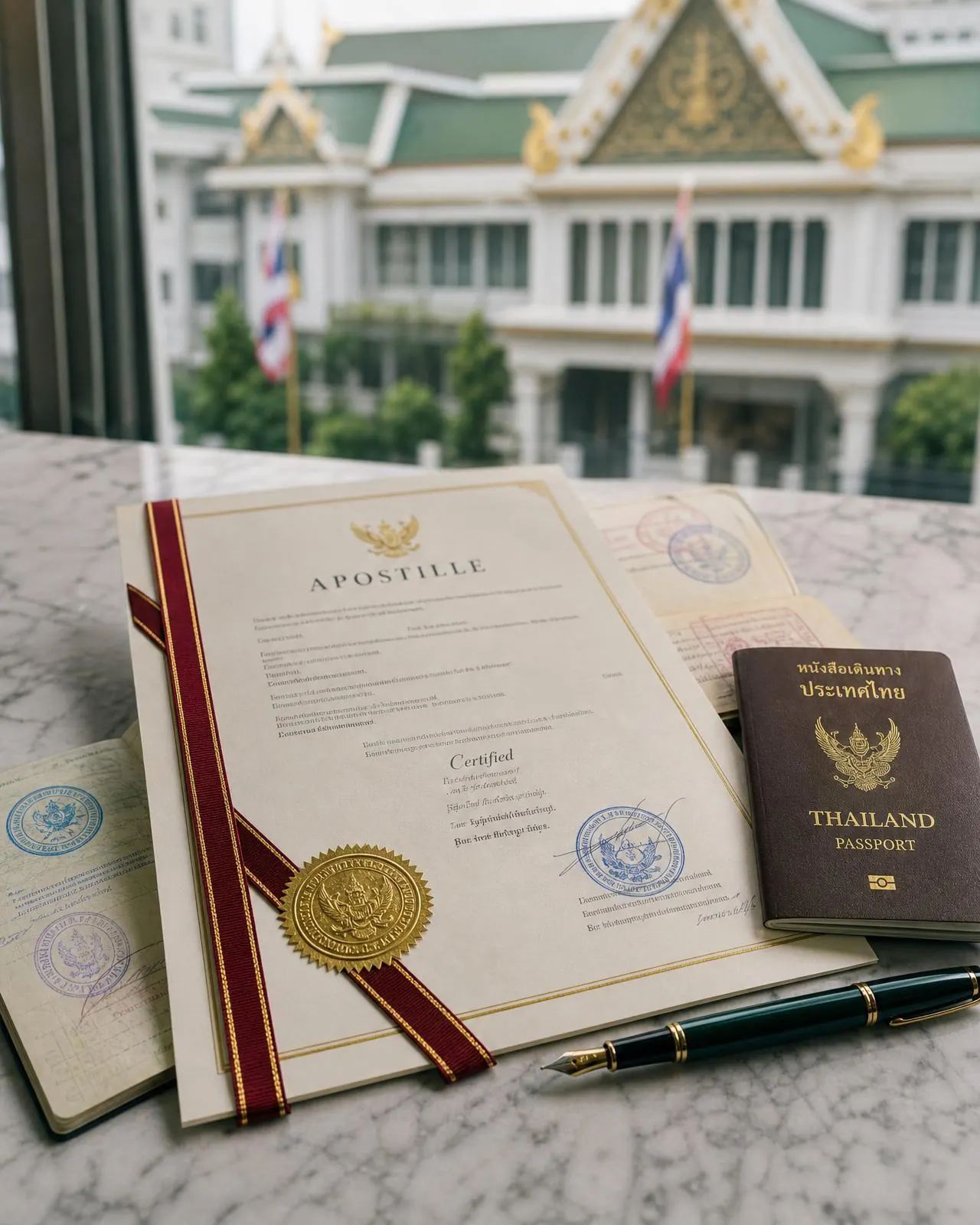
›[Basics]What does an apostille actually certify on a medical document?
Only the authenticity of the signature, the capacity of the signatory and the seal or stamp on the document. It does not certify a diagnosis, a test value or any medical fact stated in the document. The receiving authority therefore keeps full discretion over the content and may still require a fresh examination by a physician it designates.
›[Medical certificate]What must a Thai medical certificate contain for overseas use?
The patient's full name spelled exactly as in the passport, the national ID or passport number, the examination date, the hospital name and address, a clear statement of findings, the physician's signature with the name in block letters, the medical licence number issued under the Medical Profession Act, and the hospital seal. Without the licence number or the seal, both the receiving authority and the Department of Consular Affairs may decline to process the document further.
›[Medical certificate]How long is a Thai medical certificate valid?
No single Thai statute fixes a validity period; the receiving authority sets it. In practice government bodies, embassies and employers commonly require a certificate issued within the last one to three months, and specific disease screenings can be shorter. Check the destination's current checklist before the examination so the certificate does not expire while translation and legalisation are still in progress.
›[Medical certificate]The hospital issued the certificate in English — does it still need translation?
If the destination accepts English and the whole document is in English, including the text inside the seals, usually not. If the letterhead, seal or part of the text is in Thai, that part must be translated. If the destination requires another language such as German, French, Japanese, Chinese or Korean, translation into that language is required. Where consular legalisation is involved, the Department of Consular Affairs generally works with Thai-English pairs, so confirm the accepted format with staff first.
›[Medical records]How do I obtain a copy of my Thai hospital medical records?
File a request with the medical-records office or patient-relations office of the hospital, with the patient's national ID card or passport. If someone else acts for the patient, a power of attorney or consent letter plus copies of both parties' ID is required. Personal health information is confidential under s.7 of the National Health Act B.E. 2550 and is sensitive personal data under s.26 of the PDPA B.E. 2562, so the hospital must verify identity and consent before releasing copies.
›[Medical records]Can handwritten records with clinical abbreviations be translated?
Yes, provided the original is legible. Where handwriting or an abbreviation is ambiguous, the correct approach is to ask the hospital for a typed medical summary or discharge summary and translate that. The translator must not guess meanings or add information absent from the original, and should keep the original abbreviation with an expansion in brackets only where the document itself makes the meaning unambiguous.
›[Medical records]My records run to dozens of pages — must everything be translated?
It depends on the destination. Some require a complete translation of every page; others accept a physician-signed summary. Where a full translation is required, selective translation of some pages makes the submission incomplete and is a common ground for refusal. Send the index or photographs of all pages so staff can scope the work before starting.
›[Vaccination]What is the difference between a Thai vaccination book and the ICVP?
A Thai vaccination book is a general immunisation record issued by a health facility. The ICVP (International Certificate of Vaccination or Prophylaxis) is the form set out in Annex 6 of the WHO International Health Regulations (2005), used for vaccinations with international effect such as yellow fever, and must be issued and stamped by an authorised centre. Some countries accept an ICVP without translation, whereas a Thai vaccination book usually needs a certified translation.
›[Vaccination]What needs special care when translating a vaccination record?
Vaccine names, brand names, lot numbers, the date of each dose, the number of doses and the administering provider must match the original character for character. Do not reformat dates without stating the format; convert Buddhist-era to Gregorian years consistently and note the conversion in a translator's note; and translate the text inside the stamps. Date and lot-number discrepancies are the most frequent reason destination health authorities return these documents.
›[Visa medical]Can an immigration medical examination be done at any hospital?
Often not. Countries that require immigration medicals — including Australia, New Zealand, Canada, the United States and the United Kingdom — require the examination at a panel physician or clinic approved by that country's immigration authority, and results are usually transmitted electronically straight to the authority, so the applicant neither translates nor legalises them. Always check the official list of approved clinics on the destination government's website first.
›[Visa medical]When do I have to translate a health check myself?
When the destination has no panel-physician system or accepts results from any licensed facility — for example some work-permit applications, university admissions, professional registration, employment with a foreign employer, or visa categories whose checklist simply asks for a medical certificate. In those cases a certified translation is required, and consular legalisation or an apostille may be required as well.
›[Lab results]How should laboratory results with reference ranges be translated?
Keep the result values, reference ranges and units exactly as printed. Do not convert units, do not round, and do not characterise a result as normal or abnormal beyond what the original states. Use standard international test nomenclature and retain the original abbreviations such as HbA1c or eGFR. Any necessary clarification belongs in a separate translator's note so it is not mixed with the physician's certified text.
›[Medication]What paperwork should accompany personal medication taken abroad?
Generally a prescription or physician's letter stating the patient's name, the generic drug name, the dosage, the quantity carried and the medical reason, translated into the language the destination requires. Some countries control substances far more strictly than Thailand, and a medicine sold over the counter here may be a controlled drug there. Always check the destination customs or medicines-agency website before travelling. We provide document and translation services, not medical advice.
›[Fitness to travel]How does a fit-to-fly letter differ from a general medical certificate?
A fit-to-fly letter is a physician's statement that the passenger is fit for air travel within a stated period, and airlines usually require it to be issued within a short window before departure. A general medical certificate attests to a health condition or test result without reference to travel. Format and validity are set by each airline, so obtain the airline's form or requirements before seeing the physician.
›[Fitness to travel]Is a Thai disability ID card interchangeable with a disability certificate?
Not always. The disability identification card is issued under the Persons with Disabilities Empowerment Act B.E. 2550 for entitlements inside Thailand, whereas foreign authorities usually want a disability certificate or physician's letter stating the type and degree of impairment with the medical basis. Where the destination is not explicit, the safe practice is to prepare both with certified translations.
›[Birth / death]Can a hospital birth notification (T.R.1/1) replace a Thai birth certificate?
No. The T.R.1/1 is issued by the health facility to support birth registration with the registrar under the Civil Registration Act B.E. 2534. The birth certificate (T.R.1, T.R.2 or T.R.3) is the civil-registration document issued by the registrar and is what foreign authorities require. For overseas use, obtain the birth certificate or a certified extract of the birth register from the district office, then translate and legalise it.
›[Birth / death]How do the hospital death notification (T.R.4/1) and the death certificate differ?
The T.R.4/1 is issued by the health facility so the death can be reported to the registrar; the death certificate is the civil-registration document issued by the registrar and is the one used for legal steps abroad such as estate administration, life-insurance claims or status notifications. Where the medical cause of death must be shown, the destination may ask for the T.R.4/1 or an additional physician's statement alongside the death certificate.
›[Insurance policy]Must a Thai health or travel insurance policy be translated for a visa application?
It depends on the destination. Many Thai insurers already issue an English confirmation of cover, which is normally sufficient. If the policy is in Thai or the destination uses another language, translate the parts stating the insured's name, the policy number, the period of cover, the sum insured and the scope of medical cover. Minimum sums insured and required cover periods are set by the embassy or authority concerned, so check the current checklist before buying a policy.
›[Insurance policy]Which authority regulates insurers in Thailand?
The Office of Insurance Commission (OIC, oic.or.th) regulates life and non-life insurance business in Thailand. Policyholders can verify an insurer's status and find complaint channels on the OIC website, which is useful when a foreign authority asks for evidence that the issuing insurer is licensed in Thailand.
›[Claims]What documents does a foreign insurer usually require for a claim?
Typically a medical certificate stating the diagnosis and treatment, an itemised billing summary or invoice, original receipts, relevant test results, and the insurer's own claim form. These usually need certified translations, and some insurers require the treating physician to complete their form directly. Request the insurer's official document list first so you do not pay to translate documents that will not be used.
›[Claims]How should itemised medical receipts be translated?
Every line item, every digit and the grand total must match the original. State the currency using the international code, for example THB; never convert to another currency and never round. Show discounts or amounts already paid by another scheme exactly as printed, and translate the text inside the hospital's stamps. Figures that do not match the original are a standard reason for a claim to be rejected or re-requested.
›[Social security]Can Thai social-security documents be used abroad?
Yes, where the destination wants evidence of employment history, contributions or medical entitlement in Thailand — for example an insured-person certificate or a contribution history issued by the Social Security Office (sso.go.th) under the Social Security Act B.E. 2533. These are official documents, so they can normally be translated and submitted for consular legalisation directly, without prior notarial certification, but confirm the route with staff each time.
›[Privacy]How is my health information protected?
Personal health information is confidential under s.7 of the National Health Act B.E. 2550 and is sensitive personal data under s.26 of the PDPA B.E. 2562, so processing requires a lawful basis such as the data subject's explicit consent. In practice we restrict access to the translator and reviewer assigned to the job, work under confidentiality undertakings, and return or delete files within the period agreed with the client.
›[Privacy]Can a relative handle my medical paperwork for me?
Yes, with a power of attorney or consent letter from the patient plus copies of both parties' national ID card or passport, because the hospital must verify consent before disclosing health information. For a minor, the person with parental authority acts; where the patient has died, the hospital decides according to its internal rules and the requester's legal standing.
›[Legalisation]Do private and public hospital documents follow different certification routes?
In practice they can. Documents from state health facilities are treated as close to official documents and can often be submitted for consular legalisation directly. Private-hospital documents are private documents, so the signatory's signature is commonly certified first by a notarial services attorney registered with the Lawyers Council of Thailand before legalisation. Practice can change, so confirm with the Nationality and Legalisation Division before you start.
›[Legalisation]What if the destination country is not an Apostille Convention party?
Use the traditional chain: certified translation, legalisation by the Nationality and Legalisation Division of the Department of Consular Affairs, then further legalisation at the embassy or consulate of the destination country in Thailand. Each mission sets its own steps, supporting documents and appointment rules, so check that mission's official website directly.
›[Australia / NAATI]Do Australian authorities require a NAATI translator for medical documents?
Australian government agencies generally require non-English documents to be accompanied by a translation from a NAATI-certified translator where the translator is in Australia; translations prepared outside Australia must show the translator's name, address and qualification details on the translation. The exact requirement varies by agency and application type, so read the receiving agency's requirements together with the NAATI information (naati.com.au) before ordering.
›[Contact]What are your fees and turnaround times?
We do not publish rates on this page because they depend on page count, the density of clinical terminology, the target language and the certification chain the destination requires; government fees are set by the agencies concerned and can change. Send photographs of the document pages and state the destination country or authority to our staff by phone, LINE or email for an accurate, case-specific scope and timeline.