›[งานแปลและรูปแบบเอกสาร]ข้อกำหนดทางเทคนิคเรื่องขนาดกระดาษ (A4) และชนิดหมึกพิมพ์สำหรับงานแปลยื่นกงสุลมีอะไรบ้าง?
แนวปฏิบัติทั่วไปคือพิมพ์คำแปลบนกระดาษ A4 สีขาว ตัวอักษรคมชัด อ่านง่าย ใช้หมึกที่ไม่ลบเลือน ไม่ใช้ปากกาเน้นข้อความหรือลบคำผิดด้วยน้ำยาลบ ลงลายมือชื่อผู้แปลด้วยหมึกจริง และแนบสำเนาต้นฉบับที่สแกนชัดทุกหน้า กรมการกงสุลรับรองความถูกต้องของคำแปลตามระเบียบนิติกรณ์ ไม่ได้กำหนดยี่ห้อกระดาษหรือหมึก แต่เอกสารที่พิมพ์จางหรือสำเนาซ้อนสำเนามักถูกตีกลับ ควรยืนยันรูปแบบกับหน่วยงานผู้รับปลายทางก่อนพิมพ์จริง
›[งานแปลและรูปแบบเอกสาร]หนังสือมอบอำนาจทำนิติกรณ์ กงสุล ต้องติดอากรแสตมป์ไหม
หนังสือมอบอำนาจเป็นตราสารที่อยู่ในบัญชีอัตราอากรแสตมป์ตามประมวลรัษฎากร โดยทั่วไปจึงต้องปิดอากรแสตมป์ตามประเภทการมอบอำนาจ (มอบอำนาจเฉพาะการหรือมอบอำนาจทั่วไป) และขีดฆ่าให้เรียบร้อยก่อนใช้ อัตราและเงื่อนไขเป็นไปตามที่กรมสรรพากรกำหนดและอาจเปลี่ยนแปลงได้ จึงควรตรวจสอบกับกรมสรรพากรหรือเจ้าหน้าที่ผู้รับเรื่อง ณ วันที่ยื่น เอกสารที่ปิดอากรไม่ครบมักถูกให้แก้ไขก่อนรับเรื่อง
›[การศึกษาและวิชาชีพ]วุฒิการศึกษาจากมหาวิทยาลัยรัฐ ต้องให้กระทรวงอุดมศึกษาฯ (MHESI) รับรองก่อนไหม
ขึ้นอยู่กับข้อกำหนดของหน่วยงานปลายทาง กรณีทั่วไปที่สถาบันออกใบรับรองพร้อมลายมือชื่อและตราประทับที่ตรวจสอบได้ กรมการกงสุลสามารถรับรองคำแปลได้โดยตรง แต่ปลายทางบางประเทศหรือสภาวิชาชีพบางแห่งขอให้มีการรับรองจากต้นสังกัด เช่น สำนักงานปลัดกระทรวงการอุดมศึกษา วิทยาศาสตร์ วิจัยและนวัตกรรม หรือให้สถาบันส่งเอกสารตรงถึงผู้รับ แนะนำขอรายการเอกสารเป็นลายลักษณ์อักษรจากปลายทางก่อนเริ่มขั้นตอน
›[เอกสารสุขภาพและมาตรฐาน]การรับรองเอกสารใบรับรองการฉีดวัคซีนป้องกันโรคระหว่างประเทศ (Yellow Fever / COVID-19) ต้องทำที่กงสุลไหม
สมุดรับรองการฉีดวัคซีนระหว่างประเทศ (International Certificate of Vaccination หรือ Yellow Book) ที่ออกโดยสถานพยาบาลที่ได้รับมอบหมาย มักใช้ได้เองที่ด่านตรวจคนเข้าเมืองโดยไม่ต้องผ่านนิติกรณ์ แต่หากหน่วยงานปลายทาง เช่น นายจ้าง สถาบันการศึกษา หรือหน่วยงานตรวจคนเข้าเมืองบางประเทศ ขอเป็นเอกสารรับรอง จะต้องแปลและรับรองคำแปลที่กรมการกงสุล แล้วต่อด้วย Apostille สำหรับประเทศภาคี หรือรับรองสถานทูตปลายทางสำหรับประเทศที่ไม่ใช่ภาคี
›[เอกสารสุขภาพและมาตรฐาน]ใบรับรองมาตรฐานการผลิตเครื่องสำอางสากล (ISO 22716 / GMP) ต้องผ่านกงสุลไหม
ใบรับรองมาตรฐานที่ออกโดยหน่วยตรวจรับรองเอกชนไม่ใช่เอกสารราชการ หากปลายทางต้องการเอกสารที่รับรองแล้ว วิธีปฏิบัติคือให้ผู้มีอำนาจลงนามรับรองสำเนาถูกต้อง แล้วให้ทนายผู้ทำคำรับรองลายมือชื่อและเอกสาร (Notarial Services Attorney) รับรองลายมือชื่อ จากนั้นจึงยื่นนิติกรณ์ที่กรมการกงสุล และต่อด้วย Apostille หรือสถานทูตปลายทางตามกรณี ส่วนการขึ้นทะเบียนผลิตภัณฑ์เครื่องสำอางในไทยอยู่ในอำนาจสำนักงานคณะกรรมการอาหารและยา ซึ่งมีชุดเอกสารของตนเอง
›[ทรัพย์สินทางปัญญา]สิทธิบัตรซอฟต์แวร์และลิขสิทธิ์โปรแกรมคอมพิวเตอร์ต่างชาติ จะคุ้มครองในไทยต้องผ่านกงสุลไหม
ลิขสิทธิ์โปรแกรมคอมพิวเตอร์ได้รับความคุ้มครองโดยอัตโนมัติตามพระราชบัญญัติลิขสิทธิ์และอนุสัญญากรุงเบิร์น ไม่ต้องจดทะเบียนหรือผ่านนิติกรณ์เพื่อให้เกิดสิทธิ แต่หากต้องใช้เอกสารต่างประเทศเป็นหลักฐาน เช่น หนังสือโอนสิทธิ หนังสือมอบอำนาจ หรือคำพิพากษาต่างประเทศ เพื่อยื่นต่อกรมทรัพย์สินทางปัญญาหรือศาลไทย เอกสารนั้นต้องผ่านการรับรองจากประเทศต้นทาง (Apostille สำหรับประเทศภาคี หรือสถานเอกอัครราชทูตไทย) แปลเป็นไทย และรับรองคำแปลตามที่ผู้รับกำหนด
›[เอกสารต่างประเทศเข้าไทย]สติกเกอร์ QR Code และตราประทับตราบัวแก้วของกงสุลไทยบนเอกสารต่างชาติ มีลักษณะอย่างไร?
การรับรองของกรมการกงสุลจะออกเป็นแผ่นรับรองหรือสติกเกอร์แนบกับชุดเอกสาร ประกอบด้วยตราสัญลักษณ์ของกระทรวงการต่างประเทศ ลายมือชื่อเจ้าหน้าที่ผู้มีอำนาจ เลขที่นิติกรณ์ และวันที่ พร้อมการยึดชุดเอกสารไม่ให้แยกออกจากกัน รูปแบบและองค์ประกอบด้านความปลอดภัยมีการปรับปรุงเป็นระยะ จึงไม่ควรตัดสินความแท้จากลักษณะภายนอกเพียงอย่างเดียว แต่ควรตรวจสอบเลขที่นิติกรณ์กับกรมการกงสุล (consular.mfa.go.th) โดยตรง
›[เอกสารต่างประเทศเข้าไทย]คำสั่งพิทักษ์ทรัพย์หรือคดีล้มละลายจากศาลต่างประเทศ นำมาใช้ในไทยต้องผ่านกงสุลอย่างไร?
คำสั่งศาลต่างประเทศไม่มีผลบังคับในไทยโดยอัตโนมัติ เพราะไทยไม่มีระบบบังคับตามคำพิพากษาต่างประเทศโดยตรง เจ้าหนี้ต้องดำเนินคดีในไทยโดยใช้คำสั่งดังกล่าวเป็นพยานหลักฐาน การจะใช้เป็นพยานต้องผ่านการรับรองที่ประเทศต้นทางก่อน (Apostille สำหรับประเทศภาคี หรือรับรองโดยสถานเอกอัครราชทูตไทย) แล้วแปลเป็นภาษาไทยและรับรองคำแปลตามที่ศาลหรือหน่วยงานผู้รับกำหนด ควรปรึกษาทนายความคดีล้มละลายในไทยก่อนลงทุนกับขั้นตอนรับรอง
›[เอกสารต่างประเทศเข้าไทย]การรับรองเอกสารคำสั่งศาลคดีล้มละลายต่างประเทศ มีผลต่อทรัพย์สินในไทยไหม?
การรับรองเอกสารเป็นเพียงการรับรองลายมือชื่อและตราประทับ ไม่ได้ทำให้คำสั่งศาลต่างประเทศมีผลบังคับกับทรัพย์สินในประเทศไทย การจัดการทรัพย์สินในไทยต้องดำเนินการผ่านศาลไทยหรือกระบวนการตามกฎหมายไทย เอกสารที่รับรองแล้วจะช่วยให้ศาลไทยรับฟังเป็นพยานหลักฐานได้ง่ายขึ้นเท่านั้น ผลทางกฎหมายที่แท้จริงขึ้นอยู่กับดุลพินิจของศาลไทยเป็นรายคดี
›[เอกสารต่างประเทศเข้าไทย]ใบเสร็จชำระภาษีเงินได้บุคคลธรรมดาในต่างประเทศ นำมาใช้ประโยชน์ทางภาษีในไทยต้องผ่านกงสุลไหม?
หากจะใช้เครดิตภาษีต่างประเทศตามอนุสัญญาภาษีซ้อน กรมสรรพากรมักขอหลักฐานการเสียภาษีที่ออกโดยหน่วยงานภาษีของประเทศนั้น เช่น หนังสือรับรองการเสียภาษี (Tax Payment Certificate) พร้อมคำแปลภาษาไทย เอกสารต่างประเทศโดยทั่วไปควรผ่านการรับรองที่ต้นทาง (Apostille สำหรับประเทศภาคี หรือสถานเอกอัครราชทูตไทย) เงื่อนไขที่ยอมรับได้ขึ้นอยู่กับกรมสรรพากรเป็นผู้พิจารณา จึงควรสอบถามสำนักงานสรรพากรพื้นที่ก่อน
›[เอกสารต่างประเทศเข้าไทย]ใบจดทะเบียนเรือบรรทุกสินค้าขนาดใหญ่ต่างชาติ ที่เข้ามาในน่านน้ำไทยต้องผ่านกงสุลไหม?
การเดินเรือเข้าน่านน้ำตามปกติใช้เอกสารเรือตามอนุสัญญาระหว่างประเทศและระเบียบของกรมเจ้าท่า ซึ่งไม่ได้เรียกนิติกรณ์ทุกกรณี แต่หากต้องใช้ใบทะเบียนเรือประกอบการจดทะเบียน การโอนกรรมสิทธิ์ การจำนอง หรือคดีความในไทย หน่วยงานผู้รับมักขอเอกสารที่ผ่านการรับรองจากประเทศต้นทางพร้อมคำแปลภาษาไทย ควรสอบถามกรมเจ้าท่าหรือหน่วยงานผู้รับเรื่องเป็นรายกรณีก่อนดำเนินการ
›[ศาสนาและบุคคล]พระภิกษุสงฆ์ที่เดินทางไปจำพรรษาหรือเผยแผ่ศาสนาในต่างประเทศ ต้องรับรองเอกสารสุทธิและหนังสือรับรองอย่างไร?
หนังสือสุทธิและหนังสือรับรองจากวัดหรือเจ้าคณะเป็นเอกสารที่ออกโดยองค์กรทางศาสนา จึงมักต้องมีหนังสือรับรองจากสำนักงานพระพุทธศาสนาแห่งชาติหรือหน่วยงานที่เกี่ยวข้องเพื่อให้ลายมือชื่อผู้ลงนามตรวจสอบได้ จากนั้นจึงแปลเป็นภาษาอังกฤษ รับรองคำแปลที่กรมการกงสุล และต่อด้วย Apostille สำหรับประเทศภาคี หรือรับรองสถานทูตปลายทางสำหรับประเทศที่ไม่ใช่ภาคี เอกสารประกอบการขอวีซ่านักบวชมีชุดเอกสารเฉพาะของแต่ละสถานทูต ควรตรวจสอบก่อน
›[ธุรกิจและการค้า]สัญญาแฟรนไชส์ธุรกิจไทยที่จะนำไปเปิดสาขาในต่างประเทศ ต้องผ่านกระทรวงพาณิชย์ก่อนกงสุลใช่ไหม?
ไม่จำเป็นเสมอไป สัญญาแฟรนไชส์เป็นสัญญาเอกชน ขั้นตอนตามปกติคือให้ทนายผู้ทำคำรับรองลายมือชื่อและเอกสารรับรองลายมือชื่อผู้ลงนาม แล้วยื่นนิติกรณ์ที่กรมการกงสุล และต่อด้วย Apostille หรือสถานทูตปลายทาง ส่วนเอกสารที่ต้องผ่านกรมพัฒนาธุรกิจการค้าคือหนังสือรับรองนิติบุคคลและงบการเงินที่กรมเป็นผู้ออก บางปลายทางขอทั้งสองอย่างประกอบกัน จึงควรขอรายการเอกสารจากผู้รับปลายทางเป็นลายลักษณ์อักษร
›[เอกสารมรดกและศาล]คำสั่งศาลแต่งตั้งผู้จัดการมรดกและพินัยกรรม ก่อนนำไปกงสุลต้องมีตราประทับคดีถึงที่สุดจากศาลหรือไม่?
หน่วยงานปลายทางส่วนใหญ่ต้องการคำสั่งศาลที่มีหนังสือรับรองคดีถึงที่สุดจากศาลที่มีคำสั่ง เพราะเป็นหลักฐานว่าคำสั่งไม่อยู่ระหว่างอุทธรณ์ กรมการกงสุลรับรองลายมือชื่อและตราประทับของเจ้าหน้าที่ศาล ไม่ได้รับรองผลทางกฎหมายของคำสั่ง แนวปฏิบัติของแต่ละปลายทางต่างกัน จึงควรขอข้อกำหนดเป็นลายลักษณ์อักษร แล้วขอหนังสือรับรองจากศาลก่อนยื่นนิติกรณ์
›[ขั้นตอนและกรณีเฉพาะ]กรณีที่นายทะเบียนผู้รับจดทะเบียนเอกสารย้ายตำแหน่งหรือพ้นจากราชการไปแล้ว กงสุลยังรับรองให้หรือไม่?
การรับรองนิติกรณ์ตรวจสอบจากตัวอย่างลายมือชื่อและตราประทับที่หน่วยงานส่งให้กรมการกงสุลไว้ ณ ขณะที่ออกเอกสาร โดยหลักหากลายมือชื่อของเจ้าหน้าที่ในขณะนั้นตรวจสอบได้ เอกสารยังรับรองได้แม้ผู้ลงนามจะย้ายหรือเกษียณแล้ว แต่หากตรวจสอบไม่ได้ เจ้าหน้าที่อาจให้ไปขอคัดสำเนาเอกสารฉบับใหม่จากหน่วยงานผู้ออก ซึ่งมักเป็นทางออกที่เร็วกว่าการอุทธรณ์
›[พื้นที่บริการ]ศูนย์รับรองเอกสารข้ามแดน ไทย-ลาว ณ หนองคาย มีบริการครอบคลุมส่วนใดบ้าง?
บริการฝั่งหนองคายเป็นงานประสานงานเป็นหลัก ได้แก่ ตรวจความครบถ้วนของเอกสารก่อนเดินทาง แปลไทย-อังกฤษ-ลาว จัดชุดเอกสารและส่งเข้ากรมการกงสุลที่กรุงเทพฯ ติดตามสถานะ และจัดส่งกลับถึงพื้นที่ ส่วนการรับรองเอกสารเพื่อใช้ใน สปป.ลาว ยังต้องผ่านสถานเอกอัครราชทูตลาว เนื่องจาก สปป.ลาว ไม่ใช่ภาคีอนุสัญญา Apostille ระยะเวลาขึ้นอยู่กับคิวของหน่วยงานและรอบขนส่ง จึงระบุเป็นช่วงเวลาเท่านั้น
›[ค่าใช้จ่ายและการเดินทาง]ที่จอดรถภายในศูนย์ราชการเฉลิมพระเกียรติฯ (อาคารกรมการกงสุล) คิดค่าบริการอย่างไร?
กรมการกงสุลตั้งอยู่ที่ศูนย์ราชการเฉลิมพระเกียรติฯ ถนนแจ้งวัฒนะ ซึ่งมีอาคารจอดรถสาธารณะและคิดค่าบริการตามอัตราที่ผู้บริหารอาคารกำหนด อัตราและเงื่อนไขการยกเว้นมีการปรับเปลี่ยนเป็นระยะ เราจึงไม่ระบุตัวเลขไว้ในหน้านี้ ควรตรวจสอบ ณ จุดบริการในวันที่เดินทาง ช่วงเช้าวันทำการที่จอดมักเต็มเร็ว การเดินทางด้วยขนส่งสาธารณะแล้วต่อรถโดยสารมักสะดวกกว่า
›[Cross-border & border provinces]Are there specialized cross-border document coordination agencies operating in Nong Khai?
Nong Khai is a primary Thai–Lao crossing point, so translation and legalisation work there is usually coordinated rather than fully completed locally: documents still pass through the Department of Consular Affairs (consular.mfa.go.th) in Bangkok, and Lao-side acceptance is decided by the Lao authority or the Lao embassy. Our Nong Khai and Udon Thani coordination covers document review, Thai–Lao/Thai–English translation, courier hand-off to Bangkok, and return delivery. Confirm the exact chain with the receiving office first, because Laos is not a party to the Apostille Convention and normally still requires embassy legalisation.
›[Cross-border & border provinces]What advantages do specialized agencies in Nong Khai and Udon Thani offer foreign clients?
The practical advantage is a single point of contact near the border: document screening before you travel, translation into Thai/English/Lao, coordinated submission to the Department of Consular Affairs in Bangkok, and tracked return delivery to the province. This avoids repeated personal trips to Bangkok. It does not change legal requirements — the receiving authority still sets the final format, and no agency can shorten the ministry's own review queue.
›[Cross-border & border provinces]How do cross-border translation and legalisation services operate in Nong Khai?
Work is split into three stages. First, the source document is verified (issuing authority, seal legibility, issue date). Second, a translation is prepared with a translator's certification. Third, the file is submitted for MFA translation certification and, where required, onward legalisation at the destination embassy or Apostille for Convention states. For Laos, embassy legalisation is normally still required. Timelines depend on ministry workload and courier schedules, so we quote ranges rather than fixed dates.
›[Regulated products & licences]What attestation standards apply to pharmaceutical research and drug trial reports?
There is no single global standard applied by the Thai MFA: the Department of Consular Affairs certifies signatures and seals, not scientific content. For clinical trial or drug research reports the usual chain is (1) issuer's authorised signature, (2) where the receiving body demands it, verification by the issuing institution or the Thai FDA (fda.moph.go.th) for regulatory filings, (3) certified translation, (4) MFA legalisation, (5) Apostille for Convention destinations or embassy legalisation for non-Convention destinations. Ask the regulator or sponsor for their required chain in writing.
›[Regulated products & licences]How do international telecommunication spectrum license agreements undergo review?
Spectrum and telecom licence documents are handled as commercial instruments. The NBTC (nbtc.go.th) governs licensing inside Thailand; the MFA only certifies signatures and seals on the paper you submit. A typical chain is notarisation or issuer certification abroad, Apostille or Thai-embassy legalisation in the country of origin, certified Thai translation, then MFA certification of that translation for use with the Thai regulator. Technical terminology should follow the glossary the regulator itself uses.
›[Regulated products & licences]How do foreign chemical and hazardous substance composition certificates undergo MFA review?
Composition certificates and safety data sheets are treated as issuer-signed documents. Content is assessed by the Thai regulator responsible for the substance class (Thai FDA, Department of Industrial Works, or Department of Agriculture), not by the MFA. For inbound use the chain is normally: certification in the country of origin (Apostille for Convention states, otherwise Thai-embassy legalisation), certified Thai translation, then MFA certification of the translation. Chemical names should be transliterated with the original nomenclature retained in brackets.
›[Regulated products & licences]How do imported chemical safety analysis reports undergo MFA attestation?
The MFA attests the signature and seal of the laboratory or authority that issued the report, and separately certifies the accuracy chain of the Thai translation. It does not validate laboratory results. Where the report supports an import licence, the reviewing regulator may also require a laboratory accreditation certificate to travel with it. Both documents follow the same legalisation route.
›[Regulated products & licences]How are imported food safety analysis reports processed alongside Thai FDA requirements?
Two parallel tracks apply. The documentary track: authentication abroad (Apostille for Convention states, otherwise Thai-embassy legalisation), certified Thai translation, MFA certification. The regulatory track: submission to the Thai FDA (fda.moph.go.th) under the licence type you are applying for. The FDA decides on substance; the MFA only on document form. Start both tracks early because sample testing and document review run on different timetables.
›[Regulated products & licences]What attestation procedures apply to foreign telecommunication and satellite operation licenses?
Foreign operating licences are public documents issued by a foreign authority. For use in Thailand they are authenticated in the country of issue — Apostille where that state is a party to the Convention, otherwise legalisation by the Thai embassy or consulate — then translated into Thai, with the translation certified by the Department of Consular Affairs. Filing requirements with the NBTC are set separately by the NBTC.
›[Regulated products & licences]How do defense technology export licenses undergo specialized review?
Defence-related export licences are often restricted documents, and the issuing state may prohibit copying or onward transmission. Where legalisation is permitted, the ordinary chain applies (authentication in the country of issue, then certified translation and MFA certification). Because the underlying subject matter is export-controlled, always obtain written clearance from the issuing authority before submitting copies to any third party, including a translation provider.
›[Regulated products & licences]How are international plant and animal breed registration files legalized?
Breed and variety registration files are issued by an agriculture ministry or a breeders' registry. They are authenticated in the country of issue (Apostille or Thai-embassy legalisation), translated into Thai, and the translation is certified by the MFA. Substantive recognition in Thailand is decided by the Department of Agriculture or the Department of Livestock Development, which may also require phytosanitary or health certificates issued within a short validity window.
›[Corporate & investment]How do foreign regional operating headquarters (ROH/IHQ) licenses undergo MFA review?
Regional headquarters approvals and related corporate resolutions are commercial documents. For use in Thailand they must be authenticated where issued (Apostille for Convention states, otherwise Thai-embassy legalisation), translated into Thai, and the translation certified by the Department of Consular Affairs. Tax and investment privileges themselves are granted by the Revenue Department and the Board of Investment (boi.go.th) under their own criteria, independent of legalisation.
›[Corporate & investment]Do foreign investors seeking BOI promotion need MFA-legalized financial records?
Often yes for foreign-issued documents. BOI (boi.go.th) applications commonly require parent-company registration documents, audited financial statements and board resolutions. Foreign-issued papers are normally authenticated in the country of origin and accompanied by a certified Thai translation whose accuracy is certified by the MFA. The exact document list is set by BOI for each promotion category, so request the current checklist before preparing files.
›[Corporate & investment]How are project investment feasibility studies processed for Thai commercial use?
A feasibility study is a private document, so it first needs a signature that an authority can certify — typically notarisation of the author's or director's signature abroad, or a Thai Notarial Services Attorney's certification if signed in Thailand. It is then authenticated (Apostille or embassy legalisation as applicable), translated, and the translation certified by the MFA if a Thai authority requires it. Financial figures must be translated exactly, with units and currency preserved.
›[Corporate & investment]How do international stock pledge and collateral contracts undergo MFA legalization?
Share pledge and collateral agreements are private contracts. The signature is notarised first; in Thailand this is done by a lawyer holding a Notarial Services Attorney certification from the Lawyers Council of Thailand (lawyerscouncil.or.th). The document is then legalised by the Department of Consular Affairs, and finally receives an Apostille for Convention destinations or destination-embassy legalisation for non-Convention destinations. Registration effects on Thai assets are governed by Thai law and may require separate registration.
›[Corporate & investment]How do foreign authentic product authorized dealer certificates undergo MFA legalization?
Authorised dealer or distributorship certificates are issued by the manufacturer, so they are private documents. They are notarised in the country of origin, authenticated (Apostille or Thai-embassy legalisation), translated into Thai, and the translation certified by the MFA. Customs, the Department of Intellectual Property or the Thai FDA may each require their own version, so check who will read the certificate before choosing the chain.
›[Corporate & investment]How can bulk foreign document legalization costs be optimized?
Cost control comes from batching and preparation, not from special rates. Practical steps: submit documents in one consolidated batch to avoid repeated courier and handling cycles; standardise names and transliteration across the whole set so nothing is rejected individually; remove duplicates and documents nobody actually asked for; and confirm whether the receiving authority accepts certified copies instead of legalising each original. Government fees are set by the agencies and are not negotiable — we do not publish them here because they can change.
›[Inbound documents & courts]What jurisdictional impact do foreign bankruptcy rulings have on assets located in Thailand?
A foreign bankruptcy or receivership order does not automatically bind assets in Thailand. Thai courts do not enforce foreign judgments directly; a creditor generally has to bring proceedings in Thailand, where the foreign order serves as evidence. To be used as evidence the order is authenticated abroad (Apostille or Thai-embassy legalisation), translated into Thai, and the translation is certified as required by the court. Seek Thai litigation advice on the substantive route before spending on legalisation.
›[Inbound documents & courts]Do court-appointed administrator orders and wills require a finality seal from the Thai court before MFA submission?
For Thai court documents used abroad, receiving authorities very often ask for a certification that the order is final or non-appealable, issued by the court that made it. The Department of Consular Affairs certifies the court officer's signature and seal, not the legal effect. Because practice differs between destinations, request the destination's requirement in writing and obtain the court's certification before submitting the file.
›[Inbound documents & courts]How do international criminal background checks (Interpol) integrate into Thai processes?
Thailand's police clearance certificate is issued by the Royal Thai Police, not by Interpol; Interpol channels are used between police forces and are not a document service for individuals. For immigration or employment filings you will normally need the police certificate from each country of residence, each authenticated locally (Apostille for Convention states, otherwise embassy legalisation) and translated. Validity windows are set by the receiving authority and are frequently three to six months.
›[Inbound documents & courts]How can historical foreign civil papers lacking digital barcodes be verified?
Older documents without barcodes or QR codes are verified through their issuing office. Options include requesting a fresh certified extract from the register, obtaining an issuer's letter confirming authenticity, or having the document notarised together with a certified copy. Once a verifiable signature or seal exists, the ordinary authentication chain can proceed. Faded emblems or illegible stamps are a common rejection cause, so request a re-issued copy rather than submitting a poor original.
›[Inbound documents & courts]What consular pathways govern foreign mining and natural resource concessions?
Concession documents are public documents of the granting state. For use in Thailand they are authenticated where issued — Apostille if that state is a Convention party, otherwise Thai-embassy legalisation — then translated into Thai with MFA certification of the translation. Any Thai mineral rights themselves fall under the Department of Primary Industries and Mines and require separate licensing that legalisation does not substitute for.
›[Inbound documents & courts]Must foreign mineral and raw material quality inspection reports be attested?
It depends on who is receiving them. For purely commercial use between private companies, attestation is often unnecessary. When the report supports a licence application, customs classification or a court filing, the reviewing body usually requires an authenticated original plus a certified Thai translation. Ask the receiving office whether they need legalisation or only a certified translation before paying for the full chain.
›[Inbound documents & courts]Must foreign long-term property sub-lease agreements be MFA-legalised?
If a Thai Land Office, court or bank will receive the document, legalisation of the foreign-executed agreement plus a certified Thai translation is normally expected. Leases in Thailand exceeding three years require registration at the Land Office to be enforceable for the full term, and the office sets the document format. Confirm with the specific Land Office, because local practice on translation certification varies.
›[Inbound documents & courts]How are Philippine official papers attested for employment registration in Thailand?
Philippine civil registry and PSA-issued documents are authenticated in the Philippines by the Department of Foreign Affairs. The Philippines and Thailand are both Apostille Convention parties, so an Apostille from the Philippine DFA is generally the correct authentication for Thai use since the Convention entered into force for Thailand on 2 December 2025. The document is then translated into Thai and the translation certified by the Department of Consular Affairs, before submission to the Department of Employment for a work permit.
›[Inbound documents & courts]How are documents originating from unrecognized territories or states handled for Thailand use?
Documents from entities Thailand does not recognise cannot normally be legalised through the usual state channel, because there is no signature or seal that Thai authorities can verify. Practical alternatives depend on the receiving office and may include documents re-issued by a recognised administering state, statements sworn before a Thai Notarial Services Attorney or a court, or acceptance of secondary evidence. This is a case-by-case matter; ask the receiving authority for a written position first.
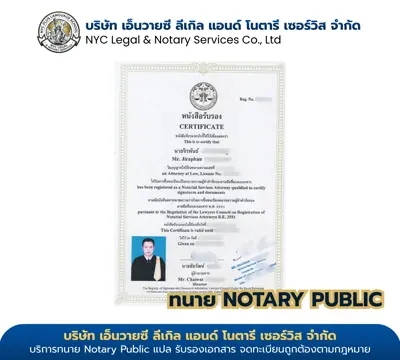
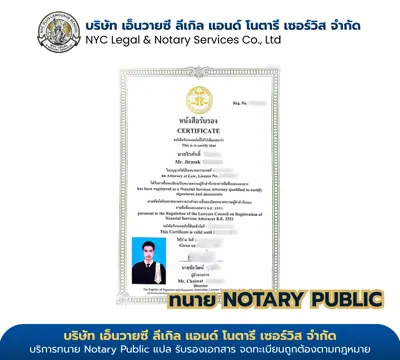
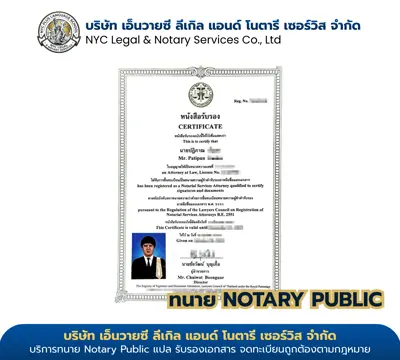
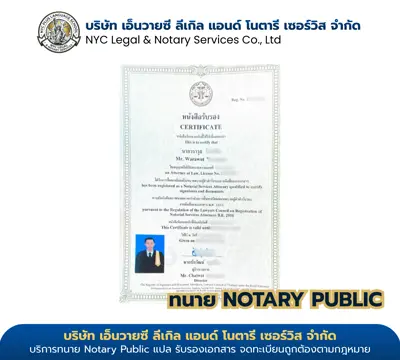
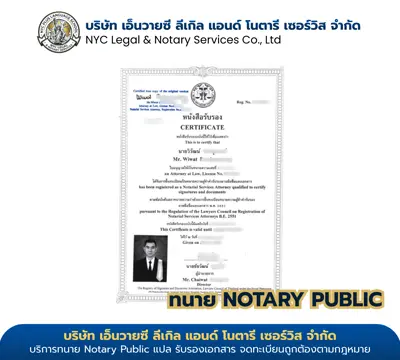
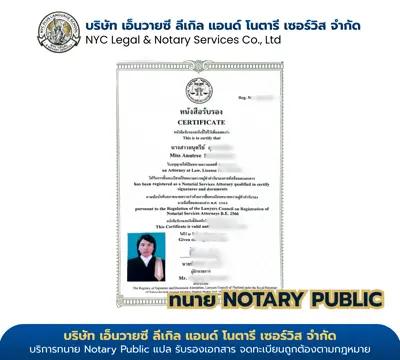
›[Inbound documents & courts]What authorized functions do Thai Notary Public lawyers perform for foreign nationals?
In Thailand the role is performed by a lawyer certified as a Notarial Services Attorney by the Lawyers Council of Thailand (lawyerscouncil.or.th). Their functions include certifying signatures, administering affidavits and statutory declarations, certifying that a copy matches an original, and certifying identity or the fact that a document was signed in their presence. They are not common-law notaries and cannot replace MFA legalisation, an Apostille or embassy authentication.
›[Inbound documents & courts]What critical precautions protect clients engaging foreign document agencies in Thailand?
Ask for the specific chain of steps in writing, with the responsible authority named for each step; verify that a lawyer signing notarial certifications holds a valid Notarial Services Attorney certification from the Lawyers Council; refuse any promise of guaranteed approval or a fixed government processing time; keep originals in your own possession where possible and use certified copies; require an itemised quotation that separates service fees from government fees; and check the destination authority's own published checklist yourself.
›[Inbound documents & courts]What comprehensive benefits do all-in-one foreign document and visa packages offer?
A combined package mainly reduces coordination risk: one team checks that names, dates and document versions are consistent across the whole file, sequences authentication and translation in the order the receiving office expects, and tracks courier hand-offs. It cannot influence any authority's decision or shorten statutory review periods. A responsible package therefore quotes time ranges, lists which steps are outside our control, and states the receiving authority as the final arbiter of format.
›[Inbound documents & courts]How do all-in-one proxy representatives manage complex foreign document portfolios?
Portfolio work is managed with a document register: each item is logged with issuer, issue date, required chain, current step and destination. A power of attorney is prepared where an authority allows representation, and originals are tracked with signed hand-over receipts. Items that share a destination are batched, and any item with a validity window (police certificates, certificates of no impediment, medical reports) is sequenced last so it does not expire mid-process.
›[Personal & family documents]What attestation requirements apply to foreign prenuptial agreements?
A prenuptial agreement is a private contract, so the signatures are notarised first. For use in Thailand the notarised agreement is authenticated in the country of origin (Apostille for Convention states, otherwise Thai-embassy legalisation) and accompanied by a certified Thai translation. Under Thai law a prenuptial agreement must be registered together with the marriage at the district office to be effective, so timing with the registrar matters as much as legalisation.
›[Personal & family documents]What steps are involved in legalizing death certificates and autopsy reports for international repatriation of remains?
Repatriation files typically include the death certificate, a medical cause-of-death or autopsy report, an embalming or non-contagious-disease certificate and a transit permit. Thai-issued documents are translated and the translation is certified by the Department of Consular Affairs, then given an Apostille for Convention destinations or legalised at the destination embassy. Airlines and the destination authority set their own additional requirements, so coordinate with the embassy and carrier at the same time as legalisation.
›[Personal & family documents]How can foreign nationals resolve name discrepancies between passports and official home documents?
Discrepancies must be reconciled with a document, not with an explanation. Common solutions are an official name-change or correction record from the issuing registry, an affidavit of one and the same person certified by a notary or a Thai Notarial Services Attorney, or a passport remark issued by your embassy. The reconciling document then follows the same authentication and translation chain as the main file. Name mismatch is one of the most frequent rejection reasons, so fix it before submission.
›[Personal & family documents]What is the official validity period of a foreign certificate of no impediment in Thailand?
Thai district offices commonly expect a recently issued certificate — in practice within three to six months — but there is no single nationwide statutory figure, and the registrar at the specific district office decides. The certificate normally needs to be authenticated in the country of issue, translated into Thai, and the translation certified by the Department of Consular Affairs. Confirm the acceptable age of the document with the district office before you request it.
›[Document integrity & security]What physical security hallmarks identify genuine Thai MFA consular seals and ribbons?
Legalisation issued by the Department of Consular Affairs is attached to the document set rather than printed on it: an official certification page or sticker bearing the ministry's seal, an authorised officer's signature, a reference or registration number and a date, with pages secured so they cannot be separated without leaving a trace. Formats are updated over time, so the only reliable verification is to check the reference number with the Department of Consular Affairs (consular.mfa.go.th) rather than relying on appearance.
›[Document integrity & security]What ultimate safety precautions should be observed when storing and handling finalized MFA-legalized documents?
Do not unstaple, re-bind, laminate, fold across seals, punch holes or write on a legalised set — any of these can void it. Store flat, away from heat and humidity, and make scans for reference while submitting only the intact original. When couriering, use a rigid envelope and a tracked service. If a set is damaged, do not repair it yourself; the certification generally has to be redone.
›[Document integrity & security]Must bank statements and passbooks bear original wet-ink stamps and bank manager signatures for MFA legalization?
Receiving authorities usually require a bank-issued statement or letter carrying the bank's original stamp and an authorised officer's signature; plain print-outs and internet-banking screenshots are commonly refused. Ask your branch for an official certified statement addressed to the purpose. Whether the MFA can certify it depends on the signature being verifiable, so obtain the bank's own certification first and confirm the exact format with the embassy or authority that will read it.
›[Translation practice]Are there professional translation agencies in Thailand capable of handling complex Asian language documents?
Yes. Certified translation into and out of Chinese, Japanese, Korean, Vietnamese, Lao, Khmer, Burmese, Hindi, Arabic and other Asian languages is available in Thailand, and our team covers these pairs with a translator's certification statement. Note that the Department of Consular Affairs certifies translations under its own language and format rules, and some embassies require a translator on their own approved list. Confirm which requirement applies before ordering the translation.
›[Fees & logistics]What are the public parking rates and facility guidelines at the Government Complex housing the Consular Department?
The Consular Department is located at the Government Complex on Chaeng Watthana Road, which has multi-storey public parking with paid rates set by the complex operator; charges and validation rules change periodically, so check on arrival or with the venue rather than relying on published figures. Peak morning periods fill quickly, and public transport plus a short taxi ride is often faster. We do not quote parking prices here because they are outside our control.