›[พื้นฐาน]Apostille คืออะไร และต่างจากการรับรองนิติกรณ์แบบเดิมอย่างไร?
Apostille คือหนังสือรับรองรูปแบบมาตรฐานตามอนุสัญญา HCCH ค.ศ. 1961 (hcch.net) ที่หน่วยงานผู้มีอำนาจของประเทศต้นทางออกให้เพื่อรับรองความแท้ของลายมือชื่อและตราประทับบนเอกสารมหาชน ทำให้เอกสารใช้ได้ในประเทศภาคีอื่นโดยไม่ต้องผ่านการรับรองซ้อนหลายชั้น ต่างจากเส้นทางเดิมที่ต้องรับรองนิติกรณ์ที่กรมการกงสุลแล้วนำไปรับรองที่สถานเอกอัครราชทูตของประเทศปลายทางอีกชั้นหนึ่ง
›[พื้นฐาน]อนุสัญญา Apostille มีผลใช้บังคับกับประเทศไทยตั้งแต่เมื่อใด?
อนุสัญญา Apostille มีผลใช้บังคับกับประเทศไทยตั้งแต่วันที่ 2 ธันวาคม 2568 ตามข้อมูลสถานะภาคีที่เผยแพร่โดย HCCH (hcch.net) และประกาศของกระทรวงการต่างประเทศ ดังนั้นเอกสารมหาชนของไทยที่จะนำไปใช้ในประเทศภาคีจึงสามารถขอ Apostille ได้ แทนการรับรองซ้อนที่สถานทูตปลายทาง โดยรายละเอียดขั้นตอนและช่องทางยื่นให้ตรวจสอบประกาศฉบับปัจจุบันที่ consular.mfa.go.th
›[พื้นฐาน]หน่วยงานใดในประเทศไทยเป็นผู้ออก Apostille?
กรมการกงสุล กระทรวงการต่างประเทศ โดยกองสัญชาติและนิติกรณ์ ทำหน้าที่เป็นหน่วยงานผู้มีอำนาจ (Competent Authority) ในการออก Apostille สำหรับเอกสารมหาชนของไทย ตามที่ประกาศไว้ในทะเบียนหน่วยงานผู้มีอำนาจของ HCCH ช่องทางยื่น สถานที่ให้บริการ และเงื่อนไขการนัดคิวมีการปรับปรุงเป็นระยะ กรุณาตรวจสอบที่ consular.mfa.go.th ก่อนเดินทางไปยื่น
›[พื้นฐาน]เอกสารประเภทใดขอ Apostille ได้?
อนุสัญญาใช้กับเอกสารมหาชน เช่น เอกสารที่ออกโดยหน่วยงานรัฐหรือเจ้าหน้าที่ เอกสารทางปกครอง เอกสารที่ออกโดยศาลหรือเจ้าพนักงานตามกฎหมาย เอกสารรับรองโดยเจ้าพนักงานผู้มีอำนาจรับรองเอกสาร และคำรับรองที่ปรากฏบนเอกสารเอกชน ส่วนเอกสารบางประเภทที่อนุสัญญาไม่ครอบคลุม เช่น เอกสารทางการทูตหรือกงสุลบางกรณี และเอกสารทางการค้าหรือศุลกากรบางประเภท ควรสอบถามกรมการกงสุลก่อนดำเนินการ
›[เส้นทางเอกสาร]ประเทศปลายทางไม่เป็นภาคีอนุสัญญา ต้องทำอย่างไร?
หากประเทศปลายทางไม่เป็นภาคี Apostille จะใช้ไม่ได้ ต้องกลับไปใช้เส้นทางเดิมคือรับรองนิติกรณ์ที่กรมการกงสุล แล้วนำไปรับรองที่สถานเอกอัครราชทูตหรือสถานกงสุลของประเทศนั้นในไทย ลำดับและเอกสารประกอบขึ้นอยู่กับข้อกำหนดของสถานทูตแต่ละแห่ง ควรตรวจสอบรายชื่อภาคีปัจจุบันที่ hcch.net และสอบถามสถานทูตปลายทางก่อนยื่น
›[เส้นทางเอกสาร]ต้องแปลเอกสารก่อนหรือขอ Apostille ก่อน?
ลำดับที่พบบ่อยคือขอเอกสารต้นฉบับหรือสำเนารับรองจากหน่วยงานผู้ออก จัดทำคำแปลพร้อมคำรับรองคำแปลหากปลายทางต้องการคำแปล แล้วนำเอกสารที่ปลายทางระบุไปขอ Apostille บางหน่วยงานปลายทางต้องการ Apostille บนเอกสารต้นฉบับและรับคำแปลแยกฉบับ บางแห่งต้องการให้คำแปลผ่านการรับรองด้วย จึงควรสอบถามหน่วยงานผู้รับเอกสารให้ชัดเจนก่อนเริ่มขั้นตอน
›[เส้นทางเอกสาร]ทะเบียนบ้าน สูติบัตร ทะเบียนสมรส ต้องเตรียมอะไรก่อนขอ Apostille?
โดยทั่วไปควรขอคัดและรับรองสำเนาถูกต้องจากสำนักทะเบียนตามกฎหมายทะเบียนราษฎรและทะเบียนครอบครัว (กรมการปกครอง bora.dopa.go.th) ให้ลายมือชื่อและตราประทับของนายทะเบียนชัดเจนและเป็นฉบับล่าสุด เพราะหน่วยงานผู้ออก Apostille ตรวจความแท้ของลายมือชื่อและตราประทับ ไม่ได้ตรวจเนื้อหา หากเอกสารเก่ามากหรือชำรุด ควรขอคัดฉบับใหม่ก่อน
›[เส้นทางเอกสาร]เอกสารเอกชน เช่น หนังสือมอบอำนาจ ขอ Apostille ได้หรือไม่?
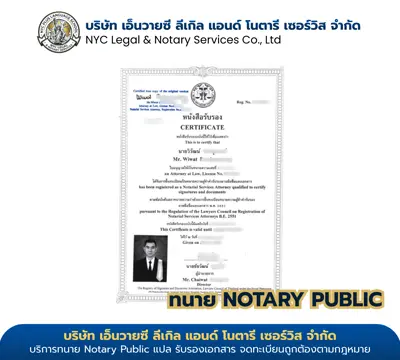
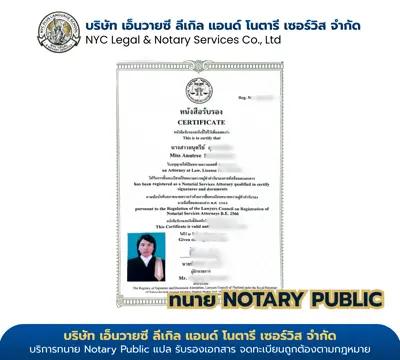
เอกสารเอกชนโดยตัวเองไม่ใช่เอกสารมหาชน แต่คำรับรองที่เจ้าพนักงานหรือผู้มีอำนาจรับรองปรากฏบนเอกสารนั้นอยู่ในขอบเขตของอนุสัญญาได้ แนวปฏิบัติทั่วไปคือให้ทนายความผู้ทำคำรับรองลายมือชื่อและเอกสารตามข้อบังคับสภาทนายความ (lawyerscouncil.or.th) หรือเจ้าพนักงานที่กฎหมายกำหนดรับรองก่อน แล้วจึงยื่นขอรับรองตามที่กรมการกงสุลกำหนด
›[ต่างประเทศ]เอกสารต่างประเทศที่จะใช้ในไทยต้องมี Apostille หรือไม่?
หากเอกสารออกในประเทศภาคี ให้ขอ Apostille จากหน่วยงานผู้มีอำนาจของประเทศนั้น แล้วนำมาจัดทำคำแปลภาษาไทยพร้อมคำรับรองคำแปลตามที่หน่วยงานผู้รับในไทยกำหนด หน่วยงานไทยบางแห่งยังคงขอให้นำคำแปลไปรับรองนิติกรณ์ด้วย จึงควรสอบถามหน่วยงานผู้รับ เช่น สำนักทะเบียน ศาล หรือหน่วยงานราชการที่เกี่ยวข้อง ก่อนดำเนินการ
›[ต่างประเทศ]e-Apostille หรือ Apostille แบบอิเล็กทรอนิกส์ ใช้ได้ทุกที่หรือไม่?
HCCH สนับสนุนโครงการ e-APP ซึ่งบางประเทศออก Apostille แบบอิเล็กทรอนิกส์และมีทะเบียนตรวจสอบออนไลน์ แต่การยอมรับขึ้นอยู่กับหน่วยงานผู้รับในประเทศปลายทาง บางหน่วยงานยังต้องการเอกสารกระดาษที่มีตราประทับจริง จึงควรถามผู้รับเอกสารว่ารับรูปแบบอิเล็กทรอนิกส์หรือไม่ และตรวจรายชื่อประเทศที่ใช้ e-APP ได้ที่ hcch.net
›[ออสเตรเลีย]เอกสารไทยที่ยื่นหน่วยงานออสเตรเลียต้องใช้ Apostille ไหม?
หน่วยงานราชการออสเตรเลียส่วนใหญ่ให้ความสำคัญกับคำแปลที่จัดทำโดยนักแปลซึ่งได้รับการรับรองจาก NAATI (naati.com.au) พร้อมตราประทับและหมายเลขผู้ปฏิบัติงานที่ตรวจสอบได้ ส่วน Apostille จะจำเป็นเมื่อผู้รับเอกสารระบุขอหลักฐานความแท้ของเอกสารราชการ เช่น การจดทะเบียนสถานะบุคคลหรือการใช้เอกสารต่อศาลหรือหน่วยงานของรัฐบางประเภท ควรสอบถามหน่วยงานผู้รับเป็นรายกรณี
›[ออสเตรเลีย]คำแปล NAATI ต้องขอ Apostille ด้วยหรือไม่?
คำแปลโดยนักแปล NAATI certified เป็นเอกสารของผู้ประกอบวิชาชีพเอกชน ไม่ใช่เอกสารมหาชนของไทย โดยทั่วไปจึงไม่ต้องขอ Apostille บนคำแปล สิ่งที่ขอ Apostille คือเอกสารราชการต้นฉบับหรือสำเนารับรอง หากผู้รับต้องการให้คำแปลมีการรับรองเพิ่ม ควรสอบถามว่าต้องการรูปแบบใดเพื่อไม่ให้เสียเวลาและเอกสารถูกตีกลับ
›[ข้อควรระวัง]สาเหตุที่เอกสารถูกตีกลับในขั้นตอน Apostille มีอะไรบ้าง?
กรณีที่พบบ่อยคือสำเนาไม่มีคำรับรองจากหน่วยงานผู้ออก ลายมือชื่อหรือตราประทับไม่ชัด เอกสารชำรุดหรือมีการแก้ไขขูดลบ ชื่อสะกดไม่ตรงกับหนังสือเดินทาง ใช้เอกสารที่หน่วยงานปลายทางถือว่าเก่าเกินกำหนด หรือขอ Apostille สำหรับประเทศที่ไม่ใช่ภาคี การตรวจเอกสารกับผู้รับปลายทางล่วงหน้าช่วยลดความเสี่ยงเหล่านี้ได้มาก
›[ข้อควรระวัง]การสะกดชื่อในคำแปลควรอ้างอิงเอกสารใด?
ควรสะกดชื่อบุคคลตามหนังสือเดินทางที่ยังไม่หมดอายุ และสะกดชื่อนิติบุคคลตามหนังสือรับรองที่นายทะเบียนออกให้ หากเอกสารเก่ามีการสะกดต่างออกไป ให้ระบุการสะกดทั้งสองแบบตามแนวทางที่หน่วยงานผู้รับยอมรับ หรือขอเอกสารเชื่อมโยงชื่อจากหน่วยงานที่เกี่ยวข้อง เพื่อไม่ให้เกิดข้อสงสัยว่าเอกสารเป็นของบุคคลเดียวกัน
›[ข้อควรระวัง]Apostille รับรองความถูกต้องของเนื้อหาเอกสารด้วยหรือไม่?
ไม่ใช่ อนุสัญญากำหนดชัดว่า Apostille รับรองเพียงความแท้ของลายมือชื่อ ตำแหน่งของผู้ลงนาม และตราประทับหรือดวงตราบนเอกสาร ไม่ได้รับรองความถูกต้องของเนื้อหา ดังนั้นหากข้อมูลในเอกสารผิด ต้องแก้ไขที่หน่วยงานผู้ออกเอกสารก่อน การมี Apostille ไม่ทำให้ข้อมูลที่ผิดกลายเป็นข้อมูลที่ถูกต้อง
›[บริการและติดต่อ]ทำไมหน้านี้จึงไม่ระบุราคาและระยะเวลา?
ค่าธรรมเนียมราชการกำหนดโดยประกาศของหน่วยงานและมีการปรับปรุงเป็นระยะ ส่วนระยะเวลาขึ้นอยู่กับประเภทเอกสาร จำนวนฉบับ ภาษา ช่องทางยื่น และคิวให้บริการในแต่ละช่วง เราจึงไม่ระบุตัวเลขในหน้านี้เพื่อไม่ให้ข้อมูลคลาดเคลื่อน กรุณาสอบถามเจ้าหน้าที่ทางโทรศัพท์ LINE หรืออีเมล เพื่อรับข้อมูลที่ตรงกับเอกสารและหน่วยงานปลายทางของท่าน
›[พื้นฐาน]Apostille คืออะไร และรับรองอะไรกันแน่?
Apostille คือใบรับรองรูปแบบมาตรฐานตามอนุสัญญา Apostille ค.ศ. 1961 ที่หน่วยงานผู้มีอำนาจของประเทศต้นทางออกให้ เพื่อรับรองความแท้จริงของลายมือชื่อ ตำแหน่งของผู้ลงนาม และตราประทับบนเอกสารมหาชน ไม่ได้รับรองว่าเนื้อหาในเอกสารถูกต้องหรือเป็นความจริง หน่วยงานปลายทางจึงยังพิจารณาสาระของเอกสารเองตามกฎหมายภายในของตน
›[พื้นฐาน]ประเทศไทยเข้าเป็นภาคีอนุสัญญา Apostille ตั้งแต่เมื่อใด?
อนุสัญญา Apostille มีผลใช้บังคับกับประเทศไทยตั้งแต่วันที่ 2 ธันวาคม 2568 ตามข้อมูลสถานะภาคีที่ HCCH เผยแพร่ที่ hcch.net ทำให้เอกสารมหาชนไทยที่ได้รับ Apostille สามารถนำไปใช้ในประเทศภาคีอื่นได้โดยไม่ต้องผ่านการรับรองซ้ำที่สถานทูตปลายทาง เว้นแต่ปลายทางมีข้อกำหนดเพิ่มเติมเฉพาะเรื่อง
›[พื้นฐาน]ใครเป็นผู้ออก Apostille ของเอกสารไทย?
หน่วยงานผู้มีอำนาจ (Competent Authority) ของไทยคือกรมการกงสุล กระทรวงการต่างประเทศ โดยกองสัญชาติและนิติกรณ์ ทั้งนี้ช่องทางยื่น สาขาที่เปิดรับ และรอบเวลาบริการอาจปรับเปลี่ยน จึงควรตรวจประกาศล่าสุดที่ consular.mfa.go.th ก่อนเดินทางไปยื่นทุกครั้ง
›[พื้นฐาน]Apostille ต่างจากการรับรองนิติกรณ์แบบเดิมอย่างไร?
แบบเดิมเอกสารต้องผ่านการรับรองของกรมการกงสุลแล้วนำไปรับรองซ้ำที่สถานเอกอัครราชทูตของประเทศปลายทางในไทย ซึ่งใช้เวลาและขึ้นกับคิวของสถานทูตแต่ละแห่ง ส่วน Apostille เป็นการรับรองชั้นเดียวที่ประเทศภาคีอื่นยอมรับ จึงลดขั้นตอนลง แต่ใช้ได้เฉพาะเมื่อประเทศปลายทางเป็นภาคีและไม่ได้คัดค้านการเข้าเป็นภาคีของอีกฝ่าย
›[ขอบเขตการใช้]ถ้าประเทศปลายทางไม่ใช่ภาคีอนุสัญญาต้องทำอย่างไร?
ใช้ขั้นตอนรับรองแบบเดิม คือแปลเอกสารเป็นภาษาที่ปลายทางกำหนด ยื่นรับรองนิติกรณ์ที่กรมการกงสุล แล้วนำไปรับรองต่อที่สถานเอกอัครราชทูตหรือสถานกงสุลของประเทศปลายทางในประเทศไทย ควรสอบถามสถานทูตนั้นล่วงหน้าเรื่องแบบฟอร์ม จำนวนชุด และภาษาของคำแปลที่ยอมรับ
›[ขอบเขตการใช้]เอกสารประเภทใดที่ขอ Apostille ไม่ได้?
อนุสัญญาใช้กับเอกสารมหาชนเป็นหลัก และมีข้อยกเว้นตามอนุสัญญาสำหรับเอกสารที่ออกโดยเจ้าหน้าที่ทางการทูตหรือกงสุล และเอกสารทางปกครองที่เกี่ยวข้องโดยตรงกับการดำเนินการทางการค้าหรือศุลกากร ส่วนเอกสารเอกชนล้วน เช่น สัญญาที่ไม่มีการรับรองใด ๆ ต้องผ่านการรับรองลายมือชื่อโดยผู้มีอำนาจก่อนจึงจะเข้าข่ายเอกสารที่ขอ Apostille ได้
›[ขอบเขตการใช้]เอกสารเอกชน เช่น หนังสือมอบอำนาจ ขอ Apostille ได้ไหม?
ได้เมื่อผ่านขั้นตอนทำให้เป็นเอกสารที่มีเจ้าหน้าที่รับรองเสียก่อน เช่น ให้ผู้ลงนามลงลายมือชื่อต่อหน้าทนายความผู้ทำคำรับรองลายมือชื่อและเอกสาร หรือเจ้าหน้าที่ผู้มีอำนาจตามกฎหมายของประเทศนั้น จากนั้นหน่วยงานผู้มีอำนาจจึงออก Apostille รับรองลายมือชื่อของผู้รับรองอีกชั้นหนึ่ง
›[ขอบเขตการใช้]สำเนาเอกสารขอ Apostille ได้หรือไม่?
โดยทั่วไปต้องเป็นต้นฉบับที่ออกโดยหน่วยงานราชการ หรือสำเนาที่ได้รับการรับรองอย่างถูกต้องจากหน่วยงานผู้ออกเอกสารหรือผู้มีอำนาจรับรอง สำเนาถ่ายเอกสารธรรมดาที่ไม่มีการรับรองมักไม่ผ่าน ควรขอคัดสำเนาฉบับรับรองจากหน่วยงานต้นเรื่อง เช่น สำนักทะเบียนอำเภอหรือเขต ก่อนเข้าสู่ขั้นตอนรับรอง
›[ขั้นตอนและเอกสาร]เอกสารทะเบียนราษฎรไทย เช่น สูติบัตร ต้องเตรียมอย่างไรก่อนขอ Apostille?
แนวปฏิบัติที่ใช้กันคือขอคัดสำเนาฉบับล่าสุดที่มีตราประทับจากสำนักทะเบียน จัดทำคำแปลเป็นภาษาปลายทางโดยผู้แปลที่ระบุชื่อและข้อมูลติดต่อได้ ยื่นรับรองคำแปลและเอกสารที่กองสัญชาติและนิติกรณ์ แล้วจึงขอ Apostille ทั้งนี้บางปลายทางกำหนดอายุเอกสารไว้ เช่น ไม่เกินสามหรือหกเดือน จึงควรตรวจเงื่อนไขก่อนคัดสำเนา
›[ขั้นตอนและเอกสาร]เอกสารบริษัทที่จะใช้ต่างประเทศต้องเตรียมอะไร?
โดยทั่วไปใช้หนังสือรับรองการจดทะเบียนนิติบุคคลฉบับล่าสุดจากกรมพัฒนาธุรกิจการค้า พร้อมเอกสารประกอบ เช่น บัญชีรายชื่อผู้ถือหุ้น และหนังสือมอบอำนาจของผู้มีอำนาจลงนาม จากนั้นทำคำแปล ยื่นรับรองที่กรมการกงสุล และขอ Apostille ควรตรวจว่าชื่อบริษัทและชื่อผู้ลงนามในทุกเอกสารสะกดตรงกันทั้งภาษาไทยและภาษาอังกฤษ
›[ขั้นตอนและเอกสาร]ต้องแปลเอกสารก่อนหรือหลังขอ Apostille?
ขึ้นกับข้อกำหนดของปลายทาง แนวทางที่พบบ่อยคือแปลและรับรองคำแปลก่อน แล้วจึงขอ Apostille ครอบทั้งชุด แต่บางประเทศต้องการให้ Apostille เอกสารต้นฉบับก่อน แล้วไปแปลโดยผู้แปลที่ได้รับการรับรองในประเทศปลายทาง จึงควรสอบถามหน่วยงานผู้รับเอกสารให้ชัดเจนก่อนเริ่ม เพื่อไม่ต้องทำซ้ำ
›[ขั้นตอนและเอกสาร]Apostille ที่ออกแล้วต้องแปลด้วยหรือไม่?
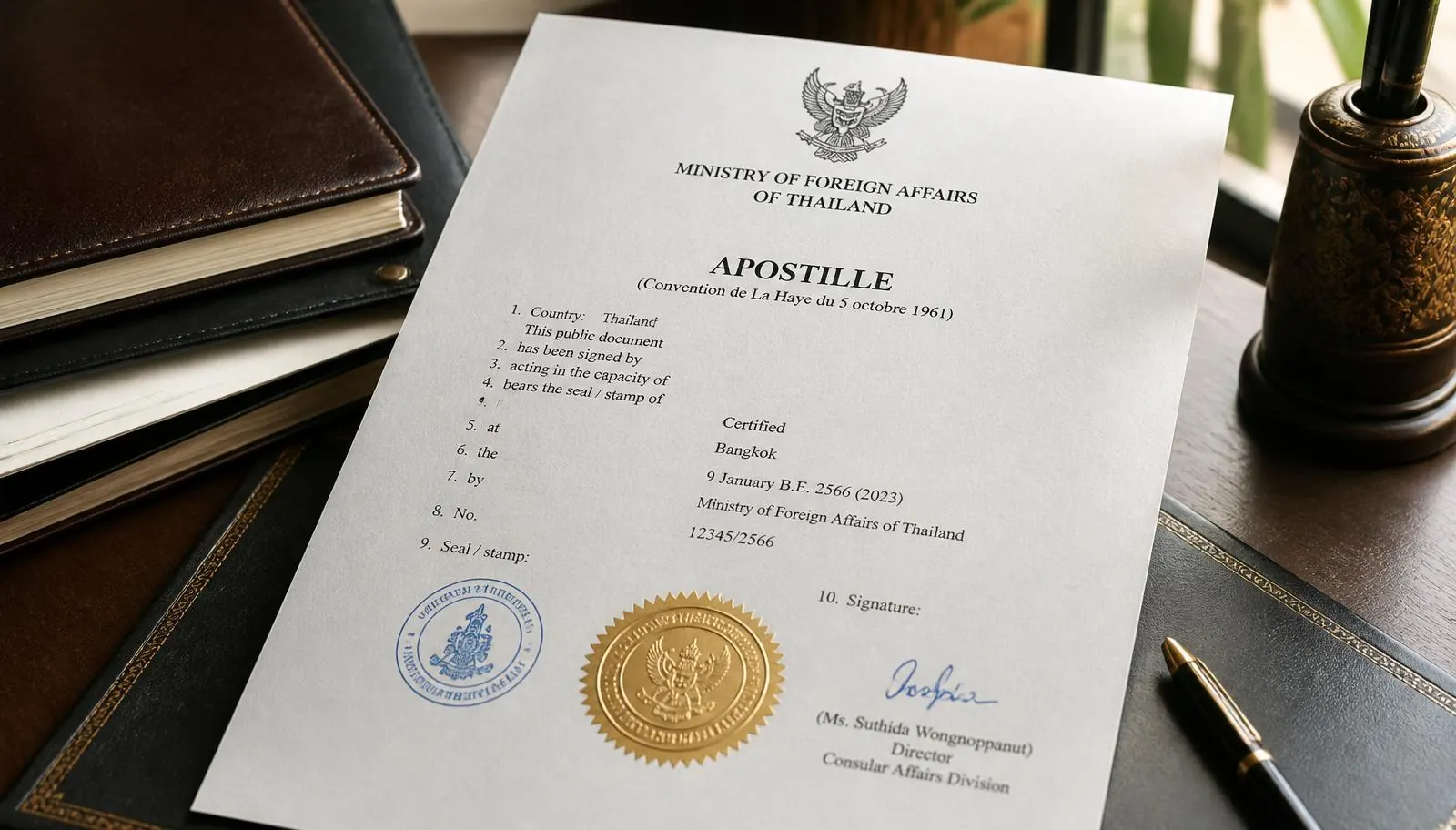
ตัวใบ Apostille มีหัวข้อภาษาฝรั่งเศสมาตรฐานว่า Apostille (Convention de La Haye du 5 octobre 1961) และมีช่องข้อมูลตามแบบของอนุสัญญา ซึ่งประเทศภาคีเข้าใจตรงกัน แต่บางหน่วยงานปลายทางยังขอคำแปลรายการในใบ Apostille ประกอบ จึงควรถามปลายทางว่าต้องการคำแปลของใบรับรองด้วยหรือไม่
›[ขั้นตอนและเอกสาร]ยื่นขอ Apostille แทนผู้อื่นได้ไหม?
โดยทั่วไปยื่นแทนได้โดยมีหนังสือมอบอำนาจและสำเนาบัตรประจำตัวของผู้มอบอำนาจพร้อมลงนามรับรองสำเนา รวมทั้งบัตรของผู้รับมอบอำนาจ ทั้งนี้รูปแบบหนังสือมอบอำนาจและเอกสารประกอบเป็นไปตามที่กรมการกงสุลกำหนด ควรตรวจแบบฟอร์มล่าสุดที่ consular.mfa.go.th ก่อนไปยื่น
›[ตรวจสอบและความถูกต้อง]ผู้รับเอกสารปลายทางตรวจสอบ Apostille ได้อย่างไร?
อนุสัญญากำหนดให้หน่วยงานผู้ออกเก็บทะเบียนการออก Apostille และให้ผู้รับสามารถขอตรวจสอบได้ว่าหมายเลขและรายการตรงกับทะเบียนหรือไม่ หลายประเทศพัฒนาเป็นทะเบียนอิเล็กทรอนิกส์ที่ตรวจออนไลน์ได้ ผู้ใช้เอกสารจึงควรเก็บหมายเลข Apostille และวันที่ออกไว้เสมอเพื่อการตรวจสอบภายหลัง
›[ตรวจสอบและความถูกต้อง]Apostille มีวันหมดอายุหรือไม่?
ตัวใบ Apostille เองไม่มีวันหมดอายุตามอนุสัญญา แต่หน่วยงานปลายทางจำนวนมากกำหนดอายุการรับเอกสาร เช่น รับเอกสารที่ออกหรือรับรองไม่เกินสามหรือหกเดือน ดังนั้นในทางปฏิบัติควรวางแผนให้เอกสารถึงปลายทางภายในกรอบเวลาที่หน่วยงานนั้นกำหนด
›[ตรวจสอบและความถูกต้อง]ปลายทางปฏิเสธเอกสารที่มี Apostille ได้ไหม?
ได้ในบางกรณี เพราะ Apostille รับรองเพียงลายมือชื่อและตราประทับ ไม่ได้รับรองเนื้อหา หน่วยงานปลายทางจึงยังปฏิเสธได้หากเอกสารไม่ตรงตามประเภทที่ต้องการ ข้อมูลไม่ครบ คำแปลไม่ได้มาตรฐานที่กำหนด หรือเอกสารเกินอายุที่รับ การยืนยันข้อกำหนดกับปลายทางก่อนดำเนินการจึงสำคัญที่สุด
›[ตรวจสอบและความถูกต้อง]เอกสารที่ผ่านการรับรองแบบเดิมก่อนไทยเข้าเป็นภาคียังใช้ได้หรือไม่?
เอกสารที่ผ่านการรับรองโดยสถานทูตปลายทางไว้แล้วโดยทั่วไปยังใช้ได้ตามเงื่อนไขของหน่วยงานผู้รับ เพราะเป็นการรับรองที่สมบูรณ์ในเวลานั้น แต่หากหน่วยงานปลายทางกำหนดอายุเอกสารหรือขอรูปแบบ Apostille โดยเฉพาะ ก็อาจต้องดำเนินการใหม่ ควรสอบถามผู้รับเอกสารก่อนตัดสินใจทำซ้ำ
›[กรณีเฉพาะประเทศ]เอกสารที่ใช้ในออสเตรเลียต้องขอ Apostille หรือไม่ และแปลอย่างไร?
ออสเตรเลียเป็นภาคีอนุสัญญา Apostille เอกสารมหาชนไทยจึงใช้ Apostille จากกรมการกงสุลได้ ส่วนคำแปลนั้นหน่วยงานรัฐออสเตรเลียโดยทั่วไปต้องการคำแปลจากนักแปลที่ได้รับการรับรองจาก NAATI ซึ่งมีตราประทับหรือหมายเลขที่ตรวจสอบได้ ควรยืนยันกับหน่วยงานผู้รับว่าต้องการคำแปล NAATI ที่ทำในออสเตรเลียหรือรับคำแปลที่รับรองในไทยด้วย
›[กรณีเฉพาะประเทศ]เอกสารที่ใช้ในเยอรมนีหรือประเทศในยุโรปต้องเตรียมอย่างไร?
ประเทศในสหภาพยุโรปส่วนใหญ่เป็นภาคีอนุสัญญา จึงใช้ Apostille ได้ แต่หลายแห่งกำหนดให้คำแปลต้องทำโดยผู้แปลที่ศาลในประเทศนั้นแต่งตั้ง หรือให้รับรองคำแปลเพิ่มที่สถานทูตของประเทศนั้น จึงควรสอบถามหน่วยงานผู้รับหรือสถานทูตล่วงหน้าว่ารับคำแปลที่ทำในไทยหรือไม่ ก่อนสั่งแปล
›[กรณีเฉพาะประเทศ]เอกสารที่ใช้ในจีนต้องใช้ Apostille หรือรับรองสถานทูต?
จีนเป็นภาคีอนุสัญญา Apostille ตั้งแต่ปี 2566 ตามข้อมูลของ HCCH เอกสารมหาชนไทยจึงใช้ Apostille ได้ตามหลัก แต่หน่วยงานผู้รับในจีนบางแห่งยังมีข้อกำหนดเรื่องภาษาและรูปแบบคำแปลของตนเอง ควรตรวจกับหน่วยงานปลายทางหรือผู้ประสานในจีนก่อนดำเนินการ
›[ปัญหาที่พบบ่อย]สาเหตุที่คำขอ Apostille ถูกตีกลับมีอะไรบ้าง?
ที่พบบ่อยคือเอกสารเป็นสำเนาที่ไม่มีการรับรอง ตราประทับหรือลายมือชื่อของผู้ออกเอกสารไม่อยู่ในฐานข้อมูลตัวอย่างลายมือชื่อของหน่วยงาน เอกสารชำรุดหรืออ่านไม่ชัด คำแปลไม่มีคำรับรองผู้แปล และชื่อบุคคลสะกดไม่ตรงกับหนังสือเดินทาง การตรวจสอบความสอดคล้องของชื่อและสภาพเอกสารก่อนยื่นช่วยลดปัญหาได้มาก
›[ปัญหาที่พบบ่อย]ชื่อในเอกสารไทยกับหนังสือเดินทางสะกดไม่ตรงกันต้องทำอย่างไร?
ควรทำให้คำแปลสะกดชื่อตรงกับหนังสือเดินทางและแนบเอกสารเชื่อมโยง เช่น หนังสือสำคัญการเปลี่ยนชื่อหรือนามสกุลฉบับรับรอง หรือหนังสือรับรองว่าเป็นบุคคลเดียวกันที่ผ่านการรับรองลายมือชื่อ เพื่อให้หน่วยงานปลายทางเห็นสายโยงของชื่อได้ชัดเจนและไม่ปฏิเสธเอกสาร
›[ปัญหาที่พบบ่อย]ทำเอกสารหายหลังได้รับ Apostille แล้วต้องเริ่มใหม่ทั้งหมดไหม?
โดยทั่วไปต้องเริ่มจากการขอเอกสารต้นฉบับหรือสำเนารับรองใหม่จากหน่วยงานผู้ออก แล้วดำเนินขั้นตอนคำแปลและรับรองซ้ำ เพราะ Apostille ผูกกับเอกสารฉบับที่ตรวจในขณะนั้น ไม่สามารถออกใบใหม่ให้ลอย ๆ ได้ จึงควรสแกนเก็บสำเนาดิจิทัลทุกฉบับไว้ตั้งแต่ต้น
›[การเตรียมงานและติดต่อ]ควรเผื่อเวลาสำหรับงาน Apostille นานเท่าใด?
ระยะเวลาขึ้นกับการขอคัดเอกสารต้นทาง ปริมาณงานแปล และรอบให้บริการของกรมการกงสุลในช่วงนั้น รวมถึงเวลาจัดส่งไปยังปลายทาง แนวปฏิบัติที่ปลอดภัยคือเผื่อเวลาให้มากกว่ากำหนดยื่นจริง และตรวจประกาศวันหยุดหรือรอบบริการที่ consular.mfa.go.th กรุณาสอบถามเจ้าหน้าที่เพื่อประเมินระยะเวลาของเคสท่านโดยเฉพาะ
›[การเตรียมงานและติดต่อ]ต้องการให้ช่วยดำเนินการต้องส่งข้อมูลอะไรมาบ้าง?
ส่งภาพถ่ายหรือไฟล์สแกนเอกสารที่ชัดเจนทุกหน้า ระบุประเทศปลายทาง หน่วยงานผู้รับ วัตถุประสงค์การใช้ ภาษาของคำแปลที่ต้องการ และกำหนดเวลาที่ต้องใช้เอกสาร ทางโทรศัพท์ LINE หรืออีเมล เจ้าหน้าที่จะตรวจความครบถ้วนและแจ้งขั้นตอนที่จำเป็นให้ทราบก่อนเริ่มงาน
›[ลำดับขั้นตอน]ควรแปลเอกสารก่อนหรือขอ Apostille ก่อน?
ขึ้นกับข้อกำหนดของหน่วยงานปลายทาง แนวปฏิบัติที่พบบ่อยมีสองแบบ แบบแรกคือรับรองคำแปลตามระเบียบของกรมการกงสุลแล้วขอ Apostille ครอบเอกสารชุดที่รับรองแล้ว แบบที่สองคือขอ Apostille เอกสารต้นฉบับก่อน แล้วให้นักแปลในประเทศปลายทางแปลทั้งเอกสารและใบ Apostille เพื่อความปลอดภัยควรถามหน่วยงานผู้รับเป็นลายลักษณ์อักษรก่อนเริ่ม เพราะการทำสลับลำดับอาจต้องเริ่มใหม่ทั้งชุด
›[ลำดับขั้นตอน]เอกสารทะเบียนราษฎรที่ออกจากอำเภอต้องเตรียมอย่างไรก่อนยื่น Apostille?
ควรขอคัดฉบับรับรองจากสำนักทะเบียนอำเภอหรือสำนักงานเขตที่ออกเอกสาร ให้มีลายมือชื่อและตราประทับของนายทะเบียนที่ชัดเจน ไม่ใช้สำเนาถ่ายเอกสารที่ไม่มีการรับรอง และตรวจว่าชื่อ นามสกุล วันเดือนปีเกิด ตรงกับหนังสือเดินทางทุกตัวอักษร หากไม่ตรงควรแก้ที่ต้นทางก่อน ตามแนวทางของกรมการปกครองที่ dopa.go.th
›[ลำดับขั้นตอน]คำพิพากษาหรือเอกสารจากศาลขอ Apostille ได้หรือไม่?
เอกสารที่ออกโดยศาลถือเป็นเอกสารมหาชนตามอนุสัญญา จึงเข้าข่ายขอ Apostille ได้ โดยต้องขอคัดสำเนาคำพิพากษาหรือหนังสือรับรองคดีที่มีการรับรองความถูกต้องจากศาลผู้ออก ตามช่องทางที่สำนักงานศาลยุติธรรมกำหนดที่ coj.go.th แล้วจึงนำเข้าสู่ขั้นตอนคำแปลและ Apostille ตามที่ปลายทางกำหนด
›[ตรวจสอบและความถูกต้อง]ปลายทางจะตรวจสอบความแท้ของ Apostille ได้อย่างไร?
อนุสัญญากำหนดให้หน่วยงานผู้มีอำนาจเก็บทะเบียนการออก Apostille ไว้ หน่วยงานปลายทางจึงสามารถสอบถามยืนยันหมายเลขและวันที่ออกกับหน่วยงานผู้ออกได้ นอกจากนี้หลายประเทศให้บริการตรวจสอบทางอิเล็กทรอนิกส์ตามแนวทาง e-APP ของ HCCH ผู้ยื่นควรถ่ายภาพหรือเก็บสำเนาใบ Apostille พร้อมหมายเลขไว้เสมอเพื่อใช้อ้างอิงเมื่อถูกขอตรวจสอบ
›[ตรวจสอบและความถูกต้อง]ถ้าปลายทางปฏิเสธเอกสารที่มี Apostille แล้วควรทำอย่างไร?
ควรขอเหตุผลการปฏิเสธเป็นลายลักษณ์อักษร เพราะสาเหตุที่พบบ่อยไม่ใช่ตัว Apostille แต่เป็นคำแปลไม่ครบหน้า ตราประทับไม่ชัด ชื่อสะกดไม่ตรงหนังสือเดินทาง หรือเอกสารเกินอายุที่กำหนด เมื่อทราบเหตุแล้วจึงแก้เฉพาะจุด เช่น จัดทำคำแปลใหม่หรือขอคัดเอกสารฉบับใหม่ แทนการเริ่มกระบวนการทั้งหมด
›[กรณีต่างประเทศ]เอกสารต่างประเทศที่จะใช้ในไทย ต้องทำอะไรหลังได้ Apostille จากต้นทาง?
เมื่อเอกสารได้ Apostille จากหน่วยงานผู้มีอำนาจของประเทศต้นทางที่เป็นภาคีแล้ว ปกติไม่ต้องรับรองซ้ำที่สถานเอกอัครราชทูตไทย แต่หน่วยงานไทยผู้รับมักกำหนดให้จัดทำคำแปลภาษาไทยที่มีคำรับรองคำแปลระบุชื่อผู้แปลและช่องทางติดต่อ และบางหน่วยงานยังกำหนดให้รับรองคำแปลตามระเบียบของกรมการกงสุลอีกชั้น ควรยืนยันกับหน่วยงานผู้รับก่อนยื่น
›[กรณีต่างประเทศ]ประเทศภาคีคัดค้านการเข้าเป็นภาคีของอีกประเทศ มีผลอย่างไร?
อนุสัญญาเปิดให้ภาคีเดิมคัดค้านการภาคยานุวัติของประเทศใหม่ได้ ผลคืออนุสัญญาไม่ใช้บังคับระหว่างสองประเทศนั้น เอกสารระหว่างกันจึงต้องกลับไปใช้การรับรองแบบเดิมผ่านกระทรวงการต่างประเทศและสถานทูตปลายทาง สถานะการคัดค้านรายประเทศประกาศอยู่ในตารางสถานะภาคีที่ hcch.net จึงควรตรวจก่อนวางแผนเอกสาร
›[กรณีต่างประเทศ]เอกสารที่จะใช้ในออสเตรเลียต้องแปลโดยใคร?
หน่วยงานรัฐและสถาบันการศึกษาของออสเตรเลียโดยทั่วไปกำหนดให้คำแปลจัดทำโดยนักแปลที่ได้รับการรับรองจาก NAATI พร้อมตราประทับและคำรับรองของผู้แปล ส่วนเอกสารราชการไทยมักต้องมี Apostille จากกรมการกงสุล ควรตรวจกับหน่วยงานผู้รับว่าต้องการให้แปลก่อนหรือหลังประทับ Apostille เพื่อจัดลำดับให้ถูกต้องตั้งแต่ครั้งแรก
›[การเตรียมตัวและช่องทาง]ยื่นขอ Apostille แทนผู้อื่นได้หรือไม่?
โดยทั่วไปทำได้ผ่านผู้รับมอบอำนาจ โดยต้องมีหนังสือมอบอำนาจที่ลงนามถูกต้อง สำเนาบัตรประจำตัวหรือหนังสือเดินทางของผู้มอบและผู้รับมอบพร้อมลงนามรับรองสำเนา ทั้งนี้แบบฟอร์ม จำนวนชุด และเงื่อนไขอาจเปลี่ยนแปลง ควรตรวจประกาศล่าสุดที่ consular.mfa.go.th หรือติดต่อเจ้าหน้าที่ของเราทางโทรศัพท์ LINE หรืออีเมลเพื่อสอบถามรายละเอียดก่อนเดินทาง
›[การเตรียมตัวและช่องทาง]อยู่ต่างจังหวัดหรือต่างประเทศ ดำเนินการได้อย่างไร?
สามารถจัดส่งเอกสารต้นฉบับหรือฉบับรับรองทางไปรษณีย์หรือขนส่งเอกชนที่ตรวจสอบสถานะได้ พร้อมสำเนาบัตรประจำตัวหรือหนังสือเดินทาง หนังสือมอบอำนาจ และรายละเอียดหน่วยงานปลายทางกับภาษาของคำแปลที่ต้องการ เพื่อให้ตรวจความครบถ้วนก่อนยื่น ควรสอบถามขั้นตอนและรอบจัดส่งกับเจ้าหน้าที่ของเราทางโทรศัพท์ LINE หรืออีเมลก่อนส่งเอกสาร
›[การเตรียมตัวและช่องทาง]ต้องขอ Apostille กี่ชุดสำหรับการยื่นหลายหน่วยงาน?
แต่ละชุดของ Apostille ผูกกับเอกสารฉบับที่นำมายื่นหนึ่งฉบับ ดังนั้นหากต้องยื่นหลายหน่วยงานที่ต้องเก็บต้นฉบับไว้ ควรขอคัดเอกสารฉบับรับรองจากหน่วยงานต้นเรื่องหลายฉบับแล้วขอ Apostille แยกตามจำนวนที่ต้องใช้ วิธีนี้ประหยัดเวลากว่าการกลับไปเริ่มกระบวนการใหม่ภายหลัง
›[ข้อผิดพลาดที่พบบ่อย]ชื่อในเอกสารสะกดไม่ตรงกับหนังสือเดินทางต้องแก้ที่ใด?
ต้องแก้ที่หน่วยงานผู้ออกเอกสารต้นทาง เช่น สำนักทะเบียนหรือสถาบันการศึกษา ไม่สามารถแก้ที่ขั้นตอนรับรองหรือขั้นตอน Apostille ได้ เพราะการรับรองเป็นการยืนยันลายมือชื่อและตราประทับของผู้ออกเอกสารเท่านั้น หากแก้ต้นทางไม่ได้ อาจใช้หนังสือรับรองความเป็นบุคคลเดียวกันประกอบ ซึ่งควรยืนยันกับหน่วยงานปลายทางว่ายอมรับหรือไม่
›[ข้อผิดพลาดที่พบบ่อย]เอกสารเย็บเล่มหรือถอดแยกหน้าได้หรือไม่?
ไม่ควรถอดลวดเย็บหรือแยกหน้าที่หน่วยงานผู้ออกเอกสารหรือผู้รับรองผนึกไว้ เพราะการผนึกและตราประทับคาบหน้าเป็นส่วนหนึ่งของความสมบูรณ์ของเอกสาร หากแยกออกอาจถือว่าเอกสารถูกแก้ไขและถูกปฏิเสธ หากต้องทำสำเนาให้ถ่ายทั้งชุดโดยไม่ถอดผนึก
›[ข้อผิดพลาดที่พบบ่อย]ใช้เอกสารอิเล็กทรอนิกส์หรือไฟล์ PDF ยื่นได้ไหม?
บางประเทศออก Apostille แบบอิเล็กทรอนิกส์ตามแนวทาง e-APP และหน่วยงานปลายทางบางแห่งยอมรับไฟล์ที่ตรวจสอบลายมือชื่อดิจิทัลได้ แต่หลายหน่วยงานยังกำหนดให้ยื่นฉบับกระดาษที่มีตราประทับจริง จึงควรถามผู้รับให้ชัดเจนว่ารับรูปแบบใด และเก็บทั้งไฟล์และฉบับกระดาษไว้เพื่อความปลอดภัย
›[Apostille basics]What is an apostille and how does it differ from consular legalisation?
An apostille is a standard-form certificate issued under the HCCH Convention of 1961 (hcch.net) by a designated competent authority in the country of origin. It certifies the authenticity of the signature and seal on a public document so the document can be used in other contracting states without further authentication. The older route required legalisation by the Department of Consular Affairs followed by a second legalisation at the destination country's embassy.
›[Apostille basics]Since when has the Apostille Convention been in force for Thailand?
The Convention entered into force for Thailand on 2 December 2025, according to the status table published by the HCCH (hcch.net) and announcements of the Ministry of Foreign Affairs. Thai public documents intended for use in other contracting states may therefore be apostillised instead of being legalised twice. Procedures and submission channels are revised periodically, so confirm the current announcement at consular.mfa.go.th.
›[Apostille basics]Which authority issues apostilles in Thailand?
The Department of Consular Affairs, Ministry of Foreign Affairs, through its Legalisation Division, acts as the competent authority for Thai public documents, as listed in the HCCH register of competent authorities. Service locations, appointment rules and accepted submission channels change from time to time, so check consular.mfa.go.th before travelling to submit documents.
›[Apostille basics]Which documents can be apostillised?
The Convention applies to public documents: documents issued by an authority or official, administrative documents, documents emanating from a court or a judicial officer, notarial acts, and official certificates placed on private documents. Certain documents fall outside the Convention, including some diplomatic or consular documents and some administrative documents dealing directly with commercial or customs operations. Ask the Department of Consular Affairs when in doubt.
›[Document routes]What if the destination country is not a party to the Convention?
An apostille cannot be used. The traditional route applies: legalisation by the Department of Consular Affairs, then legalisation at the embassy or consulate of that country in Thailand. Requirements and order of steps differ by mission. Check the current list of contracting parties at hcch.net and confirm the requirements with the destination mission before submitting.
›[Document routes]Should the document be translated before or after the apostille?
A common sequence is to obtain the original or a certified copy from the issuing authority, prepare a translation with a translator's certification if the receiving body requires one, then apply for the apostille on the document specified by the receiving body. Some authorities want the apostille on the original and accept a separate translation, others want the translation certified as well, so confirm with the receiving body first.
›[Document routes]How should civil registration documents be prepared?
Request a certified copy from the district registrar under Thai civil and family registration law (Department of Provincial Administration, bora.dopa.go.th), making sure the registrar's signature and seal are clear and the copy is recent. The issuing competent authority verifies the signature and seal, not the content, so damaged or very old copies should be reissued before submission.
›[Document routes]Can private documents such as a power of attorney be apostillised?
A private document is not itself a public document, but an official certificate placed on it can fall within the Convention. The usual practice is certification by a notarial services attorney under Lawyers Council of Thailand rules (lawyerscouncil.or.th) or by an official designated by law, followed by submission under the procedure set by the Department of Consular Affairs.
›[Foreign documents]Do foreign documents used in Thailand need an apostille?
If the document was issued in a contracting state, obtain an apostille from that country's competent authority, then arrange a Thai translation with a translator's certification as required by the receiving body in Thailand. Some Thai authorities still ask for the translation to be legalised, so confirm with the registrar, court or agency that will receive the document.
›[Foreign documents]Are electronic apostilles (e-APP) accepted everywhere?
The HCCH promotes the e-APP, and some states issue electronic apostilles with online verification registers. Acceptance depends on the receiving authority, and some still require paper with a physical seal. Ask the receiving body whether an electronic format is accepted, and check participating jurisdictions at hcch.net.
›[Australia]Do Thai documents for Australian authorities need an apostille?
Most Australian government bodies focus on translations produced by a NAATI-certified translator (naati.com.au) bearing the stamp and a verifiable practitioner number. An apostille becomes relevant when the receiving body asks for proof of authenticity of the Thai public document, for example for registration of personal status or use before a court or certain agencies. Confirm case by case with the receiving body.
›[Australia]Does a NAATI translation itself need an apostille?
A NAATI-certified translation is a private practitioner's document, not a Thai public document, so it is generally not apostillised. The apostille is placed on the underlying official document or certified copy. If the receiving body wants additional certification of the translation, ask which format it accepts before ordering.
›[Common problems]Why are documents rejected at the apostille stage?
Frequent causes are copies without the issuing authority's certification, unclear signatures or seals, damaged or altered documents, name spellings that do not match the passport, documents older than the receiving body allows, or requests for an apostille for a non-contracting state. Checking requirements with the receiving body in advance removes most of these risks.
›[Common problems]Which document governs name spelling in translations?
Spell personal names as in the current passport and company names as in the registrar's certificate. If older documents use a different spelling, show both spellings in the way the receiving body accepts, or obtain a linking document from the relevant authority, so there is no doubt that the documents concern the same person or entity.
›[Common problems]Does an apostille certify that the content is correct?
No. The Convention is explicit that an apostille certifies only the authenticity of the signature, the capacity of the signatory and the seal or stamp on the document. It does not certify the content. If information in the document is wrong, it must be corrected by the issuing authority; an apostille does not cure incorrect content.
›[Service and contact]Why are no prices or timeframes shown on this page?
Official fees are set by departmental announcements that are revised periodically, and turnaround depends on document type, number of copies, language, submission channel and queue length. To avoid publishing figures that go out of date, we ask clients to contact our staff by phone, LINE or email for information matched to their documents and destination authority.
›[Basics]What exactly does an apostille certify?
An apostille is the standard certificate under the 1961 Apostille Convention issued by the competent authority of the country of origin. It certifies the authenticity of the signature, the capacity of the signatory and the seal or stamp on a public document. It does not certify that the content of the document is correct, so the receiving authority still assesses the substance under its own law.
›[Basics]When did the Apostille Convention take effect for Thailand?
According to the status table published by the HCCH at hcch.net, the Convention entered into force for Thailand on 2 December 2025. Thai public documents bearing an apostille can therefore be used in other Contracting Parties without further legalisation at the destination embassy, unless the receiving body imposes extra requirements of its own.
›[Basics]Which Thai authority issues apostilles?
Thailand's competent authority is the Department of Consular Affairs of the Ministry of Foreign Affairs, through its Legalisation Division. Submission channels, service points and processing rounds can change, so check the latest announcements on consular.mfa.go.th before travelling to lodge documents.
›[Basics]How does an apostille differ from traditional legalisation?
Traditional legalisation requires certification by the Department of Consular Affairs followed by a second certification at the destination country's embassy in Thailand, which depends on that embassy's queue. An apostille is a single certification accepted by other Contracting Parties, so the chain is shorter — but it only works where the destination is a party and has not objected to the other state's accession.
›[Scope]Which documents fall outside the Convention?
The Convention applies to public documents and expressly excludes documents executed by diplomatic or consular agents and administrative documents dealing directly with commercial or customs operations. Purely private documents, such as an uncertified contract, must first have a signature certified by an authorised officer before an apostille can be issued.
›[Scope]Can a private document such as a power of attorney be apostillised?
Yes, once it has been turned into a document bearing an official certification — for example the signatory signs before a notarial services attorney or another officer authorised under that country's law. The competent authority then issues the apostille certifying the certifying officer's signature and seal.
›[Scope]Can photocopies be apostillised?
Generally you need an original issued by a government office, or a copy properly certified by the issuing office or an authorised certifier. Plain photocopies without certification are usually refused, so obtain a certified extract from the source office — for example the district registrar — before starting the authentication chain.
›[Process]How are Thai civil registration documents prepared for apostille?
The usual practice is to obtain a recent certified extract bearing the registrar's seal, prepare a translation into the destination language by a translator whose name and contact details are verifiable, submit the document and translation for legalisation at the Legalisation Division, and then request the apostille. Some destinations only accept documents issued within three or six months, so check before ordering the extract.
›[Process]What company documents are needed for overseas use?
Typically a current company certificate from the Department of Business Development, supporting papers such as the shareholder list, and a power of attorney from the authorised signatory. These are then translated, legalised by the Department of Consular Affairs and apostillised. Check that the company name and signatory names are spelled consistently across every document in Thai and in English.
›[Process]Should the translation be made before or after the apostille?
It depends on the destination. The common sequence is to translate and certify the translation first and then apostille the whole set, but some countries want the original apostillised first and the translation done by a locally accredited translator on arrival. Confirm the expected order with the receiving authority so the work is not repeated.
›[Process]Does the apostille certificate itself need translating?
The certificate carries the standard French heading Apostille (Convention de La Haye du 5 octobre 1961) and the numbered fields prescribed by the Convention, which Contracting Parties recognise. Even so, some receiving bodies ask for a translation of the entries, so it is worth confirming with the destination.
›[Process]Can someone lodge the apostille request on my behalf?
Usually yes, with a power of attorney, a signed copy of the principal's identification document and the representative's identification. The acceptable form of the power of attorney and the supporting papers are set by the Department of Consular Affairs, so check the current forms on consular.mfa.go.th before lodging.
›[Verification]How can the receiving party verify an apostille?
The Convention requires the issuing authority to keep a register of apostilles issued so that a recipient can check whether the number and particulars match the register. Many countries now run an electronic register that can be checked online, so always keep the apostille number and date of issue for later verification.
›[Verification]Does an apostille expire?
The certificate itself has no expiry under the Convention, but many receiving authorities only accept documents issued or certified within the last three or six months. In practice, plan so the document reaches the destination within whatever validity window that body applies.
›[Verification]Can a destination authority still reject an apostillised document?
Yes. An apostille only certifies the signature and seal, not the content, so a document can still be refused if it is the wrong type, incomplete, accompanied by a translation that does not meet the required standard, or older than the accepted validity window. Confirming requirements with the destination first is the single most useful step.
›[Country notes]Do documents for Australia need an apostille, and who translates them?
Australia is a Contracting Party, so Thai public documents can be apostillised by the Department of Consular Affairs. Australian government agencies generally require translations by a NAATI certified translator bearing a verifiable stamp or certification number. Confirm with the receiving agency whether it accepts a translation certified in Thailand or requires one produced in Australia.
›[Country notes]What about documents for Germany and other European countries?
Most EU states are Contracting Parties, so an apostille applies, but many require the translation to be produced by a translator sworn before a court in that country, or want the translation certified additionally at their embassy. Ask the receiving body or embassy whether a translation made in Thailand is accepted before ordering it.
›[Country notes]Do documents for China need an apostille or embassy legalisation?
China has been a Contracting Party since 2023 according to HCCH records, so in principle Thai public documents can be apostillised. Individual receiving bodies in China may still apply their own language and formatting requirements for translations, so check with the destination office or your local contact before proceeding.
›[Common problems]Why are apostille requests rejected?
The frequent causes are uncertified photocopies, a signature or seal from an issuing officer that is not in the authority's specimen records, damaged or illegible documents, a translation without the translator's certification, and personal names spelled differently from the passport. Checking name consistency and document condition before lodging prevents most of these.
›[Common problems]What if the name on the Thai document differs from the passport?
Spell the name in the translation as it appears in the passport and attach the linking evidence — a certified change of name or surname certificate, or a certified one-and-the-same-person statement — so the receiving authority can follow the chain of names and does not refuse the document.
›[Getting help]How much time should be allowed for apostille work?
Timing depends on obtaining the source document, the volume of translation, the Department of Consular Affairs service rounds at the time and the courier leg to the destination. The safe approach is to allow more time than the real deadline and to check holiday and service announcements on consular.mfa.go.th. Contact our staff for an estimate on your specific case.
›[Getting help]What information do you need to help with our documents?
Send clear scans or photographs of every page, and tell us the destination country, the receiving authority, the purpose of use, the translation language required and your deadline, by phone, LINE or email. Our staff will check completeness and set out the required steps before any work starts.