›[พื้นฐาน]บริการงานจดทะเบียนนิติบุคคลและใบอนุญาตทำงานของเราครอบคลุมอะไรบ้าง?
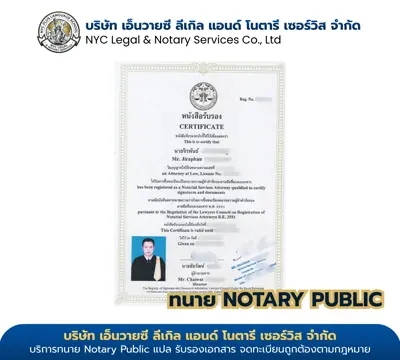
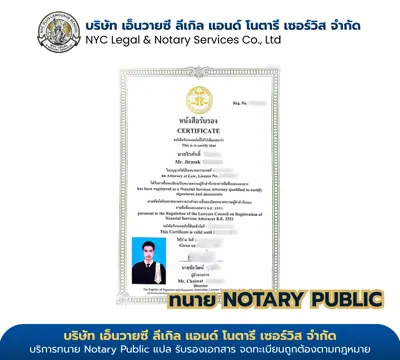
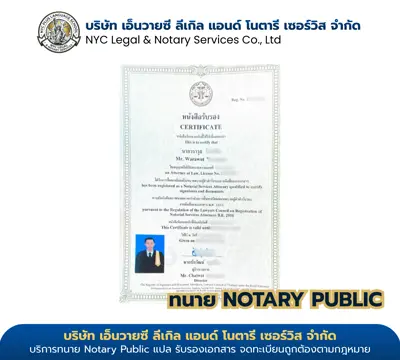
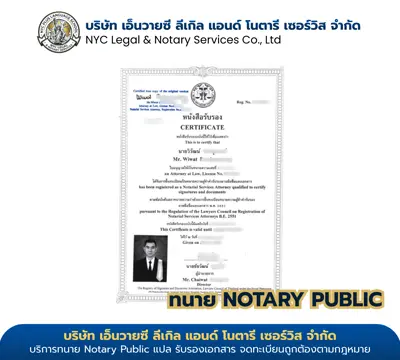
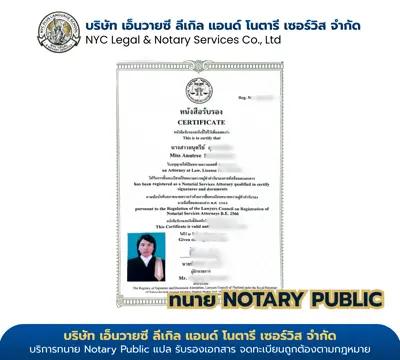
เราให้บริการด้านเอกสารและการแปล-รับรองที่เกี่ยวข้องกับการจัดตั้งและดำเนินกิจการนิติบุคคลในประเทศไทย ได้แก่ การเตรียมและตรวจร่างเอกสารจดทะเบียนบริษัทจำกัดและห้างหุ้นส่วน การจัดทำหนังสือมอบอำนาจสำหรับผู้ถือหุ้นหรือกรรมการที่อยู่ต่างประเทศ การแปลหนังสือรับรองบริษัท บัญชีรายชื่อผู้ถือหุ้น (บอจ.5) หนังสือบริคณห์สนธิ งบการเงิน และเอกสารประกอบคำขอใบอนุญาตทำงาน พร้อมการรับรองลายมือชื่อโดยทนายความผู้ทำคำรับรองลายมือชื่อและเอกสาร และการประสานงานรับรองนิติกรณ์ที่กรมการกงสุลหรือขอ Apostille สิ่งที่เราไม่ทำคือรับประกันผลการพิจารณาของนายทะเบียน กรมการจัดหางาน สำนักงานตรวจคนเข้าเมือง หรือหน่วยงานรัฐอื่น และเราแนะนำให้ตรวจสอบข้อกำหนดล่าสุดกับหน่วยงานเจ้าของเรื่องเสมอ ค่าบริการและระยะเวลาสอบถามเจ้าหน้าที่ทางโทรศัพท์ LINE หรืออีเมล
›[จดทะเบียนบริษัท]บริษัทจำกัดของไทยต้องมีผู้ถือหุ้นและกรรมการอย่างน้อยกี่คน?
ตามประมวลกฎหมายแพ่งและพาณิชย์ที่แก้ไขเพิ่มเติมโดยพระราชบัญญัติแก้ไขเพิ่มเติมประมวลกฎหมายแพ่งและพาณิชย์ (ฉบับที่ 23) พ.ศ. 2565 ซึ่งมีผลตั้งแต่ 7 กุมภาพันธ์ 2566 บริษัทจำกัดสามารถจัดตั้งได้โดยผู้เริ่มก่อการตั้งแต่ 2 คนขึ้นไป (เดิมกำหนด 3 คน) และต้องมีกรรมการอย่างน้อย 1 คน จำนวนกรรมการ อำนาจลงนามผูกพันบริษัท และเงื่อนไขการประทับตราให้เป็นไปตามที่จดทะเบียนไว้ในหนังสือรับรอง รายละเอียดและแบบพิมพ์ล่าสุดตรวจสอบได้ที่กรมพัฒนาธุรกิจการค้า (dbd.go.th)
›[จดทะเบียนบริษัท]ขั้นตอนจดทะเบียนบริษัทจำกัดโดยสรุปมีอะไรบ้าง?
โดยทั่วไปประกอบด้วย (1) จองชื่อนิติบุคคลกับกรมพัฒนาธุรกิจการค้า (2) จัดทำและยื่นจดทะเบียนหนังสือบริคณห์สนธิ ระบุชื่อ ที่ตั้งสำนักงาน วัตถุประสงค์ ทุนจดทะเบียน และผู้เริ่มก่อการ (3) จัดให้มีการจองซื้อหุ้นและประชุมจัดตั้งบริษัท (4) ยื่นคำขอจดทะเบียนจัดตั้งบริษัทพร้อมบัญชีรายชื่อผู้ถือหุ้น (บอจ.5) และ (5) ขอเลขประจำตัวผู้เสียภาษี รวมถึงจดทะเบียนภาษีมูลค่าเพิ่มและขึ้นทะเบียนประกันสังคมเมื่อเข้าเงื่อนไข ปัจจุบันสามารถยื่นผ่านระบบ e-Registration ของกรมพัฒนาธุรกิจการค้าได้ ขั้นตอนและเอกสารที่แน่นอนขึ้นกับโครงสร้างผู้ถือหุ้นและประเภทธุรกิจ
›[จดทะเบียนบริษัท]ผู้ถือหุ้นหรือกรรมการที่อยู่ต่างประเทศจะร่วมจดทะเบียนได้อย่างไร?
ทำได้โดยจัดทำหนังสือมอบอำนาจและเอกสารลงนามจากต่างประเทศ ลงนามต่อหน้า Notary Public ในประเทศนั้น แล้วนำไปรับรองตามช่องทางที่ประเทศปลายทางกำหนด หากประเทศนั้นเป็นภาคีอนุสัญญา Apostille และไทยเข้าเป็นภาคีแล้วตั้งแต่ 2 ธันวาคม 2568 การรับรองด้วย Apostille จะช่วยลดขั้นตอนการรับรองซ้อนที่สถานทูต ทั้งนี้แนวปฏิบัติในการรับเอกสารของนายทะเบียนแต่ละกรณีอาจต่างกัน จึงควรยืนยันรูปแบบเอกสารกับนายทะเบียนหรือที่ปรึกษากฎหมายก่อนส่งเอกสารข้ามประเทศ เอกสารภาษาต่างประเทศต้องมีคำแปลภาษาไทยพร้อมคำรับรองคำแปล
›[ต่างด้าว]บริษัทที่มีผู้ถือหุ้นต่างชาติต้องขอใบอนุญาตประกอบธุรกิจของคนต่างด้าวหรือไม่?
ขึ้นอยู่กับสัดส่วนการถือหุ้นและประเภทธุรกิจ พระราชบัญญัติการประกอบธุรกิจของคนต่างด้าว พ.ศ. 2542 กำหนดบัญชีธุรกิจสงวนไว้ 3 บัญชี หากนิติบุคคลเข้านิยาม 'คนต่างด้าว' (โดยหลักคือมีหุ้นของคนต่างด้าวตั้งแต่กึ่งหนึ่งของทุนขึ้นไป) และจะประกอบธุรกิจตามบัญชี 2 หรือบัญชี 3 จะต้องได้รับอนุญาตหรือหนังสือรับรองก่อน บางกรณีอาจได้รับสิทธิภายใต้สนธิสัญญาหรือความตกลงระหว่างประเทศ เช่น สนธิสัญญาไมตรีไทย-สหรัฐฯ หรือได้รับการส่งเสริมจาก BOI การประเมินต้องพิจารณาเป็นรายกรณีกับที่ปรึกษากฎหมาย รายละเอียดที่ dbd.go.th
›[ต่างด้าว]BOI ช่วยเรื่องการถือหุ้นต่างชาติและใบอนุญาตทำงานอย่างไร?
กิจการที่ได้รับการส่งเสริมการลงทุนจากสำนักงานคณะกรรมการส่งเสริมการลงทุน (BOI) อาจได้รับสิทธิประโยชน์ที่ไม่ใช่ภาษี เช่น การอนุญาตให้ต่างชาติถือหุ้นได้ตามเงื่อนไขของประเภทกิจการ การถือกรรมสิทธิ์ที่ดินเพื่อกิจการที่ได้รับส่งเสริม และการนำเข้าช่างฝีมือผู้ชำนาญการต่างชาติผ่านระบบ Single Window (e-Expert) ซึ่งมักทำให้ขั้นตอนขอวีซ่าและใบอนุญาตทำงานสั้นลงและใช้เอกสารต่างจากกรณีทั่วไป เงื่อนไข สิทธิประโยชน์ และประเภทกิจการที่ได้รับส่งเสริมเปลี่ยนแปลงเป็นระยะ ควรตรวจสอบประกาศล่าสุดที่ boi.go.th
›[ใบอนุญาตทำงาน]คนต่างชาติต้องมีใบอนุญาตทำงานในกรณีใดบ้าง?
พระราชกำหนดการบริหารจัดการการทำงานของคนต่างด้าว พ.ศ. 2560 และที่แก้ไขเพิ่มเติม (ฉบับที่ 2) พ.ศ. 2561 กำหนดให้คนต่างด้าวที่จะทำงานในราชอาณาจักรต้องได้รับอนุญาตทำงาน โดย 'ทำงาน' มีความหมายกว้างและไม่จำกัดเฉพาะงานที่ได้รับค่าจ้าง งานบางประเภทยังถูกสงวนไว้สำหรับคนไทยตามประกาศของกระทรวงแรงงาน การทำงานโดยไม่ได้รับอนุญาต รวมถึงการรับคนต่างด้าวเข้าทำงานโดยไม่มีใบอนุญาต มีบทลงโทษตามกฎหมาย รายละเอียดประเภทงาน เงื่อนไข และแบบคำขอ ตรวจสอบได้ที่กรมการจัดหางาน (doe.go.th)
›[ใบอนุญาตทำงาน]ขั้นตอนขอใบอนุญาตทำงานโดยทั่วไปเป็นอย่างไร?
โดยทั่วไปนายจ้างจะต้องเป็นผู้ยื่นหรือรับรองคำขอ ขั้นตอนหลักคือ (1) ตรวจสอบว่านิติบุคคลนายจ้างมีคุณสมบัติตามที่กรมการจัดหางานกำหนด เช่น ทุนจดทะเบียนชำระแล้วและอัตราส่วนลูกจ้างไทยต่อคนต่างด้าว (2) คนต่างชาติขอวีซ่าประเภทคนอยู่ชั่วคราวเพื่อทำงาน (Non-Immigrant B) หรือประเภทที่เหมาะสม (3) ยื่นคำขอใบอนุญาตทำงานพร้อมเอกสารนายจ้างและเอกสารส่วนบุคคล (4) เมื่อได้รับอนุญาตจึงเริ่มทำงานได้ตามขอบเขตที่ระบุ และ (5) ขออยู่ต่อในราชอาณาจักรตามเหตุผลการทำงานที่สำนักงานตรวจคนเข้าเมือง เงื่อนไขที่แน่นอนต่างกันตามช่องทาง เช่น กรณีทั่วไป กรณี BOI หรือ Smart Visa
›[ใบอนุญาตทำงาน]นายจ้างต้องมีทุนจดทะเบียนและสัดส่วนพนักงานไทยเท่าใด?
กรณีทั่วไปที่ไม่ได้รับการส่งเสริมการลงทุน กรมการจัดหางานใช้เกณฑ์เชิงนโยบายเกี่ยวกับทุนจดทะเบียนชำระแล้วของนายจ้างต่อคนต่างด้าวหนึ่งคน และอัตราส่วนลูกจ้างสัญชาติไทยต่อคนต่างด้าวหนึ่งคน ตัวเลขที่ใช้จริงและข้อยกเว้น เช่น กิจการที่ได้รับส่งเสริมจาก BOI กิจการตามสนธิสัญญา หรือผู้ถือ Smart Visa/LTR มีความแตกต่างกันและมีการปรับปรุงเป็นระยะ เราจึงไม่ระบุตัวเลขตายตัวในหน้านี้ กรุณาตรวจสอบเกณฑ์ปัจจุบันจากประกาศของกรมการจัดหางาน (doe.go.th) หรือสอบถามเจ้าหน้าที่ของเราเพื่อช่วยตรวจสอบเอกสารประกอบ
›[ใบอนุญาตทำงาน]ใบอนุญาตทำงานมีอายุเท่าไรและต่ออายุอย่างไร?
อายุของใบอนุญาตทำงานกำหนดตามที่นายทะเบียนอนุญาต โดยทั่วไปสอดคล้องกับระยะเวลาที่ได้รับอนุญาตให้อยู่ในราชอาณาจักรและระยะเวลาการจ้างงาน การต่ออายุต้องยื่นก่อนใบอนุญาตสิ้นอายุ พร้อมเอกสารนายจ้างที่เป็นปัจจุบัน เช่น หนังสือรับรองนิติบุคคล งบการเงิน แบบยื่นภาษี และหลักฐานการนำส่งประกันสังคม หากใบอนุญาตขาดอายุ การทำงานต่อไปถือเป็นการทำงานโดยไม่ได้รับอนุญาต ซึ่งมีบทลงโทษทั้งลูกจ้างและนายจ้าง กำหนดเวลาที่แน่นอนควรยืนยันกับกรมการจัดหางานในแต่ละกรณี
›[ใบอนุญาตทำงาน]เปลี่ยนงาน เปลี่ยนตำแหน่ง หรือเปลี่ยนสถานที่ทำงาน ต้องแจ้งหรือไม่?
ต้องดำเนินการตามที่กฎหมายกำหนด การเปลี่ยนนายจ้าง ประเภทงาน ตำแหน่ง หรือสถานที่ทำงาน โดยทั่วไปต้องยื่นขออนุญาตหรือแจ้งต่อนายทะเบียนภายในกำหนดเวลา และเมื่อการจ้างงานสิ้นสุดลง นายจ้างมีหน้าที่แจ้งการออกจากงานของคนต่างด้าวภายในกำหนด การละเลยอาจมีโทษปรับ เอกสารที่ใช้มักรวมถึงหนังสือรับรองการจ้าง หนังสือชี้แจงของนายจ้าง และเอกสารนิติบุคคลฉบับปัจจุบัน แนะนำให้ตรวจสอบกำหนดเวลาที่ใช้บังคับกับกรณีของท่านกับกรมการจัดหางานก่อนดำเนินการ
›[วีซ่า]วีซ่า Non-Immigrant B กับใบอนุญาตทำงานต่างกันอย่างไร?
เป็นคนละเรื่องและออกโดยคนละหน่วยงาน วีซ่า Non-Immigrant B เป็นการอนุญาตให้เดินทางเข้าและอยู่ในราชอาณาจักรด้วยเหตุผลด้านธุรกิจหรือการทำงาน ออกโดยสถานเอกอัครราชทูตหรือสถานกงสุลไทย และการขออยู่ต่อพิจารณาโดยสำนักงานตรวจคนเข้าเมือง ส่วนใบอนุญาตทำงานเป็นการอนุญาตให้ 'ทำงาน' ออกโดยกรมการจัดหางาน การมีวีซ่าอย่างเดียวไม่ทำให้ทำงานได้ และการมีใบอนุญาตทำงานก็ไม่ต่ออายุการพำนักโดยอัตโนมัติ ทั้งสองส่วนต้องคงสถานะให้ถูกต้องควบคู่กัน
›[วีซ่า]Smart Visa และ LTR Visa เหมาะกับใคร?
Smart Visa เป็นวีซ่าประเภทพิเศษสำหรับผู้เชี่ยวชาญ นักลงทุน ผู้บริหารระดับสูง และผู้ประกอบการวิสาหกิจเริ่มต้นในอุตสาหกรรมเป้าหมายที่กำหนด ส่วนวีซ่าผู้พำนักระยะยาว (Long-Term Resident: LTR) เป็นวีซ่าระยะยาวสำหรับกลุ่มเป้าหมาย เช่น ผู้มีความมั่งคั่งสูง ผู้เกษียณอายุที่มีรายได้ตามเกณฑ์ ผู้ทำงานทางไกลให้บริษัทต่างประเทศ และผู้เชี่ยวชาญทักษะสูง ทั้งสองประเภทมีสิทธิประโยชน์ด้านการทำงานและการรายงานตัวที่ต่างจากช่องทางปกติ คุณสมบัติ เอกสาร และสิทธิประโยชน์มีการปรับปรุงเป็นระยะ ควรตรวจสอบเกณฑ์ล่าสุดที่ boi.go.th ก่อนยื่น
›[ภาษี]บริษัทต้องจดทะเบียนภาษีมูลค่าเพิ่มเมื่อใด?
ตามประมวลรัษฎากร ผู้ประกอบการที่มีรายรับจากการขายสินค้าหรือให้บริการเกินกว่าเกณฑ์ที่กฎหมายกำหนดต้องยื่นคำขอจดทะเบียนภาษีมูลค่าเพิ่มภายในกำหนดเวลานับแต่วันที่รายรับเกินเกณฑ์ ทั้งนี้ผู้ประกอบการบางประเภทสามารถขอจดทะเบียนก่อนถึงเกณฑ์ได้ เช่น กรณีจำเป็นต้องใช้สถานะ VAT ในการประกอบธุรกิจหรือประกอบคำขอใบอนุญาตทำงาน สินค้าและบริการบางประเภทได้รับยกเว้น รายละเอียดเกณฑ์รายรับ อัตราภาษี และแบบคำขอที่เป็นปัจจุบัน โปรดตรวจสอบที่กรมสรรพากร (rd.go.th) หรือปรึกษาผู้ทำบัญชีของท่าน
›[ประกันสังคม]นายจ้างต้องขึ้นทะเบียนประกันสังคมเมื่อใด?
ตามพระราชบัญญัติประกันสังคม พ.ศ. 2533 และที่แก้ไขเพิ่มเติม นายจ้างที่มีลูกจ้างตั้งแต่หนึ่งคนขึ้นไปมีหน้าที่ขึ้นทะเบียนนายจ้างและขึ้นทะเบียนผู้ประกันตนสำหรับลูกจ้างภายในกำหนดเวลานับแต่วันที่รับลูกจ้างเข้าทำงาน และมีหน้าที่นำส่งเงินสมทบตามอัตราและกำหนดเวลาที่กฎหมายกำหนด ลูกจ้างต่างชาติที่ทำงานโดยชอบด้วยกฎหมายโดยหลักอยู่ในข่ายเช่นเดียวกับลูกจ้างไทย เว้นแต่กรณีที่มีข้อยกเว้นตามกฎกระทรวง หลักฐานการนำส่งเงินสมทบมักถูกใช้เป็นเอกสารประกอบการต่ออายุใบอนุญาตทำงาน รายละเอียดที่ sso.go.th
›[เอกสาร]เอกสารบริษัทที่จะนำไปใช้ต่างประเทศต้องรับรองอย่างไร?
โดยทั่วไปเริ่มจากขอเอกสารฉบับทางการ เช่น หนังสือรับรองนิติบุคคลและบัญชีรายชื่อผู้ถือหุ้นจากกรมพัฒนาธุรกิจการค้า จากนั้นแปลเป็นภาษาปลายทางพร้อมคำรับรองคำแปล แล้วยื่นรับรองนิติกรณ์ที่กองสัญชาติและนิติกรณ์ กรมการกงสุล กระทรวงการต่างประเทศ สำหรับประเทศภาคีอนุสัญญา Apostille ซึ่งมีผลกับประเทศไทยตั้งแต่ 2 ธันวาคม 2568 อาจใช้ Apostille แทนการรับรองซ้อนที่สถานทูตปลายทางได้ ส่วนประเทศที่ไม่ได้เป็นภาคียังต้องรับรองต่อที่สถานทูตหรือสถานกงสุลของประเทศปลายทางอีกชั้น ควรขอรายการเอกสารที่ผู้รับปลายทางกำหนดเป็นลายลักษณ์อักษรก่อนเสมอ
›[เอกสาร]หนังสือรับรองบริษัทต้องออกใหม่ภายในกี่วันจึงจะใช้ได้?
หน่วยงานผู้รับเอกสารมักกำหนดอายุความสดของหนังสือรับรองนิติบุคคลเอง เช่น ไม่เกิน 30 วันหรือ 90 วันนับแต่วันที่ออก ซึ่งแตกต่างกันไปตามหน่วยงานและวัตถุประสงค์ กรมพัฒนาธุรกิจการค้าไม่ได้กำหนดอายุการใช้งานไว้ในตัวเอกสาร ดังนั้นวิธีที่ปลอดภัยคือสอบถามหน่วยงานปลายทางว่ากำหนดอายุเท่าใด แล้วขอหนังสือรับรองฉบับใหม่ให้อยู่ในกรอบเวลานั้นก่อนเริ่มขั้นตอนแปลและรับรอง เพื่อไม่ให้เอกสารหมดอายุระหว่างกระบวนการรับรองหลายชั้น
›[เอกสาร]เอกสารต่างประเทศของผู้ถือหุ้นหรือกรรมการต้องแปลไทยหรือไม่?
โดยหลักต้องมีคำแปลภาษาไทยพร้อมคำรับรองคำแปลเมื่อยื่นต่อหน่วยงานราชการไทย และในกรณีที่ใช้เป็นพยานเอกสารต่อศาลไทย ประมวลกฎหมายวิธีพิจารณาความแพ่ง มาตรา 46 กำหนดให้เอกสารภาษาต่างประเทศต้องมีคำแปลภาษาไทย เอกสารที่พบบ่อยคือหนังสือเดินทาง หนังสือรับรองบริษัทแม่ในต่างประเทศ มติที่ประชุมกรรมการ และหนังสือมอบอำนาจ ทั้งนี้รูปแบบคำรับรองคำแปลที่หน่วยงานแต่ละแห่งยอมรับอาจต่างกัน จึงควรยืนยันรูปแบบกับหน่วยงานผู้รับก่อนสั่งงานแปล
›[สาขา]สำนักงานสาขา สำนักงานผู้แทน และบริษัทจำกัด ต่างกันอย่างไร?
บริษัทจำกัดเป็นนิติบุคคลไทยที่จัดตั้งใหม่และประกอบธุรกิจได้ตามวัตถุประสงค์ที่จดทะเบียนภายใต้ข้อจำกัดของกฎหมายว่าด้วยการประกอบธุรกิจของคนต่างด้าว ส่วนสำนักงานสาขาเป็นส่วนหนึ่งของนิติบุคคลต่างประเทศที่เข้ามาประกอบธุรกิจในไทยและโดยหลักต้องได้รับอนุญาตตามพระราชบัญญัติการประกอบธุรกิจของคนต่างด้าว พ.ศ. 2542 ขณะที่สำนักงานผู้แทนมีขอบเขตกิจกรรมจำกัดเฉพาะกิจกรรมที่ไม่ก่อรายได้ เช่น การจัดหาแหล่งสินค้า ตรวจสอบคุณภาพ และรายงานความเคลื่อนไหวทางธุรกิจให้สำนักงานใหญ่ การเลือกโครงสร้างควรพิจารณาร่วมกับที่ปรึกษากฎหมายและภาษี
›[แก้ไขทะเบียน]เปลี่ยนกรรมการ ที่อยู่ หรือเพิ่มทุน ต้องจดทะเบียนแก้ไขหรือไม่?
ต้อง การเปลี่ยนแปลงรายการที่จดทะเบียนไว้ เช่น กรรมการและอำนาจกรรมการ ที่ตั้งสำนักงาน ชื่อบริษัท วัตถุประสงค์ ทุนจดทะเบียน หรือข้อบังคับ ต้องดำเนินการตามขั้นตอนขององค์กร เช่น มติที่ประชุมคณะกรรมการหรือที่ประชุมผู้ถือหุ้นตามที่กฎหมายและข้อบังคับกำหนด แล้วยื่นจดทะเบียนแก้ไขต่อนายทะเบียนภายในกำหนดเวลา เอกสารสำคัญคือรายงานการประชุม แบบคำขอของกรมพัฒนาธุรกิจการค้า และหลักฐานประกอบ หากมีผู้ลงนามอยู่ต่างประเทศจะต้องจัดทำหนังสือมอบอำนาจและรับรองลายมือชื่อจากต่างประเทศตามที่กล่าวข้างต้น
›[ข้อผิดพลาด]สาเหตุที่คำขอใบอนุญาตทำงานถูกตีกลับบ่อยที่สุดคืออะไร?
จากประสบการณ์งานเอกสาร สาเหตุที่พบบ่อยได้แก่ ชื่อ-สกุลในเอกสารไม่ตรงกับหนังสือเดินทางแบบตัวต่อตัว ตำแหน่งงานและลักษณะงานที่ระบุไม่สอดคล้องกับวัตถุประสงค์ที่จดทะเบียนของนายจ้าง เอกสารนิติบุคคลออกเกินกรอบเวลาที่หน่วยงานรับได้ ขาดหลักฐานการนำส่งภาษีหรือประกันสังคม คำแปลไม่มีคำรับรองคำแปลหรือแปลไม่ครบทุกหน้ารวมถึงตราประทับ และเอกสารจากต่างประเทศยังไม่ผ่านการรับรองตามช่องทางที่หน่วยงานยอมรับ การตรวจสอบรายการเอกสารเป็นลายลักษณ์อักษรกับหน่วยงานก่อนยื่นช่วยลดการตีกลับได้มาก
›[ระยะเวลา]ทั้งกระบวนการจดทะเบียนบริษัทและขอใบอนุญาตทำงานใช้เวลานานเท่าไร?
ระยะเวลาขึ้นกับความครบถ้วนของเอกสาร ประเภทธุรกิจ ช่องทางที่ใช้ (ทั่วไป BOI หรือ Smart Visa) และคิวของแต่ละหน่วยงาน ในทางปฏิบัติงานจดทะเบียนนิติบุคคลที่เอกสารครบถ้วนมักเสร็จเร็วกว่างานขออนุญาตทำงานซึ่งต้องรอทั้งวีซ่า ใบอนุญาตทำงาน และการขออยู่ต่อ นอกจากนี้หากมีเอกสารจากต่างประเทศที่ต้องผ่าน Notary Public การรับรองในประเทศต้นทาง การแปล และการรับรองนิติกรณ์หรือ Apostille จะต้องเผื่อเวลาเพิ่ม เราไม่ระบุกรอบเวลาตายตัวเพื่อไม่ให้เข้าใจผิด กรุณาสอบถามเจ้าหน้าที่พร้อมรายละเอียดเคสของท่านทางโทรศัพท์ LINE หรืออีเมล
›[HR]บริษัทที่มีพนักงานต่างชาติหลายคนควรจัดการเอกสารอย่างไร?
แนะนำให้จัดทำทะเบียนกลางที่ติดตามวันหมดอายุของหนังสือเดินทาง วีซ่า ใบอนุญาตทำงาน และกำหนดรายงานตัว 90 วันของพนักงานแต่ละคน พร้อมจัดเก็บชุดเอกสารนายจ้างฉบับล่าสุดไว้เป็นชุดมาตรฐาน เช่น หนังสือรับรองนิติบุคคล บัญชีรายชื่อผู้ถือหุ้น งบการเงิน แบบยื่นภาษี และหลักฐานประกันสังคม เพื่อให้หยิบใช้ได้ทันทีเมื่อถึงรอบต่ออายุ สำหรับงานแปลจำนวนมาก การกำหนดคำศัพท์และรูปแบบการทับศัพท์ชื่อให้เป็นมาตรฐานเดียวกันทั้งองค์กรจะช่วยลดปัญหาชื่อไม่ตรงกันระหว่างเอกสารแต่ละฉบับ
›[เลิกกิจการ]การเลิกบริษัทต้องทำอะไรบ้าง?
โดยทั่วไปต้องมีมติที่ประชุมผู้ถือหุ้นให้เลิกบริษัทตามที่ประมวลกฎหมายแพ่งและพาณิชย์และข้อบังคับกำหนด จดทะเบียนเลิกและแต่งตั้งผู้ชำระบัญชีต่อนายทะเบียน ประกาศและแจ้งเจ้าหนี้ตามที่กฎหมายกำหนด จัดทำงบการเงิน ณ วันเลิก ชำระสะสางทรัพย์สินและหนี้สิน ดำเนินการด้านภาษีกับกรมสรรพากรและแจ้งสิ้นสุดความเป็นนายจ้างต่อสำนักงานประกันสังคม จากนั้นจึงจดทะเบียนเสร็จการชำระบัญชี หากมีพนักงานต่างชาติจะต้องดำเนินการยกเลิกใบอนุญาตทำงานและจัดการสถานะการพำนักให้ถูกต้องด้วย
›[ข้อจำกัด]ทำไมหน้านี้จึงไม่ระบุค่าบริการและค่าธรรมเนียมราชการ?
เพราะค่าธรรมเนียมราชการและเงื่อนไขของแต่ละหน่วยงานปรับปรุงเป็นระยะ และค่าบริการขึ้นกับจำนวนเอกสาร ภาษา ความเร่งด่วน และช่องทางที่ใช้ การระบุตัวเลขค้างไว้ในหน้าเว็บอาจทำให้ผู้อ่านเข้าใจผิดและขัดกับหลักความถูกต้องของข้อมูลที่เรายึดถือ เราจึงเลือกให้ท่านสอบถามเจ้าหน้าที่โดยตรงทางโทรศัพท์ LINE หรืออีเมล เพื่อรับข้อมูลที่เป็นปัจจุบันสำหรับเคสของท่านโดยเฉพาะ พร้อมรายการเอกสารที่ต้องเตรียมจริง
›[ข้อจำกัด]เนื้อหาในหน้านี้ใช้แทนคำปรึกษาทางกฎหมายได้หรือไม่?
ไม่ได้ เนื้อหานี้เป็นข้อมูลทั่วไปเพื่อความเข้าใจเบื้องต้น เรียบเรียงจากตัวบทกฎหมายและข้อมูลของหน่วยงานรัฐที่อ้างอิงไว้ท้ายหน้า แต่การใช้บังคับกับกรณีเฉพาะขึ้นกับข้อเท็จจริง โครงสร้างผู้ถือหุ้น ประเภทธุรกิจ และดุลพินิจของเจ้าหน้าที่ผู้พิจารณา เราแนะนำให้ปรึกษาทนายความหรือผู้เชี่ยวชาญด้านภาษีก่อนตัดสินใจ และตรวจสอบประกาศล่าสุดจากกรมพัฒนาธุรกิจการค้า กรมการจัดหางาน กรมสรรพากร และ BOI ทุกครั้งก่อนยื่นคำขอ
›[Basics]What does your company registration and work permit document service cover?
We handle the documentation, translation and certification side of setting up and running a juristic person in Thailand: preparing and reviewing incorporation paperwork for a company limited or partnership, drafting powers of attorney for shareholders or directors signing from abroad, certified translation of company affidavits, shareholder lists (BOJ.5), memoranda of association, financial statements and work-permit supporting documents, signature certification by a Thai notarial services attorney registered with the Lawyers Council of Thailand, and coordination of consular legalisation at the Department of Consular Affairs or an apostille. We do not guarantee the decision of the Registrar, the Department of Employment, the Immigration Bureau or any other authority, and we always recommend confirming current requirements with the relevant agency. For fees and turnaround, contact our team by phone, LINE or email.
›[Incorporation]How many shareholders and directors does a Thai company limited need?
Since the Act Amending the Civil and Commercial Code (No. 23) B.E. 2565 took effect on 7 February 2023, a company limited may be formed by two or more promoters (previously three) and must have at least one director. The number of directors, the signing authority that binds the company and any company-seal requirement are whatever is registered and shown on the company affidavit. Current forms and procedures are published by the Department of Business Development at dbd.go.th.
›[Incorporation]What are the main steps to incorporate a company limited?
Typically: (1) reserve the company name with the Department of Business Development; (2) file the memorandum of association stating the name, registered office, objectives, registered capital and promoters; (3) arrange share subscription and hold the statutory meeting; (4) file the incorporation application together with the shareholder list (BOJ.5); and (5) obtain a taxpayer identification number and, where the conditions are met, register for VAT and register as an employer with the Social Security Office. Filing through the DBD e-Registration system is available. The exact documents depend on the shareholding structure and business activity.
›[Incorporation]Can shareholders or directors abroad take part in the registration?
Yes. Signed documents and a power of attorney can be executed abroad before a local notary public and then certified through the route the receiving authority accepts. Where the country of execution is a party to the Apostille Convention, an apostille can replace consular double-certification now that the Convention is in force for Thailand (since 2 December 2025). Registrar practice on accepting foreign-executed documents can vary case by case, so confirm the required form before couriering documents. Foreign-language documents need a Thai translation with a translator's certification.
›[Foreign ownership]Does a company with foreign shareholders need a foreign business licence?
It depends on the shareholding and the activity. The Foreign Business Act B.E. 2542 sets out three restricted lists. If the juristic person falls within the definition of an 'alien' (broadly, where half or more of the capital is held by aliens) and intends to carry on an activity in List 2 or List 3, a licence or certificate is required first. Some cases benefit from a treaty or international agreement, such as the Thailand-US Treaty of Amity, or from BOI promotion. This assessment must be made case by case with legal counsel; see dbd.go.th.
›[Foreign ownership]How does BOI promotion help with ownership and work permits?
A project promoted by the Thailand Board of Investment may receive non-tax incentives such as permitted foreign shareholding subject to the conditions of the activity, land ownership for the promoted activity, and a streamlined route for bringing in foreign skilled specialists through the BOI Single Window (e-Expert) system, which usually shortens the visa and work-permit process and uses a different document set from the general route. Eligible activities and incentives are revised periodically, so check the current announcements at boi.go.th.
›[Work permit]When does a foreign national need a Thai work permit?
Under the Royal Decree on Managing the Work of Aliens B.E. 2560, as amended (No. 2) B.E. 2561, an alien must be granted permission before working in the Kingdom. 'Work' is defined broadly and is not limited to remunerated employment. Certain occupations remain reserved for Thai nationals under Ministry of Labour notifications. Working without permission, and employing an alien without a permit, both carry statutory penalties. Occupation lists, conditions and application forms are published by the Department of Employment at doe.go.th.
›[Work permit]What is the usual work-permit process?
The employer normally files or endorses the application. The main steps are: (1) confirm the employer meets the Department of Employment's criteria, including paid-up registered capital and the ratio of Thai employees to each alien; (2) the foreign national obtains a Non-Immigrant B visa or another appropriate category; (3) the work-permit application is filed with the employer's and personal documents; (4) work may begin only once permission is granted and only within the scope stated; and (5) an extension of stay on employment grounds is applied for at the Immigration Bureau. Requirements differ between the general route, BOI projects and Smart Visa holders.
›[Work permit]What capital and Thai-staff ratio must the employer meet?
For general (non-promoted) cases the Department of Employment applies policy criteria on the employer's paid-up registered capital per alien and on the number of Thai employees per alien. The figures actually applied, and the exemptions for BOI-promoted companies, treaty companies and Smart Visa or LTR holders, differ and are revised from time to time, so we deliberately do not publish fixed numbers here. Please check the current Department of Employment criteria at doe.go.th, or ask our team to review your supporting documents.
›[Work permit]How long is a work permit valid and how is it renewed?
Validity is whatever the registrar grants and is generally aligned with the permitted period of stay and the employment term. Renewal must be filed before expiry, with up-to-date employer documents such as the company affidavit, financial statements, tax filings and proof of social-security contributions. If the permit lapses, continuing to work is unauthorised work and carries penalties for both employee and employer. Confirm the applicable deadlines for your case with the Department of Employment.
›[Work permit]Must changes of employer, position or workplace be reported?
Yes, in the manner the law prescribes. Changing employer, type of work, position or work location generally requires permission or notification to the registrar within a set period, and when employment ends the employer must notify the alien's departure from work within the prescribed time. Failure can attract a fine. Supporting documents usually include an employment certificate, an employer's explanatory letter and current corporate documents. Verify the deadlines applicable to your situation before acting.
›[Visa]What is the difference between a Non-Immigrant B visa and a work permit?
They are separate approvals from separate authorities. The Non-Immigrant B visa permits entry and stay for business or employment purposes and is issued by a Thai embassy or consulate, with extensions of stay decided by the Immigration Bureau. The work permit authorises the act of working and is issued by the Department of Employment. Holding a visa alone does not allow you to work, and holding a work permit does not automatically extend your stay. Both must be kept valid in parallel.
›[Visa]Who are the Smart Visa and LTR Visa aimed at?
The Smart Visa is a special category for qualified experts, investors, senior executives and startup entrepreneurs in the designated target industries. The Long-Term Resident (LTR) visa targets groups such as wealthy global citizens, pensioners meeting the income criteria, work-from-Thailand professionals employed by overseas companies, and highly skilled professionals. Both offer work and reporting privileges that differ from the standard route. Qualifying criteria, documents and privileges are updated periodically — check the current rules at boi.go.th before applying.
›[Tax]When must a company register for VAT?
Under the Revenue Code, an operator whose income from selling goods or providing services exceeds the statutory threshold must apply to register for VAT within the prescribed period from the date the threshold is exceeded. Some operators may register voluntarily before reaching the threshold, for example where VAT status is needed for the business or to support a work-permit application. Certain goods and services are exempt. For the current threshold, rates and forms, check the Revenue Department at rd.go.th or consult your accountant.
›[Social security]When must an employer register with the Social Security Office?
Under the Social Security Act B.E. 2533 as amended, an employer with one or more employees must register as an employer and register its employees as insured persons within the statutory period from the date of hiring, and must remit contributions at the prescribed rate and time. Lawfully employed foreign employees are in principle covered on the same basis as Thai employees, save for exemptions under ministerial regulations. Proof of contributions is commonly required when renewing a work permit. Details at sso.go.th.
›[Documents]How are Thai corporate documents certified for use abroad?
Usually you obtain the official document first — for example the company affidavit and shareholder list from the Department of Business Development — then have it translated into the target language with a translator's certification, then submit it for legalisation to the Legalisation Division, Department of Consular Affairs, Ministry of Foreign Affairs. For countries party to the Apostille Convention, in force for Thailand since 2 December 2025, an apostille may replace embassy double-certification. For non-party countries, a further certification at the destination country's embassy or consulate in Thailand is still normally required. Always obtain the recipient's document list in writing first.
›[Documents]How recent must a company affidavit be?
The receiving authority usually sets its own freshness rule — for example issued within 30 or 90 days — and this varies by agency and purpose. The Department of Business Development does not print a validity period on the document itself, so the safe approach is to ask the receiving authority what age it accepts and then obtain a fresh affidavit inside that window before starting translation and legalisation, so the document does not expire part-way through a multi-layer certification chain.
›[Documents]Do foreign shareholder or director documents need a Thai translation?
As a rule, yes: a Thai translation with a translator's certification is expected when filing with Thai government agencies, and section 46 of the Civil Procedure Code requires a Thai translation for foreign-language documents used in evidence before Thai courts. Common items are passports, the overseas parent company's certificate of incorporation, board resolutions and powers of attorney. The certification wording each agency accepts can differ, so confirm the required format with the receiving authority before commissioning the translation.
›[Structures]How do a branch office, a representative office and a company limited differ?
A company limited is a newly incorporated Thai juristic person that may carry on the objectives registered, subject to foreign business restrictions. A branch office is part of the foreign juristic person doing business in Thailand and generally needs permission under the Foreign Business Act B.E. 2542. A representative office is limited to non-revenue-earning activities such as sourcing goods, inspecting quality and reporting business movements to the head office. Choosing between them should be done with legal and tax advisers.
›[Registry changes]Do director, address or capital changes have to be registered?
Yes. Changes to registered particulars — directors and signing authority, registered office, company name, objectives, registered capital or articles of association — require the proper corporate action, such as a board or shareholders' resolution as required by law and the articles, followed by filing the amendment with the Registrar within the prescribed period. Key documents are the minutes of the meeting, the relevant DBD application form and supporting evidence. Where a signatory is abroad, a power of attorney certified overseas as described above will be needed.
›[Pitfalls]What most often causes a work-permit application to be rejected?
In document practice the recurring causes are: names not matching the passport character for character; the job title and duties not matching the employer's registered objectives; corporate documents older than the window the authority accepts; missing proof of tax filings or social-security contributions; translations without a certification statement, or translations that omit pages, stamps or seals; and foreign documents that have not been certified through a route the authority accepts. Obtaining the document list in writing before filing removes most of these.
›[Timeline]How long does the whole incorporation plus work-permit process take?
It depends on document completeness, the business activity, the route used (general, BOI or Smart Visa) and each agency's queue. In practice incorporation with complete documents finishes sooner than work authorisation, which depends on the visa, the permit and the extension of stay in sequence. If documents must come from abroad through a notary public, local certification, translation and then legalisation or apostille, allow additional time. We do not publish fixed turnaround figures; contact our team by phone, LINE or email with your case details.
›[HR]How should a company with several foreign employees manage the paperwork?
Keep a central register tracking each person's passport, visa and work-permit expiry dates and 90-day reporting due dates, and keep a standard set of current employer documents on hand — company affidavit, shareholder list, financial statements, tax filings and social-security evidence — so renewals can be filed without delay. For high-volume translation, fixing a single glossary and one transliteration standard for names across the whole organisation prevents the name mismatches that cause rejections.
›[Winding up]What is involved in dissolving a Thai company?
Generally: a shareholders' resolution to dissolve as required by the Civil and Commercial Code and the articles; registration of the dissolution and appointment of a liquidator; the statutory notices to creditors; financial statements as at the dissolution date; realisation of assets and settlement of liabilities; closing out tax matters with the Revenue Department and ending employer status with the Social Security Office; and finally registration of the completion of liquidation. Where foreign employees are involved, work permits must be cancelled and immigration status regularised as well.
›[Limits]Why are no fees published on this page?
Government fees and agency conditions are revised periodically, and our service fee depends on the number of documents, the languages, the urgency and the route used. Leaving stale figures on a web page would mislead readers and conflict with the accuracy standard we apply to this site. Please contact our team by phone, LINE or email for current information for your specific case, together with the document list you actually need to prepare.
›[Limits]Is this page a substitute for legal advice?
No. It is general information compiled from the statutes and government sources cited at the foot of the page. How the rules apply to a specific case depends on the facts, the shareholding structure, the business activity and the discretion of the reviewing officer. We recommend consulting a lawyer or tax specialist before deciding, and checking the latest announcements from the Department of Business Development, the Department of Employment, the Revenue Department and the BOI before filing.