›[พื้นฐาน]บริการเอกสารที่ดิน อสังหาริมทรัพย์ และมรดกของเราครอบคลุมอะไรบ้าง?
เราให้บริการงานแปลและงานรับรองเอกสารกลุ่มที่ดินและมรดก ได้แก่ โฉนดที่ดิน (น.ส.4 จ.) หนังสือรับรองการทำประโยชน์ (น.ส.3 / น.ส.3 ก.) หนังสือกรรมสิทธิ์ห้องชุด (อ.ช.2) สัญญาซื้อขาย สัญญาจะซื้อจะขาย สัญญาเช่าและสิทธิการเช่า สัญญาจำนอง หนังสือมอบอำนาจที่ดิน (ท.ด.21) หนังสือรับรองราคาประเมิน พินัยกรรม คำร้องขอตั้งผู้จัดการมรดก คำสั่งศาลตั้งผู้จัดการมรดก และเอกสารพิสูจน์ทายาท โดยครอบคลุมการแปลพร้อมคำรับรองคำแปล การรับรองลายมือชื่อโดยทนายความผู้ทำคำรับรองลายมือชื่อและเอกสาร การประสานงานรับรองนิติกรณ์ที่กรมการกงสุล และการขอ Apostille สำหรับประเทศภาคีอนุสัญญา สิ่งที่เราไม่ทำคือการจดทะเบียนสิทธิและนิติกรรมแทนหน่วยงาน ซึ่งเป็นอำนาจของพนักงานเจ้าหน้าที่ ณ สำนักงานที่ดินเท่านั้น ค่าบริการและระยะเวลาสอบถามเจ้าหน้าที่ทางโทรศัพท์ LINE หรืออีเมล
›[พื้นฐาน]เอกสารที่ดินและมรดกของไทยต้องผ่านกี่ขั้นตอนก่อนใช้ในต่างประเทศ?
โดยทั่วไปมีสี่ขั้นตอนเรียงกัน (1) ขอเอกสารฉบับที่ทางราชการหรือศาลออกให้ เช่น สำเนาโฉนดที่รับรองโดยเจ้าพนักงานที่ดิน หรือคำสั่งศาลพร้อมหนังสือรับรองคดีถึงที่สุด (2) แปลเป็นภาษาที่ปลายทางกำหนดพร้อมคำรับรองคำแปล (3) ยื่นรับรองนิติกรณ์ที่กองสัญชาติและนิติกรณ์ กรมการกงสุล ซึ่งรับรองลายมือชื่อและตราประทับของเจ้าหน้าที่ผู้ออกเอกสารหรือของผู้แปล และ (4) ขอ Apostille หากปลายทางเป็นประเทศภาคีอนุสัญญา ซึ่งมีผลใช้บังคับกับประเทศไทยตั้งแต่ 2 ธันวาคม 2568 หรือรับรองต่อที่สถานเอกอัครราชทูตหรือสถานกงสุลของประเทศปลายทางในประเทศไทยหากไม่ใช่ประเทศภาคี
›[โฉนดที่ดิน]โฉนดที่ดินที่นำไปแปลต้องเป็นฉบับใด ใช้สำเนาที่ถ่ายเองได้หรือไม่?
กรมการกงสุลและหน่วยงานปลายทางส่วนใหญ่กำหนดให้ใช้สำเนาโฉนดที่ดินที่ขอคัดและรับรองสำเนาถูกต้องโดยเจ้าพนักงานที่ดิน ณ สำนักงานที่ดินที่โฉนดนั้นอยู่ในเขตอำนาจ ไม่ใช่สำเนาที่เจ้าของถ่ายเอกสารเองแล้วเซ็นรับรอง เพราะการรับรองนิติกรณ์เป็นการรับรองลายมือชื่อและตราประทับของเจ้าหน้าที่ผู้ออกหรือรับรองเอกสาร หากไม่มีลายมือชื่อเจ้าหน้าที่ให้ตรวจสอบ เจ้าหน้าที่นิติกรณ์จะปฏิเสธ ควรขอฉบับที่คัดใหม่เพื่อให้รายการสารบัญจดทะเบียนด้านหลังเป็นปัจจุบัน โดยเฉพาะเมื่อเคยมีการจำนอง โอน หรือแบ่งแยกแปลง
›[โฉนดที่ดิน]โฉนดต้องแปลทั้งฉบับรวมสารบัญจดทะเบียนด้านหลังหรือไม่?
ควรแปลทั้งฉบับ ทั้งด้านหน้าที่ระบุเลขโฉนด เลขที่ดิน หน้าสำรวจ ระวาง ตำบล อำเภอ จังหวัด เนื้อที่เป็นไร่-งาน-ตารางวา และชื่อผู้ถือกรรมสิทธิ์ และด้านหลังซึ่งเป็นสารบัญจดทะเบียนที่แสดงประวัติการโอน จำนอง ภาระจำยอม หรือข้อกำหนดห้ามโอน เพราะปลายทาง เช่น ธนาคาร ศาลต่างประเทศ หรือหน่วยงานพิจารณาวีซ่านักลงทุน ต้องการเห็นภาระผูกพันทั้งหมด การแปลเฉพาะด้านหน้าเป็นสาเหตุที่ทำให้เอกสารถูกตีกลับบ่อย นอกจากนี้ต้องแปลข้อความในตราประทับและลายมือชื่อเจ้าหน้าที่ด้วย
›[โฉนดที่ดิน]หนังสือแสดงสิทธิในที่ดินของไทยมีกี่ประเภท และต่างกันอย่างไร?
ตามประมวลกฎหมายที่ดินและระเบียบกรมที่ดิน เอกสารสิทธิที่พบบ่อยได้แก่ โฉนดที่ดิน (น.ส.4 จ.) ซึ่งแสดงกรรมสิทธิ์สมบูรณ์และซื้อขายจดทะเบียนได้ หนังสือรับรองการทำประโยชน์ น.ส.3 และ น.ส.3 ก. ซึ่งรับรองสิทธิครอบครองและทำประโยชน์ แต่ไม่ใช่กรรมสิทธิ์เต็มรูปแบบ ใบจอง (น.ส.2) และ ส.ค.1 ซึ่งเป็นหลักฐานเก่าที่มีข้อจำกัดในการโอน รวมถึงหนังสืออนุญาตให้เข้าทำประโยชน์ในเขตปฏิรูปที่ดิน (ส.ป.ก. 4-01) ซึ่งมีข้อห้ามโอนตามกฎหมายเฉพาะ คำแปลควรคงชื่อประเภทเอกสารตามต้นฉบับพร้อมคำอธิบายกำกับ ไม่ควรแปลรวบว่าเป็น title deed ทุกกรณี เพราะทำให้ปลายทางเข้าใจสถานะสิทธิผิด
›[ห้องชุด]หนังสือกรรมสิทธิ์ห้องชุด (อ.ช.2) แปลรับรองอย่างไร และมักใช้คู่กับเอกสารใด?
หนังสือกรรมสิทธิ์ห้องชุดตามพระราชบัญญัติอาคารชุด พ.ศ. 2522 ระบุเลขที่ห้องชุด ชั้น เนื้อที่ อัตราส่วนกรรมสิทธิ์ในทรัพย์ส่วนกลาง และชื่อเจ้าของ การแปลต้องคงตัวเลขอัตราส่วนและเนื้อที่ตรงต้นฉบับทุกหลัก เอกสารที่มักใช้ประกอบ ได้แก่ หนังสือรับรองการปลอดหนี้จากนิติบุคคลอาคารชุด สัญญาซื้อขายห้องชุด หนังสือรับรองราคาประเมิน และหลักฐานการโอนเงินจากต่างประเทศ (แบบ ธ.ต.3 หรือหนังสือรับรองจากธนาคาร) ในกรณีผู้ซื้อเป็นคนต่างชาติ ทั้งชุดสามารถผ่านนิติกรณ์และ Apostille ได้เมื่อมีลายมือชื่อเจ้าหน้าที่ผู้มีอำนาจ
›[ห้องชุด]คนต่างชาติซื้อห้องชุดในไทยได้ในสัดส่วนเท่าใด และต้องมีเอกสารอะไร?
พระราชบัญญัติอาคารชุด พ.ศ. 2522 มาตรา 19 ทวิ กำหนดว่าคนต่างด้าวและนิติบุคคลต่างด้าวถือกรรมสิทธิ์ห้องชุดรวมกันได้ไม่เกินร้อยละ 49 ของเนื้อที่ห้องชุดทั้งหมดในอาคารชุดนั้น การจดทะเบียนโอนต้องแสดงหลักฐานการนำเงินตราต่างประเทศเข้ามาในราชอาณาจักรเพื่อชำระค่าห้องชุด ตามที่ธนาคารรับรอง พร้อมหนังสือรับรองอัตราส่วนกรรมสิทธิ์คนต่างด้าวจากนิติบุคคลอาคารชุด เอกสารส่วนบุคคลของผู้ซื้อ เช่น หนังสือเดินทาง มักต้องแปลและรับรอง หากผู้ซื้อไม่ได้อยู่ในไทยต้องทำหนังสือมอบอำนาจที่ผ่านการรับรองที่สถานทูตไทยหรือผ่าน Notary Public แล้วรับรองต่อ ทั้งนี้เงื่อนไขรายโครงการต่างกัน ควรตรวจสอบกับสำนักงานที่ดินที่รับผิดชอบก่อนวางแผน
›[ต่างชาติ]คนต่างชาติถือครองที่ดินในประเทศไทยได้หรือไม่?
โดยหลักประมวลกฎหมายที่ดิน มาตรา 86 ห้ามคนต่างด้าวได้มาซึ่งที่ดิน เว้นแต่มีสนธิสัญญาหรือกฎหมายเฉพาะให้อำนาจไว้ เช่น กรณีตามมาตรา 96 ทวิ ที่กำหนดให้ผู้นำเงินลงทุนตามหลักเกณฑ์และจำนวนที่กฎหมายกำหนดอาจได้มาซึ่งที่ดินเพื่อใช้เป็นที่อยู่อาศัยในเนื้อที่จำกัด โดยต้องได้รับอนุญาตจากรัฐมนตรีว่าการกระทรวงมหาดไทย และกรณีส่งเสริมการลงทุนตามกฎหมายว่าด้วยการส่งเสริมการลงทุนหรือกฎหมายการนิคมอุตสาหกรรม ในทางปฏิบัติชาวต่างชาติจึงมักใช้วิธีถือกรรมสิทธิ์ห้องชุดในโควตาต่างด้าว หรือทำสัญญาเช่าระยะยาวที่จดทะเบียน หรือถือสิทธิเก็บกิน/สิทธิอาศัยแทน การใช้คนไทยถือแทน (nominee) เป็นการหลีกเลี่ยงกฎหมายและมีโทษตามกฎหมาย เรื่องนี้ควรปรึกษาทนายความเป็นรายกรณี
›[สัญญาซื้อขาย]สัญญาซื้อขายที่ดินต้องทำเป็นหนังสือและจดทะเบียนหรือไม่?
ประมวลกฎหมายแพ่งและพาณิชย์ มาตรา 456 กำหนดว่าการซื้อขายอสังหาริมทรัพย์ต้องทำเป็นหนังสือและจดทะเบียนต่อพนักงานเจ้าหน้าที่ มิฉะนั้นเป็นโมฆะ การจดทะเบียนทำที่สำนักงานที่ดินที่ทรัพย์นั้นตั้งอยู่ ส่วนสัญญาจะซื้อจะขายหรือสัญญาวางมัดจำไม่ต้องจดทะเบียน แต่ต้องมีหลักฐานเป็นหนังสือลงลายมือชื่อฝ่ายที่ต้องรับผิดจึงจะฟ้องร้องบังคับคดีได้ตามมาตรา 456 วรรคสอง เราจัดทำและแปลสัญญาสองภาษาให้คู่สัญญาต่างชาติเข้าใจตรงกัน และรับรองลายมือชื่อได้โดยทนายความผู้ทำคำรับรองลายมือชื่อและเอกสาร แต่การจดทะเบียนโอนกรรมสิทธิ์ยังต้องดำเนินการต่อพนักงานเจ้าหน้าที่ที่สำนักงานที่ดินเสมอ
›[สัญญาซื้อขาย]สัญญาสองภาษาถ้าข้อความไทยกับอังกฤษขัดกัน ยึดฉบับใด?
ควรกำหนดข้อสัญญาว่าด้วยภาษาที่ใช้บังคับ (governing language clause) ไว้ให้ชัดเจนตั้งแต่ต้น ในทางปฏิบัติสำหรับอสังหาริมทรัพย์ในประเทศไทย นิยมกำหนดให้ฉบับภาษาไทยเป็นฉบับที่ใช้บังคับ เพราะเป็นภาษาที่ศาลไทยและสำนักงานที่ดินใช้ และหากมีข้อพิพาทต้องนำสืบด้วยเอกสารภาษาไทยอยู่ดี ส่วนฉบับภาษาอังกฤษถือเป็นคำแปลเพื่อความเข้าใจ การไม่กำหนดข้อนี้ทำให้เกิดข้อโต้แย้งเรื่องเจตนาของคู่สัญญาได้ง่าย เราจึงแนะนำให้ระบุทั้งภาษาที่ใช้บังคับ กฎหมายที่ใช้บังคับ และเขตอำนาจศาลไว้ในสัญญาเดียวกัน
›[เช่า]สัญญาเช่าที่ดินหรืออาคารระยะยาวจดทะเบียนได้กี่ปี?
ประมวลกฎหมายแพ่งและพาณิชย์ มาตรา 540 กำหนดว่าการเช่าอสังหาริมทรัพย์ห้ามเกินสามสิบปี ถ้าทำสัญญาเกินกว่านั้นให้ลดลงเหลือสามสิบปี และอาจต่ออายุได้อีกไม่เกินสามสิบปีนับแต่วันต่อสัญญา นอกจากนี้มาตรา 538 กำหนดว่าการเช่าอสังหาริมทรัพย์เกินสามปีต้องทำเป็นหนังสือและจดทะเบียนต่อพนักงานเจ้าหน้าที่ มิฉะนั้นฟ้องร้องบังคับคดีได้เพียงสามปี สำหรับการเช่าเพื่อพาณิชยกรรมและอุตสาหกรรมมีกฎหมายเฉพาะคือพระราชบัญญัติการเช่าอสังหาริมทรัพย์เพื่อพาณิชยกรรมและอุตสาหกรรม พ.ศ. 2542 ที่ให้เช่าได้ถึงห้าสิบปีและต่อได้อีกไม่เกินห้าสิบปี ภายใต้เงื่อนไขที่กฎหมายกำหนด
›[เช่า]ข้อสัญญาที่ให้สิทธิเช่า ปีบังคับได้จริงหรือไม่?
คำมั่นว่าจะให้เช่าต่ออีกช่วงหนึ่งเป็นข้อผูกพันในทางสัญญาระหว่างคู่สัญญาเดิม แต่ไม่ก่อสิทธิที่จดทะเบียนล่วงหน้าเกินสามสิบปี และไม่ผูกพันผู้รับโอนที่ดินรายใหม่โดยอัตโนมัติ เว้นแต่มีการจดทะเบียนสิทธิที่กฎหมายรองรับ ผู้เช่าต่างชาติจำนวนมากเข้าใจผิดว่าซื้อสิทธิได้ 90 ปีเสมอ ทั้งที่ในทางปฏิบัติสิทธิที่มั่นคงคือช่วงสามสิบปีแรกที่จดทะเบียนแล้ว การลดความเสี่ยงทำได้โดยเขียนกลไกการต่อสัญญา สิทธิบอกกล่าวก่อนโอน และค่าเสียหายไว้ชัดเจน และควรให้ทนายความตรวจร่างก่อนลงนามทุกครั้ง
›[มอบอำนาจ]อยู่ต่างประเทศแต่ต้องโอนที่ดินในไทย ต้องทำหนังสือมอบอำนาจอย่างไร?
ต้องใช้แบบหนังสือมอบอำนาจของกรมที่ดิน คือแบบ ท.ด.21 สำหรับที่ดินที่มีโฉนด หรือแบบ ท.ด.21 ก. สำหรับที่ดินที่มีหนังสือรับรองการทำประโยชน์ กรอกข้อความให้ครบถ้วนโดยไม่เว้นช่องว่าง ระบุขอบเขตอำนาจให้ชัด เช่น ขายเฉพาะแปลงใด ราคาเท่าใด หากผู้มอบอำนาจอยู่ต่างประเทศ วิธีที่ปลอดภัยที่สุดคือไปลงนามต่อหน้าเจ้าหน้าที่สถานเอกอัครราชทูตหรือสถานกงสุลใหญ่ไทยเพื่อให้รับรองลายมือชื่อ อีกทางเลือกคือลงนามต่อหน้า Notary Public ในประเทศนั้นแล้วนำไปรับรองตามระบบของประเทศนั้น (Apostille สำหรับประเทศภาคี) และรับรองนิติกรณ์ที่กรมการกงสุลเมื่อนำเข้ามาใช้ในไทย ควรตรวจสอบรูปแบบที่สำนักงานที่ดินปลายทางยอมรับล่วงหน้าเสมอ
›[มอบอำนาจ]หนังสือมอบอำนาจที่ทำในต่างประเทศต้องแปลเป็นไทยหรือไม่?
ต้องแปลเป็นภาษาไทย เพราะพนักงานเจ้าหน้าที่ที่สำนักงานที่ดินใช้ภาษาไทยในการจดทะเบียนสิทธิและนิติกรรม โดยทั่วไปเอกสารต่างประเทศต้องผ่านการรับรองในประเทศต้นทาง (Apostille หรือรับรองโดยสถานทูตไทย) แล้วนำมาแปลเป็นไทย จากนั้นนำคำแปลไปรับรองนิติกรณ์ที่กองสัญชาติและนิติกรณ์ กรมการกงสุล ก่อนยื่นต่อสำนักงานที่ดิน ลำดับขั้นตอนนี้สลับไม่ได้ และการสะกดชื่อในคำแปลต้องตรงกับหนังสือเดินทางและกับชื่อที่ปรากฏในโฉนดทุกตัวอักษร
›[พินัยกรรม]พินัยกรรมตามกฎหมายไทยทำได้กี่แบบ?
ประมวลกฎหมายแพ่งและพาณิชย์ บรรพ 6 กำหนดแบบพินัยกรรมไว้ห้าแบบ ได้แก่ (1) พินัยกรรมแบบธรรมดาตามมาตรา 1656 ซึ่งต้องทำเป็นหนังสือ ลงวัน เดือน ปี ที่ทำ และผู้ทำพินัยกรรมลงลายมือชื่อต่อหน้าพยานอย่างน้อยสองคนพร้อมกัน (2) พินัยกรรมเขียนเองทั้งฉบับตามมาตรา 1657 ซึ่งผู้ทำต้องเขียนข้อความ วันเดือนปี และลงลายมือชื่อด้วยลายมือตนเองทั้งฉบับ ไม่ต้องมีพยาน (3) พินัยกรรมทำเป็นเอกสารฝ่ายเมืองตามมาตรา 1658 ทำต่อกรมการอำเภอ (4) พินัยกรรมเป็นเอกสารลับตามมาตรา 1660 และ (5) พินัยกรรมทำด้วยวาจาในพฤติการณ์พิเศษตามมาตรา 1663 การทำผิดแบบมีผลให้พินัยกรรมเป็นโมฆะ จึงควรให้ทนายความตรวจก่อนลงนาม
›[พินัยกรรม]ใครเป็นพยานพินัยกรรมไม่ได้?
ประมวลกฎหมายแพ่งและพาณิชย์ มาตรา 1670 กำหนดว่าผู้ซึ่งยังไม่บรรลุนิติภาวะ บุคคลวิกลจริตหรือบุคคลซึ่งศาลสั่งให้เป็นผู้เสมือนไร้ความสามารถ และบุคคลที่หูหนวก เป็นใบ้ หรือตาบอดทั้งสองข้าง เป็นพยานในการทำพินัยกรรมไม่ได้ นอกจากนี้มาตรา 1653 ห้ามผู้เขียนหรือพยานในพินัยกรรมรับทรัพย์ตามพินัยกรรมนั้น รวมถึงคู่สมรสของบุคคลดังกล่าว ข้อกำหนดที่ยกทรัพย์ให้พยานจึงตกเป็นโมฆะ นี่เป็นข้อผิดพลาดที่พบบ่อยที่สุดในพินัยกรรมที่ทำกันเองในครอบครัว
›[พินัยกรรม]มีทรัพย์สินทั้งในไทยและต่างประเทศ ควรทำพินัยกรรมกี่ฉบับ?
แนวปฏิบัติที่พบบ่อยคือทำพินัยกรรมแยกตามเขตอำนาจ (situs will) คือฉบับหนึ่งครอบคลุมทรัพย์สินในประเทศไทย และอีกฉบับครอบคลุมทรัพย์สินในต่างประเทศ เพื่อให้แต่ละฉบับสอดคล้องกับแบบและกระบวนการพิสูจน์พินัยกรรมของแต่ละประเทศ และลดความล่าช้าเมื่อต้องยื่นต่อศาลคนละแห่ง สิ่งสำคัญคือต้องเขียนข้อความจำกัดขอบเขตให้ชัดว่าฉบับนั้นใช้กับทรัพย์สินในประเทศใด และระวังข้อความยกเลิกพินัยกรรมฉบับก่อนหน้าทั้งหมด ซึ่งอาจไปยกเลิกพินัยกรรมอีกฉบับโดยไม่ตั้งใจ เรื่องนี้ควรให้ทนายความทั้งสองเขตอำนาจตรวจสอบร่วมกัน
›[มรดก]ถ้าไม่ได้ทำพินัยกรรม ทรัพย์มรดกตกทอดแก่ใคร?
เมื่อไม่มีพินัยกรรม ทรัพย์มรดกตกทอดแก่ทายาทโดยธรรมตามลำดับในประมวลกฎหมายแพ่งและพาณิชย์ มาตรา 1629 ซึ่งมีหกลำดับ คือ (1) ผู้สืบสันดาน (2) บิดามารดา (3) พี่น้องร่วมบิดามารดาเดียวกัน (4) พี่น้องร่วมบิดาหรือร่วมมารดาเดียวกัน (5) ปู่ ย่า ตา ยาย และ (6) ลุง ป้า น้า อา โดยลำดับก่อนตัดลำดับหลัง เว้นแต่กรณีบิดามารดายังมีชีวิตซึ่งกฎหมายให้รับส่วนแบ่งเสมือนทายาทชั้นบุตร ส่วนคู่สมรสที่ชอบด้วยกฎหมายเป็นทายาทโดยธรรมตามมาตรา 1635 และได้รับส่วนแบ่งแตกต่างกันตามว่ามีทายาทลำดับใดร่วมด้วย ทั้งนี้ต้องแยกสินสมรสออกก่อนคำนวณกองมรดก
›[มรดก]ผู้จัดการมรดกคือใคร และต้องขอตั้งอย่างไร?
ผู้จัดการมรดกคือผู้มีอำนาจรวบรวมทรัพย์มรดก ชำระหนี้ และแบ่งทรัพย์ให้ทายาท ตามประมวลกฎหมายแพ่งและพาณิชย์ มาตรา 1719 การตั้งผู้จัดการมรดกทำได้โดยพินัยกรรมกำหนดไว้ หรือโดยคำสั่งศาลตามมาตรา 1713 ซึ่งทายาท ผู้มีส่วนได้เสีย หรือพนักงานอัยการยื่นคำร้องต่อศาลที่เจ้ามรดกมีภูมิลำเนาอยู่ในขณะถึงแก่ความตาย ในทางปฏิบัติสำนักงานที่ดินและธนาคารมักไม่ยอมโอนทรัพย์หรือปล่อยเงินฝากจนกว่าจะมีคำสั่งศาลตั้งผู้จัดการมรดก จึงเป็นขั้นตอนที่แทบเลี่ยงไม่ได้เมื่อมีอสังหาริมทรัพย์อยู่ในกองมรดก
›[มรดก]ยื่นคำร้องขอตั้งผู้จัดการมรดกต้องใช้เอกสารอะไรบ้าง?
โดยทั่วไปศาลต้องการมรณบัตรของเจ้ามรดก ทะเบียนบ้านของเจ้ามรดกที่จำหน่ายชื่อแล้วและของผู้ร้อง บัตรประจำตัวประชาชนและทะเบียนบ้านของผู้ร้อง เอกสารแสดงความสัมพันธ์กับเจ้ามรดก เช่น สูติบัตร ทะเบียนสมรส หรือใบเปลี่ยนชื่อ บัญชีเครือญาติ หนังสือให้ความยินยอมของทายาทคนอื่น เอกสารแสดงทรัพย์มรดก เช่น สำเนาโฉนดที่ดิน สมุดบัญชีเงินฝาก ทะเบียนรถ หรือใบหุ้น และพินัยกรรมหากมี กรณีทายาทอยู่ต่างประเทศ หนังสือให้ความยินยอมมักต้องลงนามต่อหน้าเจ้าหน้าที่สถานทูตไทยหรือ Notary Public แล้วรับรองต่อ ก่อนแปลเป็นไทยและยื่นต่อศาล รายการเอกสารที่แน่นอนขึ้นกับข้อเท็จจริงรายคดี
›[มรดก]ทายาทอยู่ต่างประเทศ ต้องเดินทางกลับไทยหรือไม่?
ทายาทที่อยู่ต่างประเทศมักไม่จำเป็นต้องเดินทางกลับทุกขั้นตอน หากมอบอำนาจให้ทนายความหรือทายาทในไทยดำเนินการแทน โดยทำหนังสือมอบอำนาจและหนังสือให้ความยินยอมให้ผู้อื่นเป็นผู้จัดการมรดก ลงนามต่อหน้าเจ้าหน้าที่สถานเอกอัครราชทูตหรือสถานกงสุลใหญ่ไทย หรือต่อหน้า Notary Public แล้วผ่าน Apostille ในประเทศภาคี จากนั้นแปลเป็นไทยและรับรองนิติกรณ์ที่กรมการกงสุล อย่างไรก็ตาม หากผู้ร้องขอเป็นผู้จัดการมรดกเอง ศาลอาจต้องการให้ผู้ร้องมาเบิกความด้วยตนเองในวันนัดไต่สวน จึงควรวางแผนกับทนายความในคดีตั้งแต่ต้น
›[มรดก]ประเทศไทยมีภาษีมรดกหรือไม่?
มี ประเทศไทยมีพระราชบัญญัติภาษีการรับมรดก พ.ศ. 2558 ซึ่งจัดเก็บจากผู้รับมรดกเฉพาะส่วนที่เกินเกณฑ์มูลค่าที่กฎหมายกำหนดต่อเจ้ามรดกหนึ่งราย โดยกำหนดอัตราแตกต่างกันระหว่างผู้รับที่เป็นบุพการีหรือผู้สืบสันดานกับบุคคลอื่น และมีข้อยกเว้นสำหรับคู่สมรสของเจ้ามรดก นอกจากนี้การโอนอสังหาริมทรัพย์ทางมรดกยังมีค่าธรรมเนียมการจดทะเบียนที่สำนักงานที่ดินต่างหาก เนื่องจากเกณฑ์มูลค่า อัตรา และเงื่อนไขอาจมีการแก้ไข เราจึงไม่ระบุตัวเลขไว้ในหน้านี้ กรุณาตรวจสอบกับกรมสรรพากรหรือที่ปรึกษาภาษี และสอบถามแนวทางเอกสารกับเจ้าหน้าที่ของเราทางโทรศัพท์ LINE หรืออีเมล
›[มรดก]คนต่างชาติรับมรดกเป็นที่ดินในไทยได้หรือไม่?
ประมวลกฎหมายที่ดิน มาตรา 93 และแนวปฏิบัติของกรมที่ดินวางหลักว่า คนต่างด้าวที่ได้มาซึ่งที่ดินโดยทางมรดกในฐานะทายาทโดยธรรม อาจได้มาซึ่งที่ดินเมื่อได้รับอนุญาตจากรัฐมนตรีว่าการกระทรวงมหาดไทย และเมื่อรวมกับที่ดินที่มีอยู่แล้วต้องไม่เกินจำนวนที่กฎหมายกำหนด หากไม่ได้รับอนุญาต ผู้รับมรดกต้องจำหน่ายที่ดินนั้นภายในเวลาที่กำหนด มิฉะนั้นอธิบดีกรมที่ดินมีอำนาจจำหน่ายแทน ส่วนห้องชุดนั้นคนต่างชาติรับมรดกได้หากยังอยู่ในโควตาร้อยละ 49 และปฏิบัติตามเงื่อนไขของพระราชบัญญัติอาคารชุด กรณีเช่นนี้มีรายละเอียดมาก ควรปรึกษาทนายความเป็นรายกรณีก่อนดำเนินการ
›[รับรองเอกสาร]คำสั่งศาลตั้งผู้จัดการมรดกจะนำไปใช้ต่างประเทศต้องทำอย่างไร?
ต้องขอคัดถ่ายคำสั่งศาลฉบับที่เจ้าหน้าที่ศาลรับรองสำเนาถูกต้อง พร้อมหนังสือรับรองคดีถึงที่สุดจากศาล จากนั้นแปลเป็นภาษาปลายทางโดยคงเลขคดีดำ เลขคดีแดง ชื่อศาล และวันที่ให้ตรงต้นฉบับ แล้วยื่นรับรองนิติกรณ์ที่กองสัญชาติและนิติกรณ์ กรมการกงสุล ซึ่งจะรับรองลายมือชื่อเจ้าหน้าที่ศาลหรือผู้แปล และขอ Apostille หากปลายทางเป็นประเทศภาคีอนุสัญญา ทั้งนี้การที่คำสั่งศาลไทยจะมีผลบังคับในต่างประเทศหรือไม่ ขึ้นอยู่กับกฎหมายของประเทศนั้น เอกสารที่รับรองแล้วเป็นเพียงหลักฐานที่ใช้ยื่นได้เท่านั้น
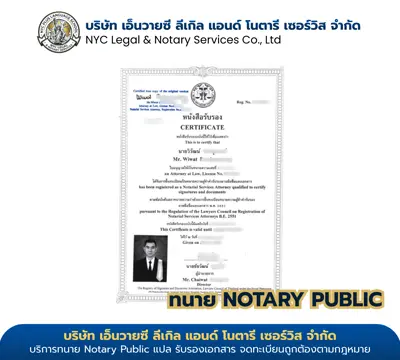
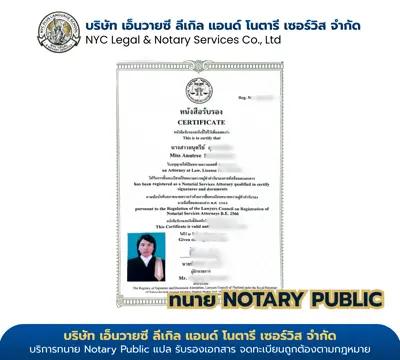
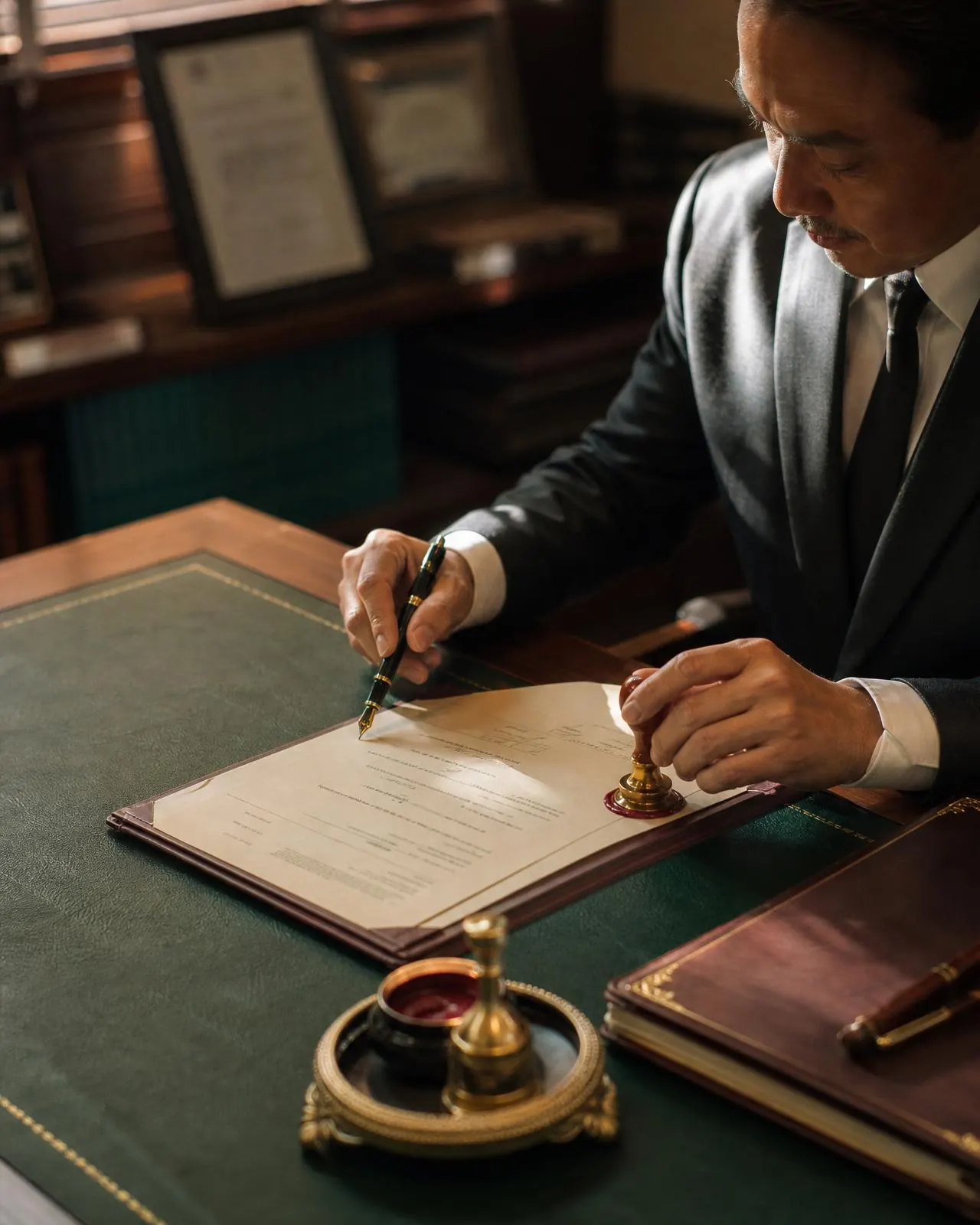
›[รับรองเอกสาร]ทนายความ Notary Public รับรองเอกสารที่ดินและมรดกได้ในขอบเขตใด?
ทนายความผู้ทำคำรับรองลายมือชื่อและเอกสารตามข้อบังคับสภาทนายความ รับรองได้ในเรื่องต่อไปนี้ คือ รับรองลายมือชื่อผู้ลงนามในหนังสือมอบอำนาจ หนังสือให้ความยินยอม คำแถลง หรือ affidavit รับรองว่าสำเนาถูกต้องตรงกับต้นฉบับที่ได้ตรวจดู และรับรองคำสาบานหรือคำปฏิญาณ สิ่งที่ไม่อยู่ในขอบเขตคือการรับรองว่าข้อเท็จจริงในเอกสารเป็นความจริง การรับรองกรรมสิทธิ์ในที่ดิน หรือการทำให้เอกสารมีผลจดทะเบียนโดยไม่ผ่านสำนักงานที่ดิน สำหรับเอกสารที่ออกโดยหน่วยงานราชการไทย เช่น โฉนด มักต้องใช้สำเนาที่รับรองโดยเจ้าพนักงานที่ดินโดยตรง ไม่ใช่การรับรองสำเนาโดยทนายความ
›[รับรองเอกสาร]Apostille ใช้กับเอกสารที่ดินและมรดกของไทยได้ตั้งแต่เมื่อใด?
อนุสัญญายกเลิกการเรียกร้องให้ทำให้เอกสารมหาชนต่างประเทศเป็นเอกสารที่ถูกต้องตามกฎหมาย (HCCH Apostille Convention) มีผลใช้บังคับกับประเทศไทยตั้งแต่วันที่ 2 ธันวาคม 2568 ทำให้เอกสารมหาชนของไทย เช่น สำเนาโฉนดที่รับรองโดยเจ้าพนักงาน คำสั่งศาล และคำรับรองที่ผ่านนิติกรณ์ สามารถขอ Apostille เพื่อใช้ในประเทศภาคีได้โดยไม่ต้องนำไปรับรองซ้ำที่สถานทูตปลายทาง สำหรับประเทศที่ไม่ใช่ภาคี ยังคงต้องรับรองนิติกรณ์ที่กรมการกงสุลแล้วนำไปรับรองต่อที่สถานเอกอัครราชทูตหรือสถานกงสุลของประเทศนั้นตามเดิม ควรตรวจสอบสถานะภาคีของประเทศปลายทางที่ hcch.net ก่อนวางแผนเอกสาร
›[ข้อผิดพลาด]ข้อผิดพลาดที่ทำให้เอกสารที่ดินและมรดกถูกปฏิเสธมีอะไรบ้าง?
ที่พบบ่อยที่สุดคือ (1) ใช้สำเนาโฉนดที่ถ่ายเองแทนสำเนาที่เจ้าพนักงานที่ดินรับรอง (2) แปลเฉพาะด้านหน้าโฉนดโดยไม่แปลสารบัญจดทะเบียนด้านหลัง (3) สะกดชื่อในคำแปลไม่ตรงกับหนังสือเดินทางหรือไม่ตรงกับชื่อในโฉนด (4) แปลเนื้อที่ไร่-งาน-ตารางวาผิดหน่วยหรือปัดตัวเลข (5) หนังสือมอบอำนาจกรอกไม่ครบหรือเว้นช่องว่างให้เติมภายหลัง ซึ่งสำนักงานที่ดินจะไม่รับ (6) เอกสารต่างประเทศยังไม่ผ่านการรับรองในประเทศต้นทางก่อนนำมาแปล และ (7) เอกสารสถานะบุคคลเก่าเกินกำหนดอายุที่ปลายทางยอมรับ การส่งภาพถ่ายเอกสารให้เจ้าหน้าที่ตรวจก่อนล่วงหน้าช่วยลดการตีกลับได้มาก
›[ติดต่อ]ค่าบริการและระยะเวลาดำเนินการเท่าไร สอบถามได้อย่างไร?
เราไม่ประกาศอัตราค่าบริการและค่าธรรมเนียมราชการไว้ในหน้านี้ เนื่องจากงานที่ดินและมรดกมีตัวแปรมาก เช่น จำนวนหน้าเอกสาร ภาษาปลายทาง จำนวนแปลงหรือห้องชุด ความจำเป็นในการยื่นศาล และขั้นตอนการรับรองที่ประเทศปลายทางกำหนด อีกทั้งค่าธรรมเนียมราชการมีการปรับปรุงเป็นระยะ กรุณาสอบถามเจ้าหน้าที่ทางโทรศัพท์ LINE หรืออีเมล พร้อมส่งภาพถ่ายเอกสารที่ชัดเจนและแจ้งประเทศหรือหน่วยงานปลายทาง เจ้าหน้าที่จะประเมินขอบเขตงานและกรอบเวลาให้เป็นรายกรณี ข้อมูลในหน้านี้เป็นข้อมูลทั่วไป ไม่ใช่คำปรึกษากฎหมายเฉพาะกรณี และเราไม่รับประกันผลการพิจารณาของหน่วยงานรัฐหรือคำสั่งศาล
›[Overview]What property and inheritance document services do you cover?
We translate and certify Thai land and succession documents: land title deeds (Nor.Sor.4 Jor.), certificates of utilisation (Nor.Sor.3 and Nor.Sor.3 Kor.), condominium ownership certificates (Or.Chor.2), sale and purchase agreements, agreements to sell, lease and leasehold agreements, mortgage agreements, Department of Lands powers of attorney (Tor.Dor.21), appraisal certificates, wills, petitions and court orders appointing an estate administrator, and heirship evidence. Work includes certified translation, signature certification by a Thai notarial services attorney, coordination of consular legalisation at the Department of Consular Affairs, and apostille for Convention states. We do not register rights and juristic acts ourselves — that is exclusively the competent officer's function at the Land Office. Fees and lead times are quoted by our staff by phone, LINE or email.
›[Overview]How many steps are needed before a Thai property or estate document can be used abroad?
Usually four, in this order: (1) obtain the version issued or certified by the authority or court, such as a title deed copy certified by the land officer, or a court order with a certificate of finality; (2) translate it into the language required by the destination, with the translator's certification; (3) submit it for legalisation to the Legalisation Division of the Department of Consular Affairs, which certifies the signature and seal of the issuing officer or of the translator; and (4) obtain an apostille if the destination is a party to the HCCH Apostille Convention, in force for Thailand since 2 December 2025, or otherwise have the document further legalised by that country's embassy or consulate in Thailand.
›[Title deed]Which version of a Thai title deed can be translated and legalised?
Use a copy issued and certified as a true copy by the land officer at the Land Office with jurisdiction over the plot — not a photocopy signed by the owner. Legalisation certifies the signature and seal of the officer who issued or certified the document, so without an officer's signature the Legalisation Division has no specimen to verify and will refuse the file. A freshly issued copy also ensures the register of juristic acts on the reverse is current, which matters where the plot has been mortgaged, transferred or subdivided.
›[Title deed]Must the reverse side of the deed be translated as well?
Yes. Translate the whole document: the front showing deed number, parcel number, survey page, map sheet, sub-district, district, province, area in rai-ngan-square wah and the registered owner, and the reverse register of juristic acts showing the history of transfers, mortgages, servitudes and any prohibition on transfer. Banks, foreign courts and investor-visa authorities need to see all encumbrances, and translating only the front is one of the most common reasons a file is returned. Text inside seals and officer signature blocks must also be rendered.
›[Title deed]What types of Thai land documents exist and how do they differ?
Under the Land Code and Department of Lands practice the common instruments are: the title deed Nor.Sor.4 Jor., which evidences full ownership and can be transferred by registration; certificates of utilisation Nor.Sor.3 and Nor.Sor.3 Kor., which evidence possessory and utilisation rights rather than full ownership; the reservation licence Nor.Sor.2 and the old Sor.Kor.1 notification form, both with transfer restrictions; and Sor.Por.Kor.4-01 land reform allotments, which are subject to statutory transfer prohibitions. A translation should keep the Thai instrument name with an explanatory gloss instead of calling every instrument a title deed, which would misrepresent the legal status to the destination authority.
›[Condominium]How is a condominium ownership certificate (Or.Chor.2) translated and what accompanies it?
The certificate issued under the Condominium Act B.E. 2522 states unit number, floor, area, the co-ownership ratio in the common property and the owner's name; the translation must reproduce every figure exactly. Documents commonly filed with it include the debt-free certificate from the juristic person of the condominium, the unit sale agreement, an appraisal certificate, and evidence of inward foreign remittance (bank Foreign Exchange Transaction form or bank letter) where the buyer is a foreigner. The whole set can be legalised and apostilled once it bears the signature of the competent official.
›[Foreign ownership]Can a foreigner own a condominium unit in Thailand?
Yes, within limits. Section 19 bis of the Condominium Act B.E. 2522 provides that foreign individuals and foreign juristic persons may together hold ownership of not more than 49 per cent of the total unit floor area in a condominium building. Registration of the transfer requires evidence that foreign currency was brought into Thailand to pay for the unit, certified by a bank, together with a certificate of the foreign ownership ratio issued by the juristic person of the condominium. Personal documents such as the buyer's passport usually require certified translation, and a buyer outside Thailand needs a power of attorney certified at a Royal Thai Embassy or before a notary public and then legalised. Project-level conditions vary, so confirm with the responsible Land Office in advance.
›[Foreign ownership]Can a foreigner own land in Thailand?
As a rule, section 86 of the Land Code prohibits an alien from acquiring land except where a treaty or a specific statute permits it. Section 96 bis allows an investor who brings in funds meeting the prescribed criteria and amount to acquire a limited area of land for residential use with the permission of the Minister of Interior, and investment-promotion and industrial-estate legislation contains further exceptions. In practice foreigners more often take condominium ownership within the foreign quota, enter a registered long-term lease, or hold a usufruct or right of habitation. Using a Thai nominee to hold land is a circumvention of the law and carries penalties. This area is fact-specific and should be reviewed with a lawyer.
›[Sale contract]Must a Thai land sale contract be in writing and registered?
Yes. Section 456 of the Civil and Commercial Code provides that a sale of immovable property is void unless made in writing and registered with the competent official, which is done at the Land Office where the property is located. An agreement to sell or a deposit agreement need not be registered, but under the same section it must be evidenced in writing and signed by the party liable to be enforceable. We prepare and translate bilingual contracts so that foreign parties understand identical terms, and signatures can be certified by a Thai notarial services attorney — but the transfer of ownership itself must always be registered before the competent official at the Land Office.
›[Sale contract]If the Thai and English texts of a contract conflict, which prevails?
Include an explicit governing-language clause. For Thai real estate it is common to make the Thai text prevail, because Thai is the language used by the Land Office and the Thai courts and any dispute will be proved on the Thai documents in any event, with the English text serving as a translation for understanding. Omitting the clause invites arguments about the parties' intention. We recommend stating governing language, governing law and jurisdiction in the same instrument.
›[Lease]How long can a lease of Thai immovable property run?
Section 540 of the Civil and Commercial Code caps a lease of immovable property at thirty years; a longer term is reduced to thirty years, and the lease may be renewed for a further period not exceeding thirty years from the date of renewal. Section 538 requires a lease of immovable property for more than three years to be in writing and registered with the competent official, failing which it is enforceable for three years only. Leases for commerce and industry are governed by the separate Hire of Immovable Property for Commerce and Industry Act B.E. 2542, which permits up to fifty years, renewable for up to a further fifty years, subject to statutory conditions.
›[Lease]Is a year lease structure actually enforceable?
A promise to grant a further lease binds the original contracting parties, but it does not create a right that can be registered beyond thirty years and does not automatically bind a later transferee of the land unless a right recognised by law has been registered. Many foreign lessees assume they have secured ninety years, whereas the reliably secured period is the first registered thirty-year term. Risk can be reduced with clearly drafted renewal mechanics, pre-emption and notice obligations on transfer, and liquidated damages — always reviewed by a lawyer before signature.
›[Power of attorney]I am abroad and need to transfer land in Thailand. How is the power of attorney made?
Use the Department of Lands form: Tor.Dor.21 for titled land, or Tor.Dor.21 Kor. for land held under a certificate of utilisation. Complete every field with no blank spaces and define the authority precisely, identifying the plot and the price. If you are abroad, the safest route is to sign before an officer at a Royal Thai Embassy or Consulate-General so that your signature is certified; alternatively sign before a notary public in that country, have it authenticated under that country's system (apostille in Convention states), and have it legalised at the Department of Consular Affairs once brought into Thailand. Always confirm the accepted format with the receiving Land Office beforehand.
›[Power of attorney]Does a power of attorney executed abroad have to be translated into Thai?
Yes, because the competent officer at the Land Office registers rights and juristic acts in Thai. The usual order is: authentication in the country of origin (apostille or Royal Thai Embassy certification), then Thai translation, then legalisation of the translation at the Legalisation Division of the Department of Consular Affairs, then filing at the Land Office. The order cannot be rearranged, and the spelling of names in the translation must match the passport and the name on the deed letter for letter.
›[Wills]What forms of will does Thai law recognise?
Book VI of the Civil and Commercial Code recognises five forms: (1) the ordinary written will under section 1656, dated and signed by the testator before at least two witnesses present at the same time; (2) the holograph will under section 1657, written, dated and signed entirely in the testator's own hand, needing no witness; (3) the will made as a public document before the district officer under section 1658; (4) the secret document will under section 1660; and (5) the oral will in special circumstances under section 1663. Failure to observe the prescribed form makes the will void, so have a lawyer review it before signature.
›[Wills]Who cannot witness a Thai will?
Under section 1670 of the Civil and Commercial Code, a minor, a person of unsound mind or one adjudged quasi-incompetent, and a person who is deaf, mute or blind in both eyes cannot be a witness to a will. Section 1653 also prohibits the writer of the will or a witness to it, and the spouse of such a person, from taking a benefit under it, so a bequest in their favour is void. This is the single most frequent defect in home-made family wills.
›[Wills]I hold assets in Thailand and abroad. How many wills should I make?
A common approach is separate situs wills: one covering Thai assets and another covering assets in the other jurisdiction, so that each complies with the form and probate procedure of its own country and neither delays the other. Each will must clearly limit its scope to the assets of that jurisdiction, and blanket revocation clauses must be drafted carefully so they do not unintentionally revoke the other will. Have lawyers in both jurisdictions review the drafts together.
›[Succession]Who inherits if there is no will?
The estate devolves on the statutory heirs in the order set out in section 1629 of the Civil and Commercial Code: (1) descendants, (2) parents, (3) brothers and sisters of full blood, (4) brothers and sisters of half blood, (5) grandparents, and (6) uncles and aunts. A prior class excludes the later ones, subject to the rule that surviving parents share as if they were a child. A lawful spouse is a statutory heir under section 1635 and the share varies according to which class of heirs also survives. Marital property must be divided out before the estate is computed.
›[Succession]What does an estate administrator do and how is one appointed?
An estate administrator collects the estate, pays debts and distributes to the heirs, with the powers and duties set out from section 1719 of the Civil and Commercial Code. Appointment is either by the will or by court order under section 1713, on petition by an heir, an interested person or the public prosecutor to the court where the deceased was domiciled at death. In practice land offices and banks will not transfer property or release deposits until a court order appointing an administrator is produced, so the step is effectively unavoidable where the estate includes immovable property.
›[Succession]Which documents does the court require for an administrator petition?
Typically the death certificate; the deceased's house registration with the name struck off and that of the petitioner; the petitioner's ID card and house registration; evidence of relationship such as a birth certificate, marriage certificate or change-of-name certificate; a family tree; consents from the other heirs; evidence of estate assets such as title deed copies, bank passbooks, vehicle registration or share certificates; and the will if any. Where heirs are abroad, consents are usually signed before a Royal Thai Embassy officer or a notary public, then authenticated, translated into Thai and filed. The exact list depends on the facts of the case.
›[Succession]Do heirs living abroad have to travel to Thailand?
Often not for every step. Heirs abroad can appoint a lawyer or a relative in Thailand by power of attorney and give written consent to another person acting as administrator, signing before a Royal Thai Embassy or Consulate officer, or before a notary public followed by an apostille in a Convention state, then having the documents translated into Thai and legalised at the Department of Consular Affairs. However, where the petitioner seeks appointment as administrator personally, the court may require that person to give evidence at the hearing, so plan this with the lawyer handling the case from the outset.
›[Succession]Does Thailand levy inheritance tax?
Yes. The Inheritance Tax Act B.E. 2558 taxes the recipient on the portion of an inheritance from one estate exceeding the statutory threshold, at different rates for ascendants and descendants compared with other recipients, with an exemption for the deceased's spouse. Registration of an inherited immovable property at the Land Office attracts separate registration fees. Because thresholds, rates and conditions may be amended, we do not publish figures here — verify with the Revenue Department or a tax adviser, and ask our staff about the document workflow by phone, LINE or email.
›[Succession]Can a foreigner inherit land in Thailand?
Section 93 of the Land Code and Department of Lands practice provide that an alien who acquires land by inheritance as a statutory heir may acquire it with the permission of the Minister of Interior, and only up to the area limits prescribed by law when aggregated with land already held. Without permission the heir must dispose of the land within the prescribed period, failing which the Director-General of the Department of Lands may dispose of it. A condominium unit may be inherited by a foreigner provided the 49 per cent foreign quota and the Condominium Act conditions are satisfied. These cases are detailed and warrant case-by-case legal advice.
›[Legalisation]How is a Thai court order appointing an administrator prepared for use abroad?
Obtain a copy certified as true by the court officer together with a certificate that the case is final, then translate it keeping the black case number, red case number, court name and dates exactly as in the original, submit it for legalisation to the Legalisation Division of the Department of Consular Affairs, which certifies the court officer's or translator's signature, and obtain an apostille where the destination is a Convention state. Whether the Thai order has effect in that country is a matter for its own law; legalisation only makes the document admissible for filing.
›[Legalisation]What can a Thai notarial services attorney certify on property and estate documents?
Under the Lawyers Council regulations a registered notarial services attorney may certify the signature of a person signing a power of attorney, consent, statement or affidavit; certify that a copy is a true copy of an original inspected; and administer oaths and affirmations. What falls outside that scope is certifying that facts stated in a document are true, certifying ownership of land, or making a document registrable without the Land Office. For documents issued by Thai government bodies, such as a title deed, the destination usually requires a copy certified by the land officer rather than a lawyer's copy certification.
›[Legalisation]Since when can Thai property and estate documents be apostilled?
The HCCH Convention Abolishing the Requirement of Legalisation for Foreign Public Documents entered into force for Thailand on 2 December 2025. Thai public documents — such as an officer-certified title deed copy, a court order, or a certification that has passed consular legalisation — can therefore be apostilled for use in other Convention states without further embassy legalisation. For non-Convention countries the previous route still applies: consular legalisation followed by legalisation at that country's embassy or consulate in Thailand. Check the destination's Convention status at hcch.net before planning the document chain.
›[Pitfalls]What mistakes most often cause property and estate documents to be rejected?
The most frequent are: using a self-made photocopy of a deed instead of an officer-certified copy; translating only the front of the deed and omitting the register of juristic acts; name spellings that differ from the passport or from the name on the deed; mis-converted or rounded rai-ngan-square wah areas; powers of attorney left partly blank, which the Land Office will not accept; foreign documents brought for translation before being authenticated in the country of origin; and status documents older than the destination's acceptance window. Sending clear photographs for a pre-check greatly reduces returns.
›[Contact]What are your fees and turnaround times?
We do not publish fees or government charges on this page. Property and succession matters vary widely — page counts, target language, number of plots or units, whether a court filing is needed, and the certification chain required by the destination — and official fees are revised periodically. Please contact our staff by phone, LINE or email with clear photographs of the documents and the destination country or authority, and we will scope the work and the timeframe for your case. This page is general information, not case-specific legal advice, and we do not guarantee the outcome of any government decision or court order.