Deciding which certification route your document needs
The single most common cause of rejected paperwork is choosing the wrong certification route. A Thai document that will be presented to an Australian university is treated very differently from the same document presented to a district registrar in Europe or to an immigration office in the Middle East. Before anything is translated, it is worth writing down three facts: which authority will physically receive the document, which country that authority sits in, and what that authority publishes as its own requirement. Everything else follows from those three answers.
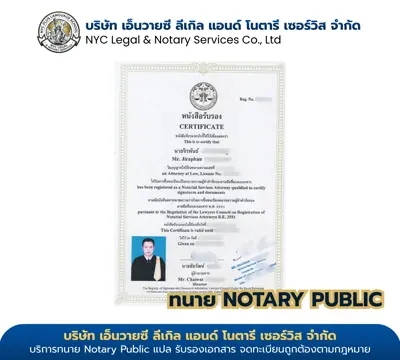
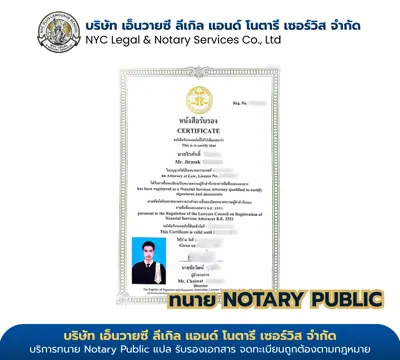
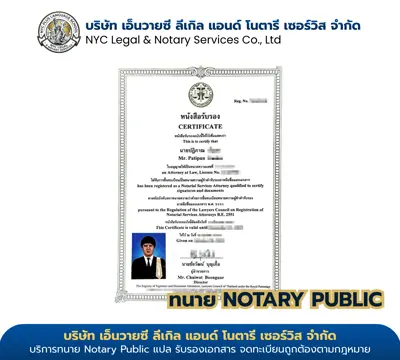
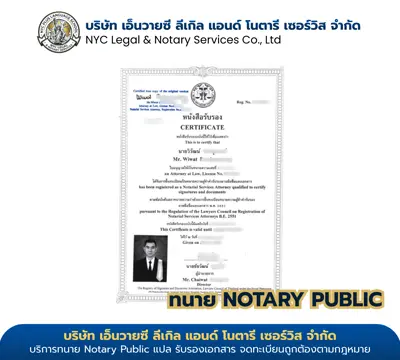
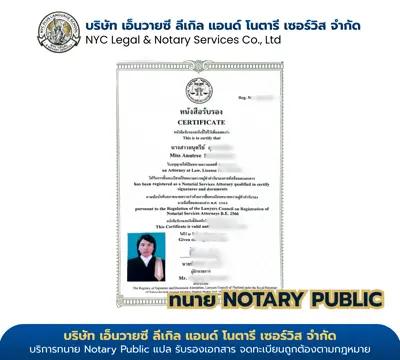
In broad terms there are four routes. The first is a translation certified by the translation provider, which many universities and employers accept on its own. The second is a translation to the NAATI standard, required by many Australian federal and state agencies and by a large number of Australian education providers. The third is certification by a Notarial Services Attorney, a Thai lawyer licensed for that purpose by the Lawyers Council of Thailand under Royal Patronage, used when a signature, a true copy or a declared fact must be attested. The fourth is legalisation, where the Department of Consular Affairs of the Ministry of Foreign Affairs certifies the document and, depending on the destination, the destination country's embassy adds its own certification, or an apostille is issued for countries operating under the Hague Apostille Convention.
These routes are cumulative rather than alternatives. A birth certificate destined for a foreign registry office may need a certified translation, then consular certification, then an embassy or apostille step. Skipping a stage usually means starting again, because most authorities will not accept a document that has been certified out of order.
Preparing source documents so they are accepted the first time
Thai civil registration documents are issued in Thai and frequently contain handwritten annotations, official stamps and reference numbers in the margins. Receiving authorities abroad expect the translation to reflect the whole page, including stamps and annotations, so scans must show the complete document edge to edge rather than a cropped centre. Where a document has an official reverse side, that side must be scanned too.
Older documents raise a second issue: names transliterated from Thai into the Latin alphabet can legitimately be spelled in more than one way. If a passport, a foreign marriage certificate or an earlier visa application already uses a particular spelling, that spelling should be supplied to the translator so the whole document set is internally consistent. Inconsistent name spellings across a bundle are a frequent reason for authorities to request resubmission.
Finally, some authorities will only accept documents issued within a defined recency window, commonly three or six months. That window normally applies to the date the underlying document was issued or re-issued by the Thai registrar, not to the date it was translated. If your document is older than the window, a fresh copy from the district office is usually needed before translation begins.
Timelines, government processing and realistic planning
Foreign documents used inside Thailand follow the mirror-image path: they are certified in the country of issue, legalised or apostilled there, and then translated into Thai for the Thai authority that will receive them. Thai district offices, courts and government departments generally expect the Thai translation to accompany the foreign original together with its certification, so the translation should be prepared after the foreign certification is complete rather than before it.
Translation and legal certification are steps we control, and we can commit to a timeframe for them once we have seen your files. Government processing steps are not: the Department of Consular Affairs, the Royal Thai Police Criminal Records Division, district offices and foreign embassies each set their own processing periods, which vary with workload and public holidays. For anything with a fixed external deadline such as a visa appointment, a court hearing or a university enrolment date, plan backwards from the deadline and allow contingency for at least one government step taking longer than expected.
Because requirements are published and revised by the authorities themselves, we treat their websites as the source of truth rather than any summary, including ours. The reference links at the bottom of this page point to the primary sources we rely on, and we encourage you to check the current wording there before you submit.
Two practical habits reduce delay more than anything else. The first is confirming the required certification route in writing before translation begins, ideally by quoting the published wording of the receiving authority, because a translation prepared for the wrong route generally cannot be upgraded afterwards. The second is keeping a single consistent spelling of every personal name and place name across the whole document bundle, matched to the spelling already used in the applicant's passport, since inconsistent transliteration is treated by many registries as a discrepancy rather than a formatting preference.
We do not publish fees on this page. The correct figure depends on document type, page count, language direction, the certification stages actually required and the delivery method, and quoting a range without seeing the documents would risk giving you a number that does not apply to your case. Our team reviews your scans and confirms both the fee and a realistic completion window by phone, LINE or email, in English or Thai, before any work is started.